- WIADOMOŚCI
- ANALIZA
India plays its hand on the global stage – free trade, tariffs, war, and peace

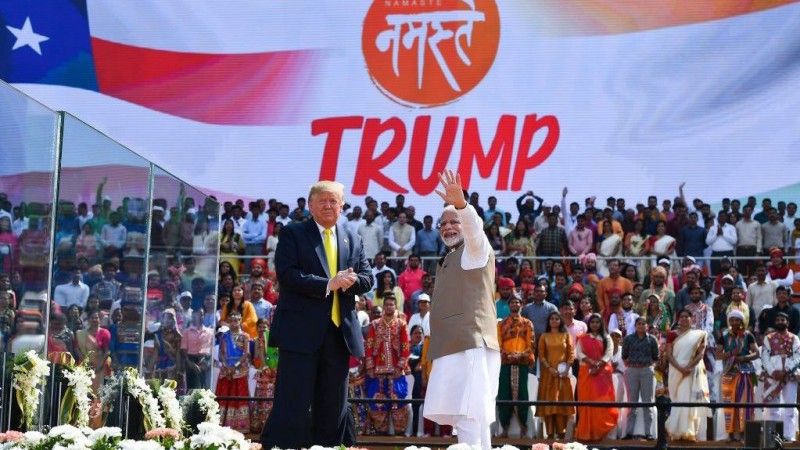
In recent months, India has been skillfully maneuvering on the international stage, leveraging decades of diplomatic balance as a nation that maintains good – or at least workable – relations with nearly everyone. The country’s position is particularly visible in its simultaneous dealings with Moscow and Washington. It is also impossible to ignore that India now ranks fifth among the world’s largest economies, following the United States, China, Germany, and Japan. The United States and the European Union continue to pressure India over its purchases of Russian oil – and this time, the pressure appears to be working.
On the table lie a series of high-stakes issues: a Free Trade Agreement (FTA) with the European Union, tariff negotiations with the United States, India’s purchase of Russian oil, and the country’s broader regional policy. All these matters are approaching key turning points, with decisions expected in the near future – decisions that are likely to shape the global landscape for years to come, economically and politically alike.
India remains committed to democracy, a value that naturally aligns it with Western democracies. Yet it also understands the Global South intimately, being part of it. New Delhi continues to nurture its long-standing friendship and strategic alliance with Moscow – partly out of historical tradition, partly due to ongoing military dependence, and partly on the mistaken assumption that Russia might one day cease to be the „junior partner” in its relationship with China. Meanwhile, tensions with Pakistan remain India’s most persistent regional challenge, resurfacing dramatically in a sudden flare-up earlier this spring.
Between October 27 and 29, the EU and India are set to hold another round of negotiations on their long-discussed Free Trade Agreement (FTA). Both sides insist the deal could be finalized by the end of 2025, though only about 60% of the negotiation chapters – mainly the easier ones – have been closed so far. One major sticking point is the Carbon Border Adjustment Mechanism (CBAM), set to take effect on January 1, 2026, which would significantly increase the cost of Indian exports such as steel to the EU. European negotiators have also raised India’s ongoing imports of Russian oil; in July, for example, the EU added Nayara Energy, a joint venture between Russia’s Rosneft and India and its refinery located near Jamnagar, Gujarat, to its sanctions list. Despite these tensions, both New Delhi and Brussels maintain optimism that the FTA could be concluded soon – potentially ushering in a new era of streamlined trade.
Relations with the United States are another crucial front. Tariff negotiations have been underway for months, and in August, Washington imposed steep 50% duties on a range of Indian products – a move that disrupted trade flows and drew criticism from industry leaders on both sides. From the outset, however, it was clear that the tariffs were a bargaining tactic, not an end in themselves, aimed at forcing a mutually acceptable compromise.
The US President Donald Trump has also criticized India’s continued purchase of Russian oil, sold at preferential rates and paid for in Indian rupees rather than U.S. dollars. By invoking this issue, Trump sought not only to pressure India on trade but also to indirectly squeeze Russia’s oil revenues. On October 15, Trump announced that Prime Minister Narendra Modi „assured me today that they will not be buying oil from Russia.” No such statement has been confirmed by the Indian government, nor has there been any visible reduction in India’s oil imports from Russia. However, Washington’s decision to sanction Rosneft and Lukoil – the key suppliers of oil to India – may in practice force New Delhi to curtail purchases.

Then, on October 22, insiders reported US and India being „very close” to a new trade deal that would lower tariffs on Indian goods to around 15%, down from the current 50%. Trump’s Diwali phone call to Modi was described as cordial, suggesting that an agreement is indeed within reach.
If all goes as planned, India could soon seal two major trade agreements – one with the EU, another with the U.S. – in a matter of months. Though the fine print remains confidential, these deals could reshape the architecture of global trade. This comes as China successfully tests new northern maritime routes to Europe, an initiative closely watched in New Delhi.
Regionally, India faces not only potential escalation with Pakistan but also instability in neighboring Bangladesh, Sri Lanka, and, more recently, Nepal. In this context, New Delhi’s pragmatic engagement with the Taliban regime – including the upgrading of its diplomatic mission in Afghanistan to embassy level – reflects a calculated search for new alignments in a volatile region.
In the coming months, South Asia will be the region to watch. Developments there are poised to reverberate far beyond its borders, influencing global politics and economics for years to come. India remains a key player in several of the world’s geopolitical puzzles – from U.S.- China relations and Russia’s war of aggression against Ukraine to Donald Trump’s tariff policy. New Delhi is fully aware of its strategic importance and is determined to extract the maximum possible advantage from this moment of global realignment.