












- WIADOMOŚCI
India's pivot? Agreements signed for oil imports from the U.S.

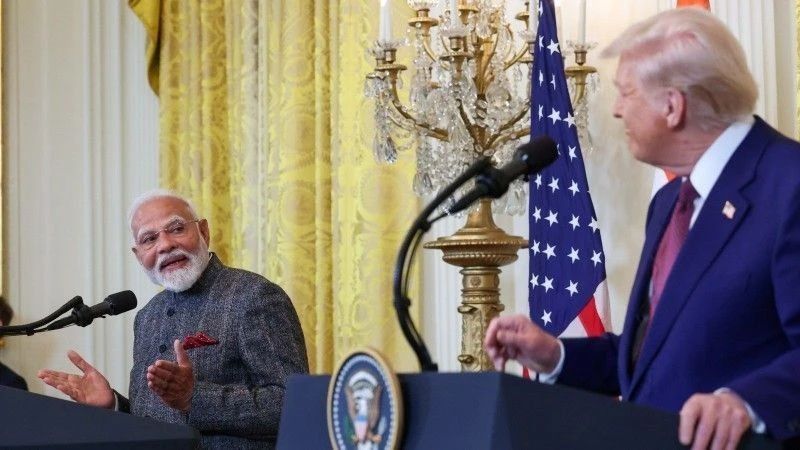
Photo. Narendra Modi/X
According to a Reuters source at the White House, Indian refineries have already cut imports of Russian oil by 50 percent. At the same time, the Indian government stresses that it has not yet informed refineries of any request to limit imports from Moscow.
On 17th October Indian sources reported that the reduction is not yet visible, although it may become noticeable in import figures in December and January. Reuters reports that Indian refineries have already placed orders for November deliveries, which also include crude imports for December.
(Un)predictable Donald
After many months of amicable rapprochement and unsuccessful negotiations with Vladimir Putin, President Donald Trump has decided to increase economic pressure on the Kremlin regime.
A confirmation of the shift (though it is uncertain how long-lasting it will be) was the U.S. president’s criticism at the UN forum of the EU’s continued imports of Russian LNG and oil. I am very disappointed in Putin (…) [EU leaders — ed. note E24] must immediately stop all purchases of energy from Russia, Trump said on 23rd September 2025.
And although the EU did significantly reduce imports of Russian piped gas (by 90 percent) and led a global initiative to exclude Russian energy resources from Western economies, member states nevertheless continued to buy Kremlin oil and LNG through side channels — and one of those channels ran through India.
Russia uses a shadow fleet to transport oil, through which it ships 61 percent of total seaborne oil exports, valued at €83 billion.
The G7+ countries imported petroleum products worth €18 billion from six refineries in India and Turkey, of which an estimated €9 billion came from Russian crude oil, the CREA report says.
In September India increased purchases of Russian oil by 10–20 percent compared with August. Meanwhile, the main European buyers of Indian diesel are France, Turkey, Belgium and the Netherlands.

Will Modi turn away from the Kremlin?
India is currently the second-largest importer of Russian oil after China. As E24 editor Karol Byzdra noted on the sidelines of the IMF meetings and the G7 and G20 finance ministers« sessions in Washington, President Donald Trump said that Prime Minister Narendra Modi assured him India would suspend purchases of Russian oil.
From India’s perspective, a complete, immediate cutoff from Russian supplies would risk price increases and inflationary pressure, which is why Delhi talks about protecting consumers and »ongoing talks« with the U.S., Byzdra writes.
At the same time, Reuters reports that two Indian refineries (Indian Oil Corp, Hindustan Petroleum Corp.) bought 4 million barrels of Guyanese crude oil from U.S. oil giant Exxon Mobil. Deliveries are expected at the end of 2025 or in early 2026.
New Delhi’s priority remains ensuring stable energy prices and supply security, which also includes diversifying supply sources. According to the Associated Press (AP), India’s commerce secretary Rajesh Agarwal said India buys roughly $12–13 billion worth of oil and gas from the U.S. each year, and that it is possible to almost double that amount without causing disruptions to the operations of Indian refineries.
At the end of August 2025 the U.S. imposed tariffs of 25–50 percent on certain Indian goods to pressure India to stop buying Russian oil. The U.S. administration’s actions then strained relations between Modi and Trump, but the diplomatic services of both countries have kept channels of communication open.


