












- KOMENTARZ
- WIADOMOŚCI
- WAŻNE
Macron: Europe must increase defence spending

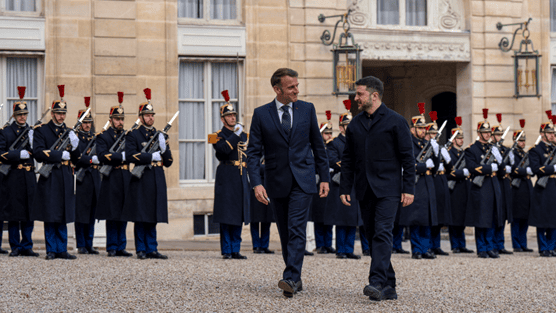
France – even before Poland and Germany overtake it – as the strongest army in the European Union, intends to continue investing in its armed forces and strengthening cooperation with its partners. Emmanuel Macron has announced a significant increase in defence spending, which in the coming years is expected to clearly exceed 2% of GDP.
France plans to allocate €413 billion to defence between 2024 and 2030, aimed at adapting the country and Europe to growing global threats. This represents a substantial increase compared to the previous period, when France spent €295 billion between 2019 and 2025. This growth is to be implemented through annual increases in the defence budget, exemplified by the 2026 budget, which is set to reach €57.2 billion.
Macron pointed out that the current level of defence spending in Europe is too low compared to other global powers. The United States spends around 3.5% of its GDP on defence, while China increased its military budget by 7.2% over the past year. Against this backdrop, Poland, spending over 4% of GDP, and Lithuania, planning to exceed 5%, clearly outpace Western allies on the Old Continent.
Currently, more than 180 different weapons systems are in operation across Europe, resulting in inefficiency and high costs. Macron announced the need to simplify procedures and focus on so-called „European champions” (fr.champions européens), meaning companies capable of becoming leaders in the defence sector. Key areas include artificial intelligence, drones, cyber security, and space technologies.
The scale and limitations of French support for Ukraine
Furthermore, according to reports from the second half of 2025, France’s total military and financial assistance to Ukraine since 2022 is estimated to have reached €8.6 billion, of which €5.9 billion constituted military aid. Macron stressed that Ukraine currently plays the role of a „guardian of Europe’s security”. Further support from France is intended to enable Ukraine to defend itself effectively and to build a position of strength ahead of forthcoming peace negotiations.
However, as French experts themselves emphasise, France’s contribution is significant but not decisive. It amounts to just 0.3% of GDP, while even Germany allocates roughly twice as much. If France were to spend proportionally as much as some Eastern Flank states – such as Poland, Finland, or Sweden – the sum could exceed €30 billion. France can still afford to do more.
It should also not be forgotten that France, together with Italy, blocked a plan at the December meeting of the European Council to use frozen Russian assets to provide financial support to Ukraine. Similar scepticism towards risky actions was expressed by the French military in the early months of the war, opposing the transfer of weapons out of concern for the loss of valuable stockpiles. Despite Macron’s rhetoric, France has not been – and still is not – a genuine leader in supporting Kyiv.
Mobilisation of society and reserves
The head of state also drew attention to the need to increase the number of reservists. The goal is to reach 100,000 reservists by 2035 – that is, one reservist for every two professional soldiers. Currently, the French reserve numbers around 40,000 personnel. Each year, approximately 800,000 young French citizens are expected to participate in the Defence and Citizenship Day (fr.Journée Défense et Citoyenneté), from among whom some will be able to apply for service in the reserves.
The President of the Republic also places great hopes on the launch of national service in 2026 (fr.Le service national), aimed at young French people aged 18–25. This year, 3,000 individuals are expected to undertake voluntary, paid nine-month service in the armed forces, preceded by one month of military training, with the ambition of increasing this number to 50,000 by 2035. The programme is intended to expand the reserve pool, support the armed forces« operational capabilities, and strengthen society’s readiness for a potential conflict.
President Macron also announced further actions to strengthen the European pillar of NATO, which is to serve as the foundation of European strategic autonomy. Europe cannot afford to remain dependent on foreign suppliers of weapons and technologies, including the United States.
For France – and perhaps even more so for its president – the role of Europe’s security leader remains crucial. There is currently a push for the European Union to support defence investments by member states. Macron has also not abandoned his idea of deploying troops to Ukraine.
France’s internal crisis continues
Macron’s fundamental problem, which he must resolve immediately – yet appears not to acknowledge – is the paralysis of the state and the renewed risk of government collapse. The unmanageable parliament formed in 2024 at his own request remains his greatest curse. Divided into three conflicting blocs, it prevented the passage of the 2026 budget for months, as well as the implementation of necessary reforms aimed at reducing the deficit.
Ultimately, France adopted the 2026 defence budget. Instead of the announced €6.7 billion, the French armed forces will receive an additional €6.5 billion compared to 2025.
Much indicates that the political deadlock, now ongoing for a year and a half, will persist until the end of Macron’s term in April 2027. This means that some ambitious plans and reforms will have to wait for more stable times. However, their arrival is increasingly likely to be associated with the rise to power of the historically pro-Russian National Rally led by Marine Le Pen, which continues to lead in opinion polls, potentially calling into question the direction of changes underway since 2022.
At present, France seeks to be strong, President Macron independent, and the army as well equipped as possible at the same time. As the French proverb says –Qui trop embrasse, mal étreint – „he who grasps too much loses control,” and perhaps power as well.


