












- ANALIZA
- WIADOMOŚCI
Nuclear weapons in Russia and NATO’s response (Part II)

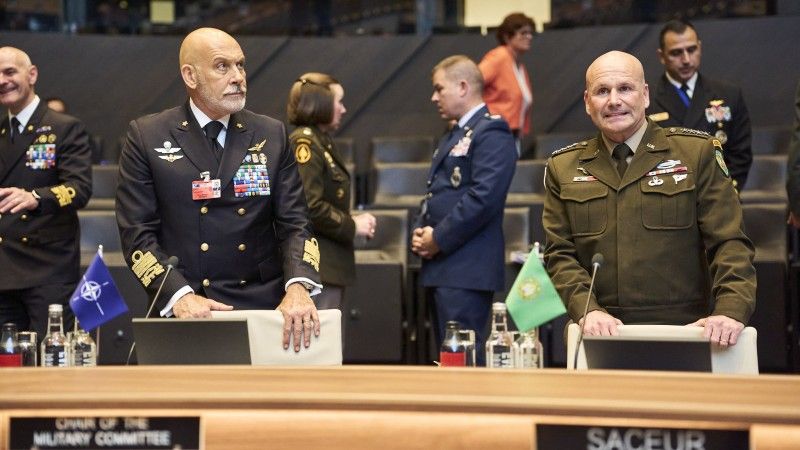
Photo. NATO`
Since the founding of the Russian Federation, nuclear weapons have formed the foundation of the state’s international position and have been one of the pillars of strategic thinking among political and military elites. After the end of the Cold War and the collapse of the Soviet Union, a belief emerged that the risk of nuclear weapons being used in Europe had been permanently marginalized, and that armed conflicts would be limited to asymmetric, local and hybrid operations.
NATO’s response to the Russian nuclear strategy was twofold. On the one hand, the Alliance strengthened its eastern flank, increased the size of its rapid response forces, and raised the combat readiness of units in the Baltic states and in Poland. On the other hand, NATO consistently avoided direct engagement in the conflict in Ukrain, which points to the effectiveness of Russian nuclear deterrence in the psychological dimension while at the same time maintaining control over the risk of global escalation.
The adoption of NATO’s new Strategic Concept in 2022, which explicitly identified Russia as the primary threat, made it possible to formally adjust Alliance structures to the changed strategic environment and also signalled a readiness to preserve cohesion in long-term competition.
Nuclear warhead's role in Russian doctrine
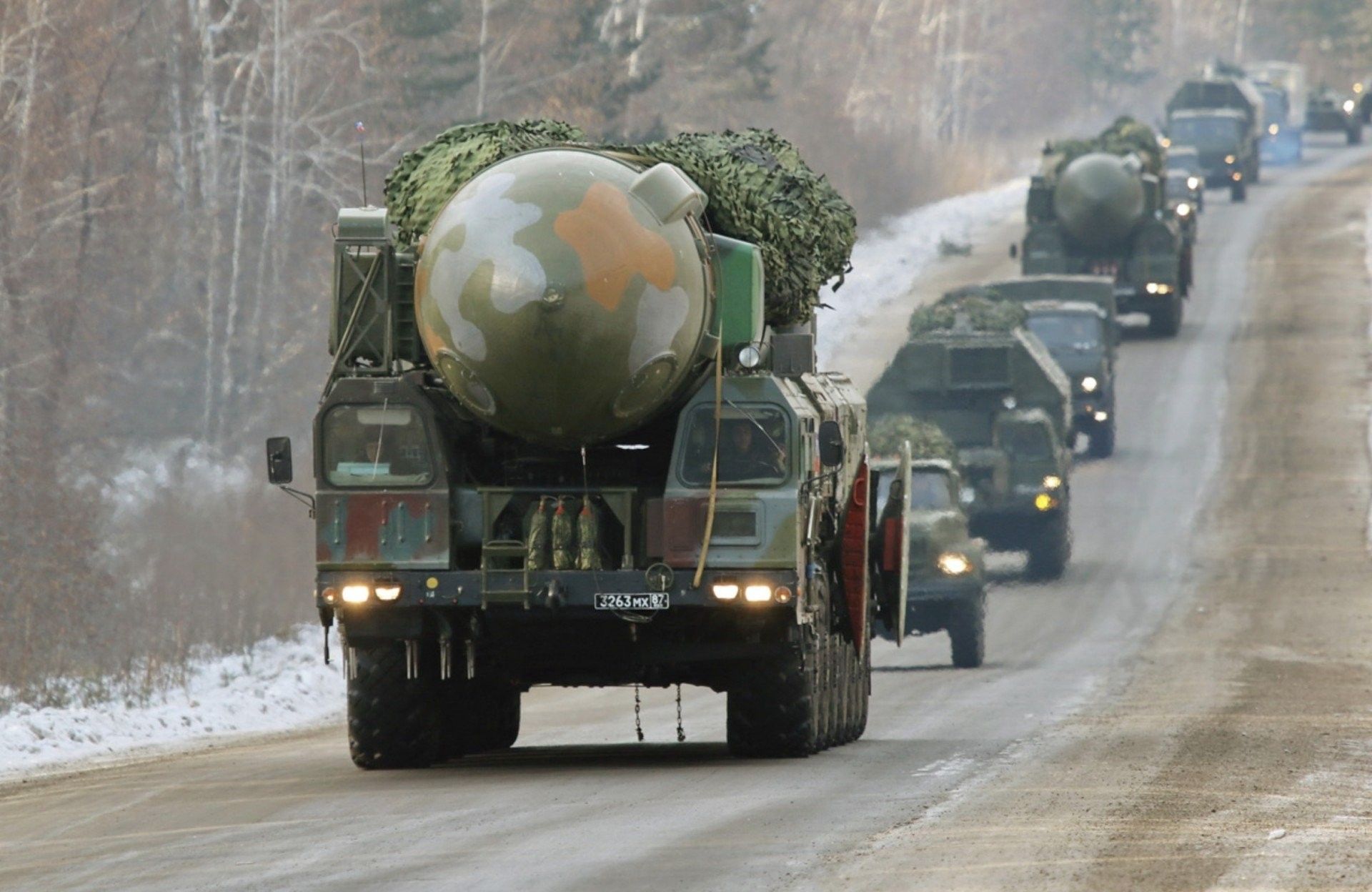
Nuclear weapons in Russian strategy perform a multidimensional function: deterrent, communicative, political and compensatory for conventional weaknesses. At the same time, their actual use remains very costly politically and militarily, which leads the Kremlin to employ them primarily in psychological and demonstrative roles. The instrumentalization of nuclear infrastructure, demonstrative deployment of the arsenal and nuclear rhetoric create a zone of strategic pressure in which an adversary is forced to calculate the risk of escalation while maintaining limited intervention.
The war in Ukraine has shown that nuclear weapons are not a relic of the Cold War but still play a central role in shaping the strategic balance in Europe. The Kremlin uses them to shape the behavior of adversaries, sustain great-power status and retain control over the region. At the same time, the high political costs of using nuclear weapons mean that the threshold for actual escalation remains high, and their operational function in practice is limited to deterrent and communicative actions.
An analysis of Russian nuclear strategy in the context of the war in Ukraine allows us to identify key consequences for European and global security. The Russian Federation consistently employs its nuclear potential in the political dimension, treating it as a tool of deterrence, pressure and strategic communication.
Examples of actions in 2022 and 2023 — such as raising the combat readiness of nuclear forces, nuclear rhetoric from the highest state representatives, the deployment of tactical nuclear weapons in Belarus, and the military use of the Zaporizhzhia Nuclear Power Plant — show that the Kremlin regards nuclear weapons as an integral element of its security policy rather than merely a last-resort means.
These actions have a significant impact on risk perception among NATO countries and strategic partners. A cautious approach to direct military action in Ukraine goes hand in hand with investments in the defence of the Alliance’s eastern flank, including in Poland, the Baltic states and Romania.
Responses
Strengthening rapid response forces, deploying additional units and modernizing air- and missile-defense systems are responses to a realistic perception of potential nuclear and hybrid threats. These defensive measures demonstrate the need to balance deterrence with minimizing the risk of escalation, and the necessity of adapting allied strategy to the dynamic security situation in the region.
Scenario analysis of nuclear weapons use indicates that the threshold for actual employment remains high. Even in the face of significant Russian failures on the conventional front — such as the withdrawal from Kherson or an unsuccessful offensive in northeastern Ukraine — the Kremlin has confined itself to rhetoric and demonstrations of nuclear capability. Such behaviour indicates awareness of the catastrophic political, military and international consequences that actual use of nuclear weapons would entail, including the risk of global escalation and Russia’s political and economic isolation.
The instrumentalization of nuclear infrastructure, including nuclear power plants, raises the level of risk to civilian security while simultaneously serving as a tool of pressure and strategic blackmail. The seizure of the Zaporizhzhia Nuclear Power Plant and the use of its surroundings as an element of military operations demonstrate that Russian nuclear potential extends beyond warheads themselves and includes control over critical infrastructure whose destabilization could have international consequences.
Such actions underscore the complex character of Russian strategy, in which nuclear elements are used not only for deterrence but also as instruments of political and military pressure.

Doctrinal background
Russian nuclear doctrine is characterized by interpretive flexibility regarding the concept of an existential threat to the state, which in practice allows the Kremlin to use its nuclear arsenal to shape adversaries« strategic calculations. Territorial losses, disruption of command systems, economic pressure or a drop in opponent morale may serve as grounds for employing the nuclear arsenal, at least symbolically. In this sense, nuclear weapons function as a means to compel negotiations and to restrain escalation of a conventional conflict, providing Russia with additional strategic flexibility.
Experience from the war in Ukraine also highlights the significant role of the nuclear arsenal in hybrid strategy. Beyond the potential military threat, nuclear weapons serve as a tool of political pressure intended to cast a protective umbrella of influence over Central and Eastern European states and to limit their strategic independence.
Poland and the Baltic states remain at the centre of these calculations because of their geographic locations, historical experiences with Soviet aggression and importance for NATO’s eastern flank. The strategic use of nuclear potential enables the Kremlin to create pressure zones in which an adversary must weigh the risk of escalation while limiting direct military actions.
Russian actions emphasize the importance of maintaining coherent nuclear deterrence mechanisms and strategic stability in Europe. Increasing rapid response capabilities, modernizing conventional arsenals and missile defence systems in Alliance countries, and maintaining political coordination are responses to pressure exercised by Moscow. Strategically, this means further developing early-warning systems, interoperability of armed forces and a policy of precise deterrence to minimize the risk of uncontrolled escalation and to enhance resilience against nuclear pressure.
The Russian instrumentalization of nuclear potential shows that nuclear weapons are not merely a deterrent in the classical sense but an integral element of a broader political and military strategy. Nuclear rhetoric, demonstrative exercises, the deployment of the arsenal and manipulation of threat perception create a mechanism for controlling adversaries without actually crossing the threshold of use. This is an example of a modern hybrid strategy in which weapons of mass destruction serve political, psychological and strategic purposes simultaneously. Nuclear weapons remain an important factor in strategic calculations in Europe, and their deterrent potential must not be underestimated.
Concluding note
It is necessary to continue strengthening the defensive capabilities of Alliance states, including through the development of missile-defence systems, modernization of conventional forces and maintenance of rapid response readiness. Nuclear rhetoric and demonstrations of the capability to use nuclear weapons remain effective tools of political pressure, which requires European states to sustain a coherent deterrence policy and strategic coordination.
The war in Ukraine has confirmed that nuclear weapons still play a central role in the strategy of the Russian Federation. The Kremlin uses nuclear potential to shape adversary behavior, constrain their freedom of action and raise the political and military costs of escalation.
The high threshold for actual use of nuclear weapons indicates that their primary role remains political and deterrent rather than operational. For European security, this means that the nuclear factor must be permanently incorporated into strategic analyses, that deterrence mechanisms must be reinforced, and that resilience to escalatory pressure must be built in the context of prolonged geopolitical rivalry.
Future security policy in Central and Eastern Europe should take into account both conventional and nuclear aspects. Building stable deterrence mechanisms, maintaining Alliance cohesion and modernizing defence systems are key to reducing the risk of uncontrolled escalation and ensuring regional security. Nuclear weapons remain a multidimensional tool whose significance goes beyond the physical capability to strike targets and encompasses a broad sphere of strategic policy, wartime psychology and conflict management at the international level.
Author: Agnieszka Rogozińska, PhD


