












- WIADOMOŚCI
- WYWIADY
Poland should fight to become a host nation for NATO AI Centre

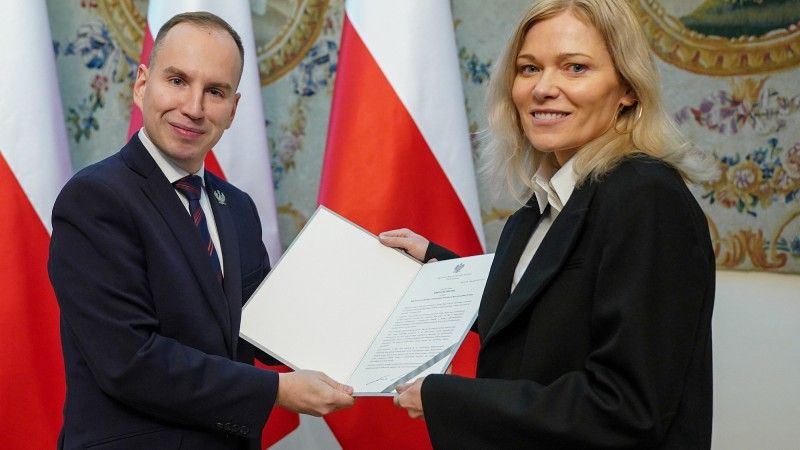
Photo. KPRP/Twitter
Artificial intelligence is no longer an add-on to NATO defence planning. It is becoming one of the key components of command, intelligence, cyber defence, information warfare, interoperability, and future military advantage. In an interview with Dr Aleksander Olech, Dr Karolina Grenda of the SET Foundation argues that Poland has strategic, operational, and political grounds to seek the establishment of a NATO Centre for Artificial Intelligence on its territory.
NATO treats artificial intelligence as one of the most important emerging and disruptive technologies, yet the Alliance still does not have a separate Centre of Excellence dedicated exclusively to AI. Existing centres deal with command, cybersecurity, or strategic communications, but none of them is comprehensively responsible for AI as a horizontal technology: doctrine, testing, certification, interoperability, battlefield lessons, and digital sovereignty. For Poland, this represents an opportunity. As an eastern-flank state, one of the leaders in defence spending, and a country with direct access to Ukraine’s wartime experience, Poland can offer NATO more than a technological proposal: an AI centre rooted in real operational lessons from Russia’s war against Ukraine.
Aleksander Olech, PhD: Why does NATO need a separate Centre of Excellence for Artificial Intelligence today, rather than dispersing this issue among existing structures?
Dr Karolina Grenda: Because AI has ceased to be a topic addressed „on the side”. NATO lists artificial intelligence first among its nine priority emerging and disruptive technologies, which is also strongly emphasised in the Alliance’s AI strategies—the 2021 strategy and the revised 2024 version. Meanwhile, none of NATO’s 30 accredited Centres of Excellence has AI as its principal mandate. The Command and Control COE in Utrecht approaches AI solely through the lens of command support, the CCDCOE in Tallinn through the lens of cybersecurity, and the STRATCOM COE in Riga through the lens of cognitive warfare. This fragmentation means that no one in the Alliance is comprehensively responsible for doctrine, testing standards, certification, or interoperability of AI systems as such. A dedicated centre would not duplicate this work; it would integrate it. This is a horizontal approach to the issue.
What specific gap in the Alliance would a NATO AI COE fill — doctrinal, technological, operational, or certification-related?
In fact, all four at once — and that is the essence of the case for establishing it. Doctrinally, NATO still does not have a coherent set of doctrines for the military use of AI, even though the six principles for the responsible use of AI — lawfulness, accountability, explainability, reliability, governability, and bias mitigation — were adopted as early as 2021. In certification and technological terms, the revised 2024 strategy explicitly points to the need to build a testing, evaluation, verification, and validation ecosystem, or TEV&V, and today there is no single institutional addressee for it. Operationally, a platform is needed to collect and systematise combat experience with the use of AI, which NATO as a whole does not yet possess in a formalised form. Finally, there is the issue of control over AI models used by the Alliance — so-called digital sovereignty — because today there is no institution responsible for developing NATO’s own models, independent of commercial providers from outside the Alliance.
See also 

Why should Poland host such a centre? What is our strongest argument vis-à-vis our allies?
The strongest argument is the combination of four factors that together create a unique profile. First, exceptional intellectual capital, evidenced by Polish teams that have for years ranked among the leaders in Locked Shields, the world’s largest cyber-defence exercise organised by the CCDCOE, or that have won NATO ACT’s TIDE Hackathon. Poland has also for years been a leader among EU countries in the International Mathematical Olympiad. Second, the highest defence spending in all of NATO — 4.3% of GDP in 2025, or approximately EUR 38 billion — which is a signal of political and financial credibility for the role of Framework Nation. Third, existing experience in running centres: Poland hosts the NATO Counter-Intelligence COE in Kraków and the Military Police COE in Bydgoszcz, so it knows how to carry such a project organisationally. Fourth, its location on the eastern flank. No other country combines all four of these elements at once.
How can the experience of the eastern flank, the war in Ukraine, cyberattacks, drones, and disinformation be translated into real competencies for such a centre?
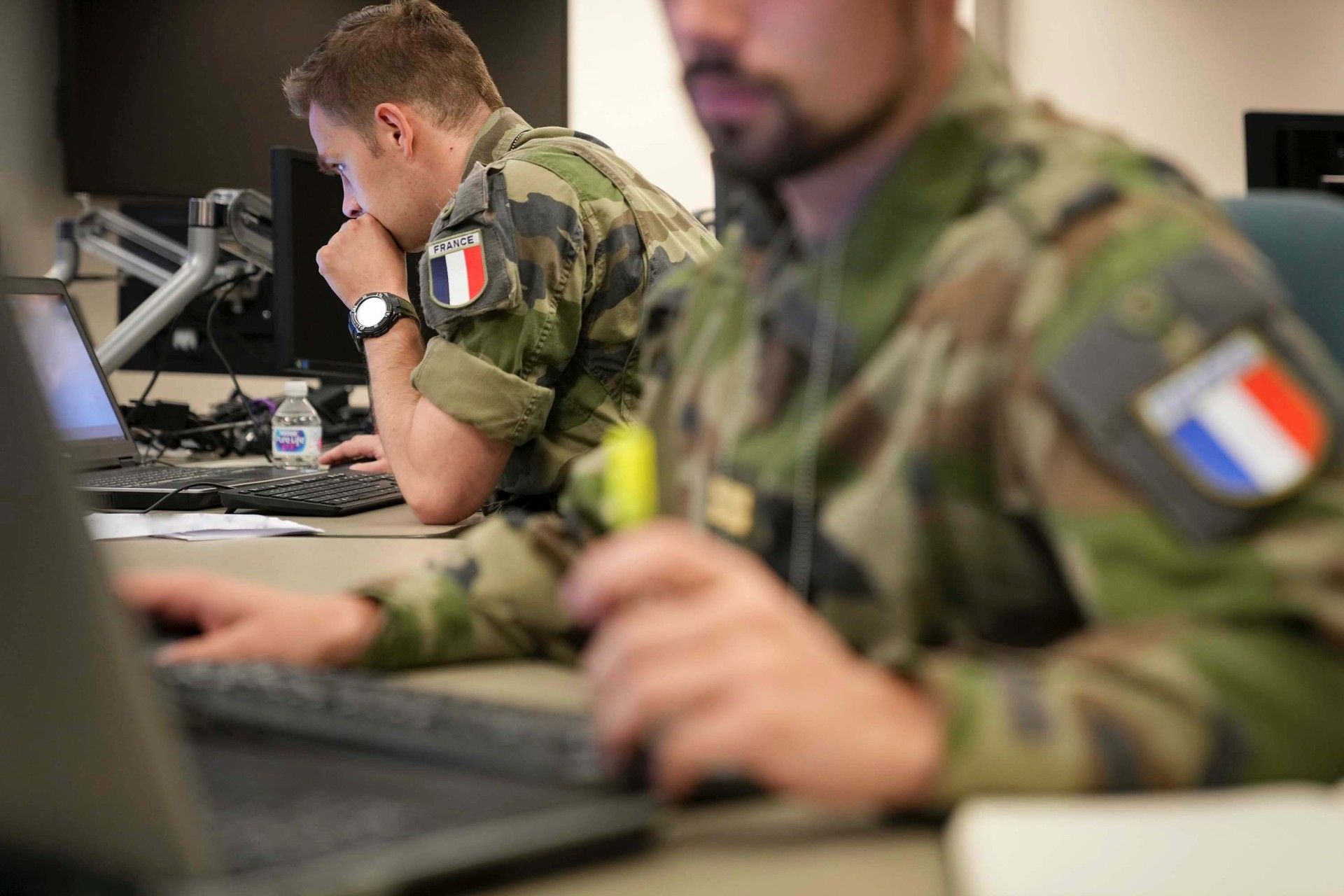
This is, in fact, a value proposition that Western Europe cannot offer. Poland has almost real-time access to Ukrainian combat experience involving the use of AI — drones with AI-based navigation, image-recognition systems supporting target acquisition, and algorithmic command-support systems — through direct channels of contact: personal, diplomatic, and military. Added to this is Poland’s own direct experience as a target of automated, AI-based influence operations, disinformation, and reconnaissance of vulnerabilities in security systems conducted by Russia, Belarus, and China. Polish specialists provided real support to Ukraine in 2022–2023 in building information resilience against such operations. All of this translates into concrete competencies that a Centre of Excellence located in Poland would bring to the Alliance as a whole: analysis of operational lessons from a real algorithmic battlefield, development of methods for detecting vulnerabilities in AI systems, and methods for neutralising hostile applications of this technology — in other words, exactly what NATO’s current structure lacks.
France also aspires to host a NATO AI COE. What is Poland’s advantage, and where might the French be stronger?
Information available in the public domain indicates that France is currently at a more advanced procedural stage. It is proposing a centre in Rennes, based on the military digital infrastructure already present there, and in theory it could be approved in the coming months. This picture emerges especially from French media. However, this question should not be decided in terms of a race between two capitals, but in terms of which institutional solution would best serve the Alliance itself. From this perspective, the difference between the proposals is clear. The French concept has one real advantage: it is further along in the procedure and could perhaps be formally approved relatively quickly. Yet it has a significant substantive weakness, because the scope of the mandate the French wish to give it largely overlaps with the tasks of existing centres dealing with command or cybersecurity. For NATO, this means a risk of duplicating competencies and blurring responsibility in a structure that already includes 30 specialised centres. As the Alliance implements the Rapid Adoption Action Plan, it needs institutional precision today, not another layer of overlapping mandates.
The value Poland brings is of a different kind and should be based both on the aforementioned strategic advantages of our country and on a precisely defined mandate for the centre, focused on AI technology as such — without encroaching on the competencies of other COEs. It is worth emphasising once again that the case for locating the centre in Poland must certainly rest on unique, current operational knowledge from the battlefield, resulting from direct proximity to Ukraine and the experience of the Alliance’s eastern flank. It is precisely this kind of knowledge — about how AI systems actually perform and fail in a real conflict — that is difficult for NATO to replace and difficult to develop anywhere else in the Alliance.
It is also worth remembering that alongside the Framework Nation — the state that assumes conceptual and organisational responsibility — each centre brings together Sponsoring Nations, meaning states that provide funding and personnel, and Contributing Partners, which may include NATO partner countries, meaning states that support the Centre in other ways. Countries also regularly combine competencies within a single structure, as Poland currently does with Slovakia in the CI COE in Kraków. French experience in digitalisation certainly has real value. The question is therefore not whether France has something to offer, but in what structure those competencies would bring the greatest benefit to the Alliance. The answer best suited to NATO’s actual needs appears to be a centre built around a precise Polish mandate and the operational experience of the eastern flank, with France as a valued partner contributing its technological expertise to that structure.
See also

What must Poland do politically and diplomatically to ensure this initiative does not remain merely an expert proposal, but becomes a real offer to NATO?
Four concrete steps are needed. First, Poland must identify a real location and institutional concept — preferably in a well-connected academic city with a strong technological base, close to the scientific community, cybersecurity circles, and the Polish Armed Forces. Second, it must build a coalition of Sponsoring Nations, in my view primarily by consulting eastern-flank states, including the Bucharest Nine, as well as the United States and the United Kingdom as key investors in military AI. Third, it must precisely define the centre’s mission so that it directly corresponds to the priorities of NATO’s revised 2024 AI Strategy. Fourth, it must formally submit an offer to assume the role of Framework Nation to the Chair of the Military Committee, which launches the official accreditation procedure. First, however, we must demonstrate strong conviction and political will to build such a centre in our country.
What concrete benefits would Poland gain from hosting the NATO AI COE, apart from prestige? Are we talking about real influence over doctrine, standards, and the Alliance’s future capabilities?
Yes, and this is crucial: prestige is a by-product, not the objective. The host country of an Allied Centre of Excellence begins to be perceived — and naturally becomes — the Alliance’s competence base in the field in which it assumes the role of Framework Nation for a specific NATO COE. This means it has a real influence on how the entire Alliance thinks about a given domain, how it shapes doctrine, testing and certification standards, and rules for the interoperability of AI systems among allies. Polish concepts and solutions, Polish methodology, and Polish experts would therefore enter the very process that is only now taking shape. Instead of adapting ready-made standards developed elsewhere, the Framework Nation co-creates those standards. There is also the question of Allied digital sovereignty — that is, legal and technical control over AI models developed for NATO — which would strengthen the position of both Poland and the Alliance as a whole vis-à-vis commercial providers. In practical terms, this would also mean an inflow of experts, Sponsoring Nations’ budgets, links with DIANA and the NATO Innovation Fund, and a natural development impulse for Poland’s AI ecosystem, technical universities, and defence industry.
What will be the most important test for this initiative in the coming months: a political decision in Warsaw, a coalition of allies, financing, or a formal offer to NATO ACT? Will President Nawrocki work together with Prime Minister Tusk to convince NATO and France?
All four elements must come together within a short period of time, but as I have already mentioned, the political decision in Warsaw is the preliminary and necessary condition, because without it there is neither a coalition nor a formal offer. The NATO summit in Ankara will be an excellent opportunity to build support for the Polish proposal — not only through the formal proceedings themselves, but also through all the bilateral and multilateral meetings at various levels that always accompany a summit.
As for cooperation between centres of power, an initiative of this importance — comparable to what Estonia did after 2007 with the CCDCOE — of course requires Poland to speak with one voice to its allies, because a lack of coherence may be interpreted as a signal of insufficient determination. I cannot predict how cooperation on this project will develop, but I am convinced that Poland is the best candidate to host the NATO AI COE. Such a decision would be beneficial in the long term both for our country and for the Alliance as a whole, and it is worth pursuing with full determination.
See also
What role would Polish universities and the private sector play in this project?
A key one. NATO’s 2024 AI Strategy explicitly assumes cooperation between centres of competence, industry, academia, and partners from outside the traditional defence sector, and Poland has a base in this area that many candidates do not. On the military education side, a key role would be played by the Military University of Technology in Warsaw and the Polish Naval Academy in Gdynia — institutions with a long tradition of educating personnel for defence needs in the fields of science and computer science. On the civilian side, Poland has strong technological centres such as the Warsaw University of Technology and AGH University of Kraków, whose graduates have for years helped build the success of global companies working on artificial intelligence, including OpenAI, ElevenLabs, and DeepL.
On the industrial side, the centre would have an equally strong foundation. Poland is dynamically expanding its own computing-power resources, which is a prerequisite for conducting any extensive research and development work on AI. The national defence sector, developing in parallel with the highest defence spending in NATO, is becoming a natural industrial partner for the centre — both as a recipient of the standards and doctrines developed there and as a supplier of solutions subject to testing and certification within the future TEV&V ecosystem. Added to this is a growing domestic ecosystem of technology and AI companies that could be incorporated into the centre’s work on principles similar to DIANA’s cooperation with the private sector — namely, technology transfer between business and Alliance structures, explicitly envisaged in NATO’s 2024 AI Strategy.
Finally, there are hard data showing the maturity of the Polish market and society: nearly 70% of Poles regularly use AI tools — the highest result in Central and Eastern Europe, comparable to or higher than in the United States and Germany — while research by the SET Foundation shows that 85% of Polish lawyers are already within AI’s orbit, either implementing it in professional practice or planning implementation within a year. This shows that the centre would have not only institutional, scientific, and industrial foundations, but also a social one. Poland would not have to build a culture of AI adoption from scratch; it could use it as an existing foundation for training, research, and expert activity on behalf of the entire Alliance.
Thank you for this conversation.


