












Returning Soldiers and the Surge of Violent Crime in Russia

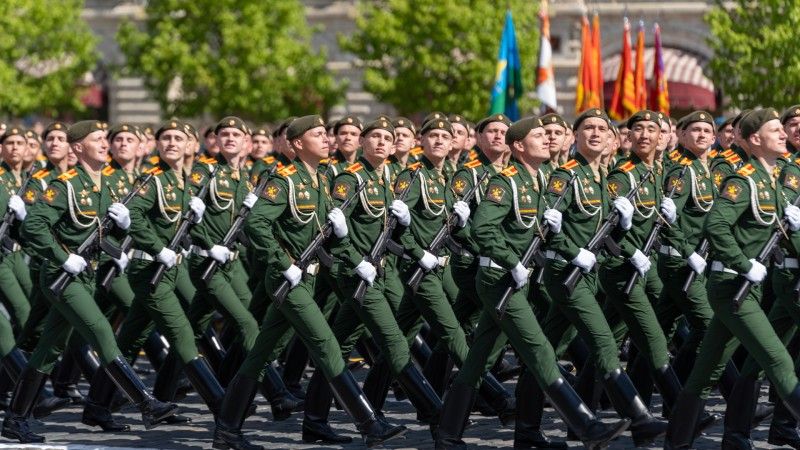
Photo. Мацква.ру - praca własna, CC BY-SA 4.0, commons.wikimedia.org
Russia is facing a sharp rise in violent crime – a stark „boomerang effect” of its war in Ukraine. Returning soldiers, unaddressed trauma, and the spread of illegal weapons are fuelling a dangerous trend with growing implications for internal security.
In the first half of 2025, Russian authorities recorded 333,251 serious and particularly serious crimes – the highest figure in fifteen years and a 10.4% increase compared to the same period in 2024. Compared to pre-war figures, the rise is even more striking: up 12.7% from the first half of 2021 and a staggering 32.3% higher than in 2019. The most affected regions are the Central Federal District (over 79,000 cases) and the Volga District (nearly 58,000), with Moscow and the surrounding region alone accounting for nearly 43,500 serious crimes.
While total crime numbers are gradually falling – reaching a 16-year low of 940,500 in early 2025 – the category of the most violent offences continues to climb. In 2024 alone, 617,301 serious or particularly serious crimes were registered – the highest number since 2010. Between 2010 and 2018, these figures had steadily declined, but the trend reversed around the time of the full-scale invasion of Ukraine.
A growing number of violent incidents have been linked to returning veterans from Ukraine. An independent investigation by the Verstka portal found that since February 2022, Russian soldiers and officers have been connected to at least 750 fatal or near-fatal incidents. These include at least 166 homicides and 112 cases of grievous bodily harm resulting in death. Most of these crimes occur within domestic or local communities and are often fuelled by alcohol abuse.
Although the Ministry of Internal Affairs (MVD) claims overall crime fell by 1.8%, it acknowledged that serious offences increased by 4.8%. Tellingly, for the first time in many years, the number of murder victims was removed from public statistics.
Analysts at The Jamestown Foundation link the crime surge to the return of convicts recruited into the military in exchange for amnesty. According toNovaya Gazeta Europe, over 1,130 veterans have been charged with crimes since the start of the war, ranging from minor offences to murder. In around two-thirds of these court cases, the defendants« military service was treated as a mitigating factor – a practice enabled by Article 80.2 of the Russian Criminal Code, introduced in March 2024. This law allows prosecutors to drop charges if a person signs a military contract during mobilisation.
Another dimension of the crisis involves the mental health of returning troops. According to Deputy Defence Minister Anna Tsivileva, around 20% suffer from PTSD, but Russia’s healthcare system lacks enough psychologists to cope. Professor Mark Galeotti, writing for the Global Initiative Against Transnational Organized Crime (GI-TOC), estimates up to 250,000 veterans may be affected.
This has led to what some experts are calling the ”Wagnerisation” of Russia’s underworld. Organised crime groups are recruiting former soldiers as contract killers or bodyguards, prompting rivals to do the same and escalating a criminal arms race. Similar patterns followed the Soviet withdrawal from Afghanistan, when veterans helped swell the ranks of criminal gangs. So-called „khaki gangs” made up entirely of ex-soldiers are now emerging and clashing with established groups, intensifying violence and illegal arms build-ups.
The flow of illegal weapons is accelerating. Azerbaijani outletCaliber.Az reported that in just May and June 2025, Russia’s FSB dismantled 157 arms trafficking rings across 51 regions and closed 62 underground weapons factories, seizing grenade launchers and 140 kg of explosives. The GI-TOC report warns that post-war weapons and military skills could feed criminal networks from Europe to Africa. Notably, the main source of illegal arms is not military theft, but ”trophies” smuggled from the battlefield, often sent home via post or personal luggage. A jurisdictional struggle between the FSB and Rosgvardiya over civilian arms control has created what GI-TOC describes as a ”bureaucratic black hole”, ideal for traffickers.
Meanwhile, Russian authorities claim that 57% of 137,000 demobilised soldiers had found employment by 1 May 2025. But according to Radio Svoboda’sSever.Realii project, most jobs are in security or manual labour, paying just 40,000–60,000 roubles a month – insufficient to address addiction or reintegration issues. The Defenders of the Fatherland Fund absorbs 10–19 billion roubles annually, yet fails to tackle these core problems.
Even senior security officials are sounding the alarm. Former Interior Minister Anatoly Kulikov warned viaLenta.ru that after the military operation ends, Russia could face a serious wave of crime from demobilised soldiers, including convicts-turned-combatants. Drawing on the post-WWII Soviet experience, he highlighted the rise of „banditry” among returning conscripts – a pattern Russian law enforcement must be prepared to counter.
The risks extend beyond Russia’s borders. AGuardian report, citing Europol, notes that the Kremlin is already leveraging criminal networks for sabotage and cyberattacks in the EU, with battle-hardened ex-convicts becoming key assets in hybrid warfare.
If, as GI-TOC warns, Russia fails to implement large-scale rehabilitation and weapons control programmes, and continues to soften sentences under Article 80.2, it could face an internal security crisis even greater than after Afghanistan or Chechnya. Without a real plan for disarmament, demobilisation, and reintegration, Russia risks descending into a cycle of violence with consequences both at home and abroad — the full scale of which remains unpredictable.
Author: Adam Jawor


