- WIADOMOŚCI
- ANALIZA
Rome over Paris? Merz and Meloni forge a new EU power axis

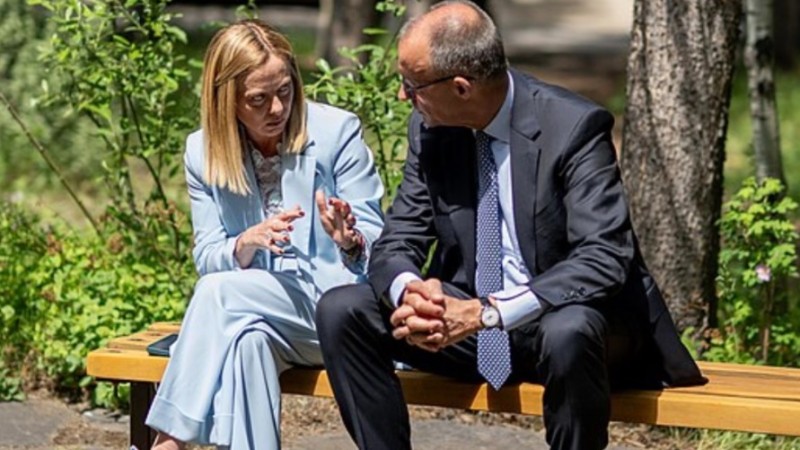
Is the EU’s traditional power center shifting south? With Paris paralyzed by gridlock, Chancellor Friedrich Merz is pivoting away from the Elysée toward a new, pragmatic partner: Giorgia Meloni.
As the Franco-German engine stalls over the Mercosur trade deal and defense disputes, Berlin and Rome are forging a new axis defined by aggressive deregulation, military integration, and a unified front to safeguard transatlantic relations in the Trump era.
Leading a delegation of ten ministers to the German-Italian government consultations in Rome, Merz unveiled a joint competitiveness paper. Echoing his recent Davos call for an „emergency brake” on bureaucracy, the document targets the integration of energy, capital markets, and digital industries to dismantle internal barriers that the IMF equates to tariffs as high as 44% on goods and over 110% on services. The two leaders also pledged closer cooperation on microchips and critical raw materials, explicitly aiming to prevent China from dictating global prices.
Trade policy exposes a deepening fault line with Paris. While President Macron vows to maintain France’s opposition to the EU–Mercosur deal amid persistent farmer protests, Chancellor Merz pushes for the agreement’s provisional application, noting Italy’s eventual green light for the treaty.

Defense presents a similar picture of divergence. The flagship €100bn Franco-German Future Combat Air System (FCAS) remains bogged down in disputes between Airbus and Dassault over workshare and technology rights. Conversely, Rome and Berlin used the summit to highlight bilateral momentum, showcasing the Leonardo-Rheinmetall joint venture and agreeing to expand both joint armament initiatives and military exercises.
From Berlin’s perspective, Rome increasingly looks like the more pragmatic and predictable partner. Both Merz and Meloni position themselves as right-leaning Atlanticists, prioritizing de-escalation in the wake of President Trump’s recent Greenland-linked tariff threats. At Davos, Merz cautioned Europeans against writing off the transatlantic partnership too hastily, a sentiment echoed by Meloni, who affirmed Italy’s strong commitment to cooperation with Washington.
This alignment comes as a leadership vacuum opens at the EU’s political center. With President Macron term-limited and France bracing for a contentious succession battle in 2027, Meloni is keen to step into the breach. She has successfully normalized her faction’s foreign policy by anchoring it firmly within NATO and backing Ukraine, distancing herself from the pro-Russian sentiments that once lingered in parts of the Italian right. Merz, meanwhile, has hardened his rhetoric on migration and internal security in response to pressure from the AfD. This shift has created significant ideological overlap, making a Berlin-Rome axis easier to justify to domestic audiences.