












- WIADOMOŚCI
Russia builds new bases for 115,000 troops near NATO

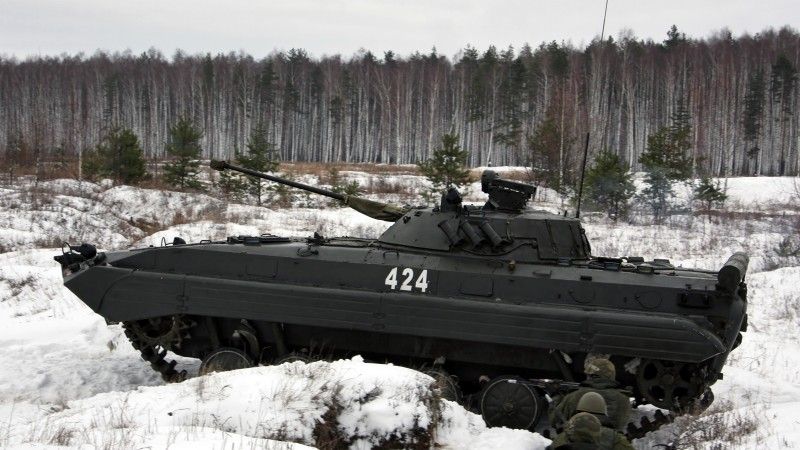
Russia is systematically strengthening its military presence on the border with NATO countries, building new bases and modernising existing units. The goal is to establish a powerful force of up to 115,000 soldiers following the conclusion of the war in Ukraine, according to an analysis of satellite imagery conducted by Scandinavian and Estonian media outlets.
Journalists from Sweden’s SVT, Denmark’s DR, Norway’s NRK, Estonia’s Delfi, and Finland’s Yle analysed comparative satellite images from 2024–2026. The photographs show new barracks, long rows of military vehicles, storage hangars, and infrastructure expansion in key locations.
According to former Finnish military intelligence officer Major (Res.) Marko Eklund, the objective is to prepare space for tens of thousands of soldiers. The most significant reinforcement concerns the border with Finland—the size of Russian ground forces there is expected to increase from approximately 20,000 to 80,000. Similar activities are observed along the border with Norway, in the Baltic states, and in the Kaliningrad Oblast, including in Baltiysk, where military vehicles have been amassed.

In Karelia, specifically in the Petrozavodsk region, Russia is building an entirely new military base, capable of housing 4,000–6,000 soldiers with the simultaneous potential for expansion to approximately 15,000, including supporting units. Dozens of buildings are being constructed there, including multi-storey barracks. Eklund emphasises that Karelia was previously a “military wasteland” in terms of ground forces.
Furthermore, it was noted that Russia may be capable of deploying hundreds of thousands of experienced soldiers from other parts of the country within a few weeks. The Swedish Military Intelligence and Security Service Militära underrättelse- och säkerhetstjänsten – MUST) estimates that the total strength of the Russian Armed Forces stands at 1.5 million. Scandinavian media outlets add that Russian remilitarisation also involves a restructuring of the armed forces. The reform is based on a shift away from maintaining smaller combat groups in favour of large divisions, numbering up to approximately 10,000 soldiers. Additionally, the combat experience of the Russian army, including the utilisation of drones, presents a challenge.


