












- WIADOMOŚCI
Taliban government in Afghanistan gains ground amid shifting regional dynamics

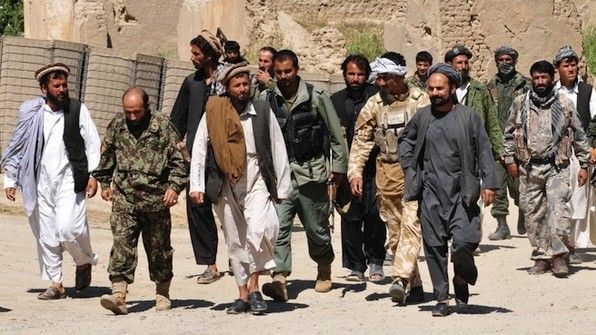
On October 10, 2025, New Delhi hosted Amir Khan Muttaqi, thede facto foreign minister of the Islamic Emirate of Afghanistan, a regime unrecognized by any country except Russia. Although India, too, does not formally acknowledge Taliban rule, External Minister S. Jaishankar welcomed Muttaqi with considerable protocol, announcing that diplomatic relations would soon be upgraded to the level of an embassy. The Taliban, adept at reading the geopolitical landscape, are skillfully leveraging regional tensions to secure a growing measure of international legitimacy.
The world watched on August 15, 2021, as the Taliban seized Kabul. Within days, their forces swept through Afghanistan virtually unopposed, entering the capital as President Ashraf Ghani fled to Dubai. Many diplomats, former regime officials, and citizens unwilling to live under radical Islamist rule were left behind. The two-week evacuation of civilians from Kabul airport became a tragic episode, marked by chaos and bloodshed, including a deadly attack that claimed nearly 200 lives.
In the following months, global media outlets were flooded with harrowing images and videos depicting persecution of those deemed „enemies” of the new authorities and the gradual erasure of women from public life. Yet the world’s attention quickly drifted elsewhere. With no realistic prospect of the old government’s return and the Taliban showing little interest in external aggression, the situation stabilized into uneasy acceptance. Six months later, Russia launched its invasion of Ukraine – a conflict whose scale and global repercussions far overshadowed Afghan affairs, pushing the mountainous nation to the margins of international attention for years to come.
Many embassies in Kabul continued operating as „technical missions,” staffed by diplomats accredited to the now-defunct Ghani administration. No country extended formal recognition to the Taliban, and in official parlance, Kabul’s rulers became known as thede facto authorities. This pragmatic tolerance endured for several years. Within Afghanistan, the Taliban consolidated their rule. Certain indicators, such as personal security, even showed improvement, though their governance remained steeped in rigid interpretations of Islamic law.
The international environment, however, began to shift. As the protracted war in Ukraine dragged on, a series of developments in the broader region began to raise Afghanistan’s strategic profile. Following the fall of Bashar al-Assad and the rise of HTS in Syria, Moscow started reconsidering its stance on Kabul. In July 2025, Russia became the first nation to formally recognize the Taliban government, breaking ranks with the international community that had, until then, maintained a united front of non-recognition. During his visit to Moscow, Muttaqi hailed the Russian move as „courageous.”
That diplomatic breach soon opened the way for others. Mounting tensions between India and Pakistan in early 2025, compounded by the earlier collapse of Bangladesh’s Sheikh Hasina government and unrest in Nepal, prompted New Delhi to re-evaluate its regional calculus. Historically, India has sought to use Afghanistan as a counterweight to Pakistan, and similar logic seems to be guiding its current policy. Meanwhile, relations between Kabul and Islamabad have deteriorated sharply, with frequent border skirmishes and Pakistani accusations that the Taliban are harboring Tehrik-i-Taliban Pakistan (TTP) militants.
Against this backdrop, Muttaqi’s visit to Delhi marked a symbolic breakthrough. Accompanied by Jaishankar, he projected warmth and confidence, addressing journalists in fluent Hindi – a move that impressed many and underscored the Taliban’s growing diplomatic sophistication. After initial criticism over a press event restricted to male reporters, a second, mixed-gender conference was hastily arranged (In India, the leading journalists covering Afghan affairs are, notably, women). India stopped short of formally recognizing the Taliban regime but announced plans to elevate its Kabul mission to full embassy status. India also pledged to continue its humanitarian and development projects in Afghanistan.
Moreover, Indian authorities allowed Muttaqi to visit Deoband, an important Islamic center in Northern India. This visit contained an indirect message to the Taliban, given the fact that Deoband actually promotes girls« right to education. On the other hand, the attendance of the meeting with Muttaqi in Deoband exceeded the expectations, more than 4,000 people showed up to listen to him.
The visit’s geopolitical after-effects were immediate. On the very day of Muttaqi’s arrival, an explosion rocked Kabul. The Afghan authorities blamed Pakistan on the blast. Days later, a deadly border clash further strained relations between the two neighbors.
For the Taliban, this evolving geopolitical environment presents both opportunity and leverage. With the world increasingly governed by transactional diplomacy, a trend reinforced also by the HTS in Syria, Kabul’s rulers appear ready to „trade” selective cooperation for international recognition. Unlike Russia, which remains almost entirely isolated from the West, India maintains an active dialogue with both the United States (see United States – India: „Tough Guys” in high-stakes negotiations and the European Union (see Negotiation of the EU–India free trade agreement, making New Delhi’s recognition particularly significant for the Taliban authorities in Kabul.


