- WIADOMOŚCI
- KOMENTARZ
Trump gives Putin 50 days to wage war and rebuild arms

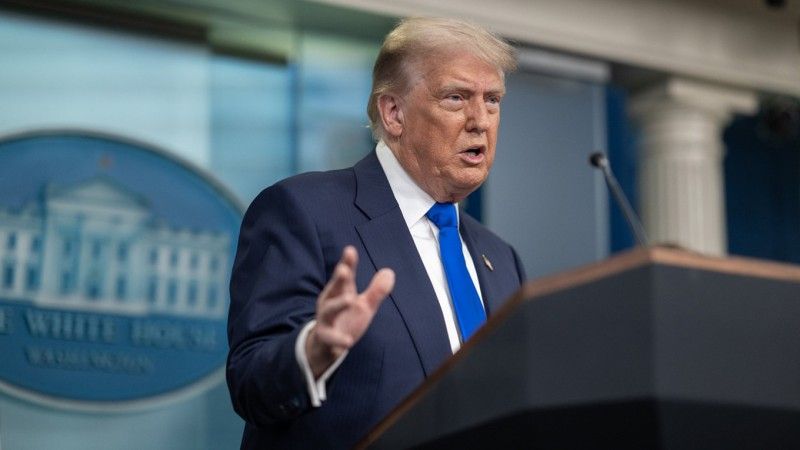
Donald Trump has issued a direct ultimatum: if Moscow and Kyiv don’t agree to a ceasefire within 50 days, the U.S. will impose 100% secondary tariffs—not only on Russia, but also on countries that continue to support its war economy through trade. Simultaneously, Trump announced a $10 billion weapons package for Ukraine, including Patriot air-defense systems and heavy artillery, to be delivered via NATO and financed largely by European allies. While this appears to be a hardening of Washington’s posture toward Moscow, many see it as a dangerous delay. Critics argue the ultimatum provides Putin with nearly two months of unrestricted military escalation and territorial consolidation. Meanwhile, markets in Moscow reacted positively—betting that enforcement is far from certain.
Donald Trump has reinserted himself forcefully into the debate over U.S. policy on Russia’s invasion of Ukraine, issuing a 50-day ultimatum: either the Kremlin agrees to a ceasefire, or the U.S. will slap 100% tariffs on Russian goods and target third-party nations continuing trade with Moscow. This includes what Trump referred to as „very severe” secondary sanctions. In practice, that could hit not only China, India, and Turkey—but also European Union member states still conducting certain types of commerce with Russia. Trump made it clear: „We are very unhappy with Russia,” criticizing ongoing missile attacks on Kyiv and accusing Putin of continuing „murderous” behavior even while engaging in diplomatic talks.
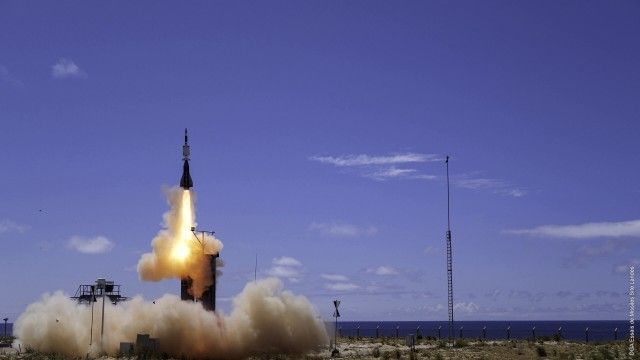
At the same time, Trump unveiled a massive $10 billion U.S. weapons package—what he framed as the „first wave of help”—that would be sold to NATO allies and ultimately delivered to Ukraine. This package includes Patriot missile systems, air-defense platforms, artillery shells, and long-range rockets. Trump stressed the urgency of distribution, pointing to 17 Patriot systems ready for deployment, stating that many of them „will end up in the war zone.” According to his statement, NATO will handle the logistics, and Europe will foot most of the bill.
However, this support package is not a donation. It is a sale—structured to move through NATO budgets and defense procurement channels. That distinction has sparked criticism, with some arguing that it delays delivery and makes aid contingent on bureaucratic steps that may not match the urgency of the battlefield.
The most controversial part of Trump’s announcement remains the 50-day deadline. Critics argue that such a timeline gives Putin a clear window of impunity. It is widely feared that in that time, Russia will intensify military offensives, solidify territorial gains in eastern Ukraine, and rebuild stockpiles—all without the threat of immediate consequences. Some analysts predict that Putin will wait until day 48 or 49 to signal interest in talks, thereby extending the window even further and exploiting diplomatic ambiguity.
That concern seems supported by the financial markets. Following Trump’s announcement, the Russian IRUS stock index jumped 2.73%, rising from 2,642.02 to 2,714.14 RUB. A sharp spike was recorded shortly after 17:00 local time—precisely when Trump’s statements became public. Investors, it seems, interpreted the announcement as a signal that no new sanctions would hit Russia in the near term, giving businesses time to maneuver and prepare.

Photo. IRUS
Trump’s defenders counter these concerns by emphasizing the complexity of imposing secondary sanctions. Unlike direct sanctions, these measures could provoke serious economic backlash from China, India, and even certain NATO countries. Trump’s 50-day buffer, they argue, is designed not for Putin, but for Washington—to allow the U.S. to coordinate burden-sharing and avoid taking unilateral economic damage. It also gives reluctant European partners a final window to align with Washington’s pressure campaign before being hit with tariff retaliation.
Nonetheless, for Ukraine, the cost of delay is measured in lives. Cities like Kyiv continue to be targeted by missiles. Casualties mount. Russia pushes forward on the front. Critics say the timing is a gift to Putin, allowing his military to regroup and reposition while Washington and Brussels prepare the legal groundwork for sanctions that may or may not be enforced.
This marks a political shift for Trump. Previously critical of aid to Ukraine, he now signals a willingness to act—through military support and economic leverage. But many wonder if this is a tactical shift or a strategic one. If, after 50 days, Russia hasn’t changed course and Trump fails to act decisively, the credibility of his threat will collapse. Worse, the perception may grow that he gave Putin not just time, but permission to escalate.
The final outcome depends on two factors: the speed of weapons delivery, and the actual implementation of tariffs. If both are delivered firmly and on time, this could be the strongest response yet to Russian aggression. If not, it will be remembered as the moment when Trump handed Putin 50 days—days that will be measured not in words, but in blood, territory, and destruction.