- KOMENTARZ
- WIADOMOŚCI
Two battalions “destroyed”? The truth about NATO’s exercise

Reports that Ukrainian drone operators wiped out two NATO battalions sound dramatic, but the Estonian exercise revealed something far more important — not defeat, but how quickly warfare is changing and how slowly large armies adapt.
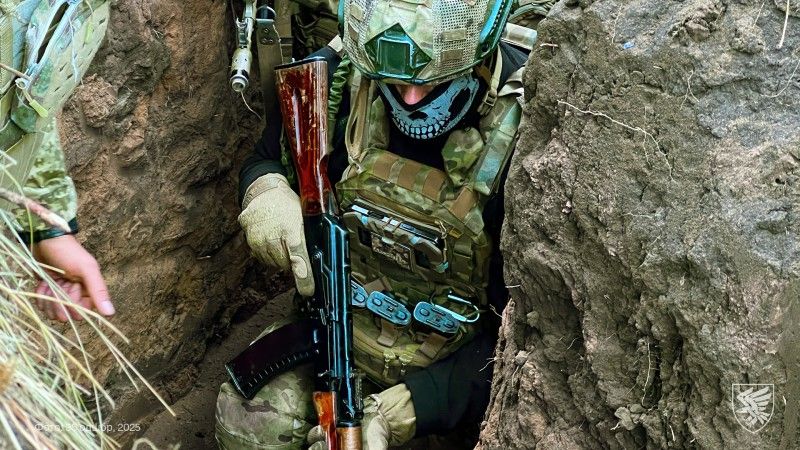
Large-scale manoeuvres Hedgehog-2025 were conducted in Estonia with the participation of more than 16,000 soldiers from 12 NATO countries. The scenarios were intended to reflect a „crowded and contested” battlefield, where information pressure and speed of decision-making play a decisive role. Ukrainian personnel with combat experience also took part, using the battlefield management system „Delta”, which gathers reconnaissance data in real time, analyses targets and coordinates strikes, significantly shortening the time between detection and attack.
One of the exercise episodes revealed the scale of the problem. A large NATO grouping, including a British brigade and Estonian units, operated as if full battlefield transparency did not exist. Units moved without sufficient concealment and deployed vehicles and equipment in easily detectable positions. A team of roughly ten operators was able within half a day to simulate the destruction of 17 armoured vehicles and conduct around 30 additional strikes, while more than 30 drones operated on an area smaller than 10 km². In the assessment of the exercise, two battalions were declared combat-ineffective.

The conclusion should be interpreted carefully. The exercise did not represent a real battle, and simulated drone hits were treated as successful engagements for training purposes. The aim was to test procedures and resilience to mass drone use rather than defeat NATO forces. The results nevertheless showed how transparent the modern battlefield has become and how vulnerable concentrated formations are without dispersion, camouflage and rapid exchange of information.
Another problem identified was the speed of decision-making. Ukrainian forces share operational data quickly between command and subordinate units, accelerating strikes. In several Allied militaries the tendency to restrict access to sensitive information slows reactions and complicates coordination. Estonian officers described the results as alarming, while observers stressed that recognising the problem is only the first step; doctrinal changes, training adjustments and procurement decisions must follow.
The broader lesson is not that drones alone win wars, but that they significantly alter tempo and organisation of combat. Even well-equipped armies may encounter serious difficulties if structures, doctrine and training remain aligned with earlier models of warfare.