- KOMENTARZ
- WIADOMOŚCI
- WAŻNE
Two speeches at the Bayerischer Hof: What's next?

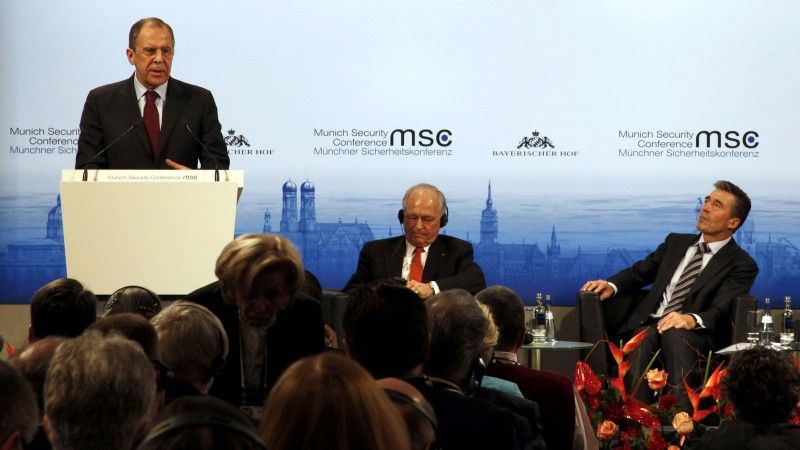
The Munich Security Conference has long been known for its influential policy statements and side meetings that leave a lasting mark. However, this year the event generated more excitement than usual, with two speeches—one by German Chancellor Friedrich Merz and another by U.S. Secretary of State Marco Rubio—presenting opposing visions for the future of transatlantic relations.
Merz declared that we are ending an era in transatlantic relations as we knew it, emphasizing that the United States« role as a global leader is „lost.” Rubio, on the other hand, highlighted the ongoing importance of the transatlantic bond but argued that it depends on changes in how allies work together and share the burden of deterrence and defense, as well as how they view our shared Western cultural connection. These two speeches presented a clear choice, and whether Merz or Rubio’s vision ultimately prevails will shape the future of transatlantic relations and collective defense in the West and beyond.
In essence, the two speeches offered clear and sometimes unsettling insights into what might lie ahead for NATO and transatlantic relations overall. Merz discussed how the United States and Europe are drifting apart, noting a widening gap in their relationship. He described NATO as still being central to security and defense, highlighting areas of agreement and disagreement—particularly as the old „rules-based international order” fades from view. Referencing this year’s MSC motto, Merz said that this order no longer exists and that Europe faces a world of hard power and influence it once believed it had left behind. He addressed Russia’s aggression against Ukraine but emphasized China, suggesting it might soon match the U.S. militarily and challenge American leadership globally. When he pointed out that Europe’s GDP is ten times larger than Russia’s, he underscored that economic size does not necessarily translate to strength. Unless Europe reallocates significant resources to defense and develops credible capabilities, nominal GDP figures will matter little in the end. Merz reaffirmed Berlin’s commitment to „lead in partnership with allies and partners,” and, referencing Vice President J.D. Vance’s Munich speech from a year earlier, he outlined, step by step, the various ways in which Europe differs from the United States. The tone was clear—a signal of a possible final break with America down the line, even as the Chancellor still spoke of finding common ground and preserving the alliance. What made the Merz speech troubling was the same tone that has characterized speeches by European politicians for years—being heavily rhetorical and filled with normative language, as if the killing fields of Ukraine were, yet again, somewhere „out there” and not at the doorstep of the alliance, and the continent could somehow segment the map of Europe into separate geopolitical spaces.
Rubio’s speech was notably different in tone — somewhat calming for the audience as he discussed Europe’s and America’s shared heritage, but also brutally honest about what Washington expects from allies to restore deterrence and defend the North Atlantic community. He again challenged Europeans to fully fund their defenses and end their holiday from history. He didn’t apologize for the friction that marked the past year but offered a chance to collaborate across the Atlantic for mutual security. While well-received in the main hall, Rubio’s remarks were privately criticized for their MAGA undertones and alleged dog whistles to European nationalists when he said history shouldn’t become a shackle on state action. Most importantly, the Rubio speech was clear in signaling that the Trump administration would not change its geostrategic priorities and that America’s primary focus is now elsewhere: in its own hemisphere and in Asia. Where Merz spoke of values, Rubio spoke of national interest and branded the belief in international trade and institutions, and offshoring manufacturing as a pathway to a new stable world, a dangerous delusion. He also directly attacked what he called the „climate cult” that impoverishes nations, and pointed to mass migration as threatening the cohesion of the West. The key message of Rubio’s speech was that America could move forward alone, but its preference was to do it with Europe, in the spirit of shared history, Christian faith, and common heritage. Rubio asserted that America was defending a civilization that, while reflected in institutions, was contained in strong nations.
The annual meeting at Bayerischer Hof is always marked by ceremony and networking, but the speeches by Merz and Rubio have overshadowed its usual atmosphere. They emphasized the key question of whether Europe and America can unite not only around military cooperation and the restoration of their industrial strength but also around a broader transatlantic consensus on the future of the transatlantic community. The two speeches presented different visions of how that path might develop and whether the actions taken by American and European allies will align or diverge, leading them in separate directions. They showed that the room for a negotiated compromise between the two approaches continues to shrink as positions on both sides of the Atlantic become more solidified. Most notably, the Merz speech raised the question of whether Germany now represents Europe and can enforce its will on other EU members, or if the course set by the Chancellor at Munich will deepen divisions across the continent and potentially create a rift for which the EU’s institutional framework is ill-prepared.
Andrew A. Michta is Professor of Strategic Studies at the Hamilton School at the University of Florida and a Nonresident Senior Fellow at the Atlantic Council in Washington, D.C.Views expressed here are his own.