












- WIADOMOŚCI
Ukraine dismantles anti-corruption system

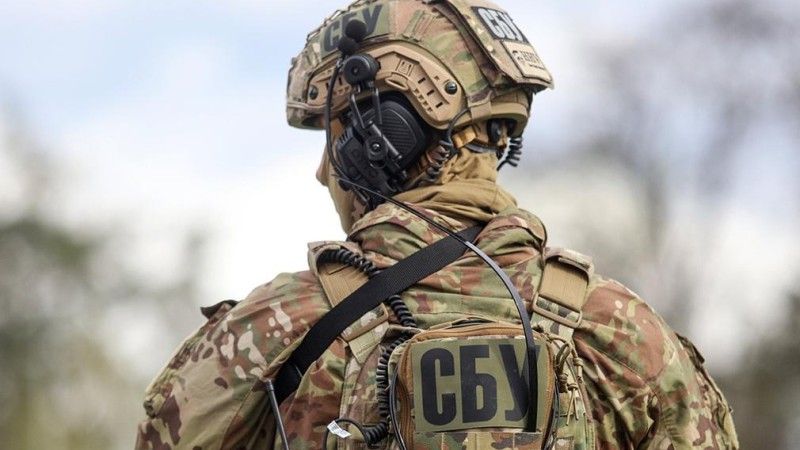
Photo. СБ України (@ServiceSsu)/X
When, in 2014, in response to public demands following the Euromaidan revolution, Ukraine established the National Anti-Corruption Bureau (NABU) and the Specialised Anti-Corruption Prosecutor’s Office (SAPO), it was a symbol of genuine reform. These institutions were meant to serve as the foundations of state transparency, a tool for independently prosecuting political elites, and a safeguard against the return of an era where corruption was the only constant in Ukrainian politics. Now, that legacy has been severely undermined.
The Verkhovna Rada has passed Bill No. 12414 — and President Volodymyr Zelensky has signed it into law — effectively placing NABU and SAPO under the authority of the Prosecutor General’s Office, dismantling their independence and striking a major blow to hopes for a democratic rule-of-law state.
The bill was passed with extraordinary haste — without broad consultation, without genuine debate, and almost silently. The speed of the legislative process even caught seasoned observers of Ukrainian politics off guard. As MP Yaroslav Zhelezniak pointed out, such fast-tracked proceedings had not been seen for years. The urgency was deliberate — a move to push the law through before public or international pressure could mount.
With this decision, Ukraine returns to conditions resembling those of 2012 — when the Prosecutor General had sweeping control over law enforcement agencies and institutional independence existed largely in name only. The new legislation allows current Prosecutor General Ruslan Kravchenko to issue binding instructions to NABU, reassign cases to other bodies, and appoint new prosecutors to oversee key investigations. In practice, this means any anti-corruption case can now be redirected, frozen, or silenced. The system ceases to be independent — and becomes politically steerable once again.
Many civil society leaders have no doubt this is a destructive step. NABU Director Semen Kryvonos was unambiguous, stating directly that the country’s anti-corruption infrastructure was dismantled by the votes of 263 MPs. This is more than a legislative change — it is a political reversal of reforms, raising fundamental questions about the path Ukraine is taking amidst war and crisis.
Supporters of the bill justify it by pointing to the need to counter Russian infiltration of NABU. In recent weeks, Ukraine’s Security Service (SBU) detained several bureau employees accused of espionage for Russia. Among them was detective Ruslan Mahamedrasulov, who allegedly maintained contact with representatives of the aggressor state, and Viktor Husarov, a member of NABU’s elite unit, who, according to the SBU, passed data to Russian intelligence. But as Kryvonos rightly noted, betrayal and corruption also exist in other state institutions — including the SBU itself. Yet no one is talking about dismantling them.
More worryingly, the real motivation behind the new law may lie elsewhere. Hidden within Bill No. 12414 is a particularly disturbing provision: NABU and SAPO will no longer be permitted to investigate abuses in the defence sector. This is precisely the area that, depleted by the ongoing war with Russia, should be under the strictest oversight. Instead, we are witnessing the opposite — the removal of the only actor capable of holding the political elite accountable for actions harmful to the state. One must ask: are lawmakers more afraid of Russian agents — or of their own scandals?
The international consequences of this decision may be severe. Both the European Union and the International Monetary Fund have repeatedly made independent anti-corruption institutions a condition for financial support and further European integration. Those foundations are now being eroded. NABU and SAPO were symbolic pillars of Ukraine’s credibility in reform — without them, the country risks not only losing crucial funding, but also the trust of key partners, including the United States. The appeal made by NABU’s leadership to the EU, IMF, and the US administration is not accidental. It is a call for help at a moment when Ukraine’s own leadership appears to be turning away from the principles it once declared.

Recent developments are also a bitter lesson for Ukrainian civil society. Among the MPs who supported the bill were six graduates of the Ukrainian School of Political Studies — an institution that for years trained leaders committed to democracy and accountability. The School has since expelled them from its community, emphasising that there can be no compromise on fundamental values. This symbolic gesture is nonetheless significant: it demonstrates that in the face of betrayed principles, resolute action is needed — even against one’s own alumni.
Framing the bill as a „necessary wartime adjustment” is particularly dangerous. War does not justify abandoning the rule of law — in fact, democratic institutions must be especially protected during conflict, because that is when they are needed most. Without them, Ukraine becomes vulnerable not only to external aggression, but also to internal corruption — which, time and again, has weakened the state more effectively than any military strike.
Though the law has now been signed by the president, the decision has ignited fierce opposition. Civil society organisations, experts, and Ukraine’s international partners all stressed: this is a historic moment. Zelensky faced not just a political choice — but a test of his own credibility.
Social media has exploded. These are not anonymous trolls, but respected activists, journalists, and civic leaders. For the first time since the start of the war, mass protests are openly being planned outside the presidential office on Bankova Street. The accusations are clear: betrayal of Maidan values, disregard for European standards, an end to democracy. Citizens are calling for civil disobedience, government blockades, and public demonstrations. These are not the voices of isolated activists — they reflect the outrage of ordinary people who remember why NABU and SAPO were created.
For Zelensky, this may prove the most serious internal crisis of his presidency. With his signature, he risks being remembered as the one who, under the guise of fighting Russian infiltration, dismantled one of the state’s key pillars of justice. Had he vetoed the bill, he would have clashed with his inner circle and parts of the parliamentary coalition. In any case, it is clear that the president’s camp no longer fully controls public sentiment.
The irony is painful. Zelensky — the actor who became famous for playing a fictional president waging war against corruption — was elected to „clean up the country.” Today, his signature on Bill No. 12414 may bury that promise for good. For many voters, international observers, and civil society organisations, this marks a turning point: either Ukraine remains true to the values it proclaims — or it slides into an authoritarian charade.
”We’re not like our predecessors. If you see corruption in my team — report it to NABU. These were Volodymyr Zelensky’s words in 2019, as a presidential candidate. A simple, direct slogan — promising a new standard in politics. He was to be the face of an honest Ukraine — one that rejected its corrupt past and dared to hold its own government accountable.
This is not just a battle over NABU. It is a fight for the soul of a state that, for years, has struggled to emerge from the shadow of oligarchy, corruption, and impunity.
Author: Bartłomiej Wypartowicz


