












- ANALIZA
- WIADOMOŚCI
Zelensky will not run for re-election. Who will become Ukraine’s new president?

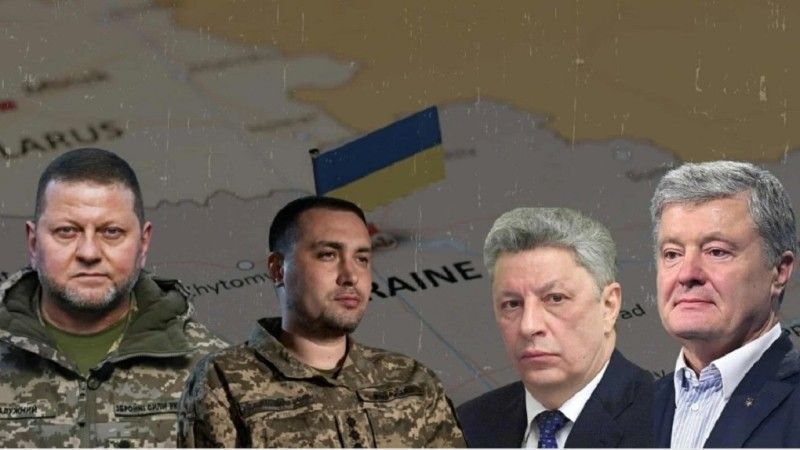
Ukrainian President Volodymyr Zelensky told Axios plainly that he does not see himself as a leader for peacetime and will not run for re-election. As he emphasized, his main goal is to end the war, not to cling to power.
“My goal is to end the war, not to continue running for office,” he said in response to a question about the future of his mission.
Although the official date for the next presidential elections was scheduled for 2024, martial law has completely blocked the possibility of holding them. The Ukrainian constitution clearly prohibits elections during wartime, and the logistics of running a vote under current conditions would be nearly impossible. Around 20 percent of the country’s territory remains under Russian occupation, millions of people have emigrated or been internally displaced, and the risk of missile strikes on critical infrastructure would make election day a military target.
Still, Zelensky suggested that a ceasefire could create a “window of opportunity” that would allow the electoral process to begin. But that would be only part of the problem. Even if elections were formally possible, questions arise: how to ensure voting for refugees, how to guarantee the safety of polling stations, how to prevent Russian provocations? Each of these elements would require international support, both logistical and financial.

A New Political Scene
Zelensky’s declaration that he will not seek another term has thrown Ukrainian politics into exceptional uncertainty. After years in which public life revolved around a single dominant figure, the question now is: who will succeed the president who has become, in the world’s eyes, a symbol of resistance to Russian aggression?
Valerii Zaluzhny

Photo. Генеральний штаб ЗСУ (@GeneralStaffUA)/X
General Valerii Zaluzhny, called by many the “iron general,” remains one of the most recognizable heroes of the war. His role in stopping the Russian offensive on Kyiv and his ability to adapt the Ukrainian army to NATO standards made him, for a long time, almost legendary.
Currently serving as an ambassador in the United Kingdom, he is gaining diplomatic experience that could be crucial if he decides to run. However, Zaluzhny still lacks his own party or an organized social movement. In the realities of Ukrainian elections, where party infrastructure, local structures and campaign financing are crucial, this could be a serious limitation. That said, it is possible a new political movement could coalesce around him, supported by civil society, war veterans, or young elites who want to break with prewar corrupt politics.
Kyrylo Budanov

Photo. Головне управління розвідки Міністерства оборони України/Wikimedia Commons/CC4.0
Another name stirring strong emotions is General Kyrylo Budanov, head of military intelligence. He is a figure shrouded in an aura of secrecy and decisiveness. His biography, full of spectacular sabotage operations on territory occupied by Russia, commands respect and sympathy from a large part of society. Budanov is seen as someone unafraid of taking risks and who could guarantee security during a difficult period of postwar reconstruction.
Yet the image of a “man of the services” carries risks. A Budanov presidency could mean the militarization of public life and a narrowing of space for free political debate. Moreover, like Zaluzhny, he currently lacks a broad political structure, though Budanov is more likely to rely on alliances with existing groups seeking a strong leader.

Oleksiy Arestovych

Oleksiy Arestovych was one of the most media-visible figures in the early months of the war. As a presidential adviser he became known for calm, matter-of-fact briefings that helped raise public morale. Many Ukrainians at the time perceived him as a voice of reason and a kind of “national psychotherapist.” However, his public career soon took another direction. Over time Arestovych began to lose credibility. He was repeatedly criticized for his repeated assurances every few weeks that the war would end “in two or three weeks.” Such predictions, which never materialized, became the subject of jokes and memes on the Ukrainian internet, and he gained a reputation for being out of touch with the realities of the front.
His position was further weakened by the fact that in 2023 he went abroad, which many citizens interpreted as leaving at the country’s most difficult moment. Nevertheless, Arestovych still has a core of loyal supporters who see him as an alternative to the “tired” political class. His strength remains his ease of communication and ability to craft a media narrative; however, his negative image among a large portion of the population—as someone unreliable and prone to populism—constitutes a serious barrier to building a credible presidential campaign.
Oleksiy Honcharenko

Oleksiy Honcharenko is among politicians who have managed to make a visible mark in recent years, though not always in an unambiguously positive way. On the one hand he presents himself as a consistent reformer and pro-Western politician; on the other, he does not shy away from behaviors or statements that provoke controversy.
Active in parliament for years, Honcharenko has built a reputation as a highly media-savvy politician. He is present online, keen to comment live on events, and reacts quickly to changing situations. This gives him an advantage over older politicians who still rely on traditional communication channels. His videos and social posts build an image of an energetic, tireless defender of Ukraine’s interests in Europe and the world.
But this direct style often turns into excess. Honcharenko is sometimes accused of populism, theatrical gestures and provocations that serve self-promotion more than substantive politics. His image is also affected by prewar associations—some remind of his past links to the Party of Regions, Viktor Yanukovych’s party, which is seen as pro-Russian. Although Honcharenko has for years presented himself as unequivocally pro-European and anti-Russian, his political opponents use past episodes to question the sincerity of his conversion. Thus, despite growing popularity, not everyone sees him as fully credible.
Honcharenko tries to counter these charges by highlighting his commitment to fighting Russian imperialism, his activity in international bodies and his consistent pro-Western stance. Compared with many “eternal politicians,” he brings dynamism and freshness that may appeal to younger voters; however, his path to becoming a presidential candidate still appears uncertain.
Andriy Biletsky

Andriy Biletsky is one of the most ambiguous figures in contemporary Ukraine. For some he symbolizes uncompromising resistance to Russian imperialism; for others he is a politician burdened by a radical past that could become his heaviest liability in postwar normalization.
Biletsky became known primarily as the founder and first commander of the Azov Regiment. The unit played a huge role in the defense of Mariupol and became a legend of Ukrainian resistance. The image of Azov fighters who defended the Azovstal plant for many weeks built an aura of heroism around Biletsky. In public consciousness he will always be associated with that formation—as a man who from the start prioritized determined resistance to Russia.
But the “Azov” pedigree also raises controversies. The formation was long accused, especially in Russian propaganda, of extreme nationalist and even neo-Nazi sympathies. Biletsky is reminded of past statements in which he used nationalist rhetoric. Although Azov has long been fully integrated into Ukraine’s armed forces, and Biletsky seeks to present himself as a more moderate politician, the “radical” label still clings to him.
Politically, Biletsky already tried his hand earlier—he founded the “National Corps” movement, which failed electorally. He lacked structures, funds and a broad social base. In postwar politics he could see a renaissance of support if society turns to candidates with frontline experience and a decidedly military background.
Biletsky’s advantage is his authority among veterans and young nationalists, who see him not as a politician but as a commander and ideologue of independence. His problem, however, is a limited ability to expand beyond that circle and win the trust of a broader electorate. In the West his candidacy could be viewed with caution, especially if political opponents invoke old accusations of radicalism.
Yuriy Boyko

Yuriy Boyko is a figure who for years personified pro-Russian politics in Ukraine. The former deputy prime minister and leader of the Opposition Platform — For Life party, which is now banned in Ukraine because of its pro-Russian nature and ties to Moscow, gained popularity among parts of the electorate in the eastern and southern regions. His strengths were a long presence in the political elite, experience in economic affairs, energy negotiations and administration, and a network of contacts both inside and outside the country.
Boyko is perceived by many Ukrainians as a symbol of pro-Russian politics, and his activities in recent years have been widely criticized by pro-Western media and analysts. However, he is a resilient and experienced politician. He knows how to operate in the Ukrainian party system, negotiate with oligarchs and maintain relations with regional leaders. His strong point is also predictability—in times of crisis voters attached to old structures might see in him a known and stable candidate.
Boyko’s greatest limitation remains public sentiment and the fact that his former party was banned. In many parts of the country, especially in western and central oblasts, his name provokes distrust and disapproval. In practice, while Boyko could play a role in parliamentary or regional coalitions, his real chances for the presidency in the current political climate are heavily limited. Nonetheless, his presence on the political scene could significantly affect campaign dynamics.
Dmytro Razumkov

Dmytro Razumkov, the former speaker of parliament, is a young politician who has gained experience working in government and the legislature. People see him as calm and reasonable—someone who could help rebuild the country after the war.
But Razumkov also has weaknesses. He is criticized for trying to make deals with everyone and sometimes losing credibility as a result. Conflicts with the Servant of the People party and the lack of a strong party base make it difficult for him to compete with better-known politicians and military figures.
He could attract support from urban voters and pro-European-minded people, but in a contest against war heroes or popular generals his chances are limited.
Denys Prokopenko

Denys Prokopenko became a symbol of the heroic defense of Mariupol. His image is primarily courage, steadfastness and authority among veterans. He could attract voters who value wartime experience and decisive leadership.
However, Prokopenko has no party and no political experience, and his popularity is mainly confined to military and patriotic circles. His challenge would be to turn a wartime legend into real, nationwide support and to build the structures needed for a presidential campaign.
Mykhailo Fedorov

Mykhailo Fedorov is Ukraine’s deputy prime minister and minister for digital transformation. In recent years he has become known for implementing modern digital solutions that make citizens’ lives easier, increase administrative transparency and improve state functioning under wartime conditions.
Fedorov could be seen as a candidate of the “establishment,” since he is part of the key government team running state administration and implementing current policy. His position gives him advantages in access to state structures, media and contacts with foreign partners, important assets during an election.
His chances also stem from his image as a technocrat and modern leader: he is perceived as competent, efficient and focused on concrete solutions, which may attract voters who value professionalism and state stability. This makes him a serious candidate in a scenario where the ruling elites seek a successor to Zelensky or someone who can ensure the efficient functioning of the administration.
Olena Zerkal

Olena Zerkal is a Ukrainian diplomat and lawyer who served from 2014 to 2019 as deputy foreign minister for European integration. She was one of the main negotiators on Ukraine’s association agreement with the European Union and has considerable experience in international law and handling complex diplomatic negotiations.
Zerkal is seen as competent, professional and decidedly pro-European. She has wide contacts within state administration and international institutions, which gives her a strong position in discussions about foreign policy and strategic state decisions. Her ability to work in difficult and complex political conditions is also an asset.
Her political potential is therefore significant; she could attract voters who value competence, professionalism and a consistent approach to state affairs. In the context of future presidential elections her chances are relatively high, especially among pro-European electorates and those seeking leaders with diplomatic and technocratic experience who can make rational decisions in difficult times.
Old Names, New Rules
The return of old players is another possible scenario. Petro Poroshenko, the former president and billionaire, still has financial backing, media assets and loyal voters, mainly in the western and central regions. Although his image was tarnished by corruption allegations and conflicts with Zelensky, in a situation of destabilization Poroshenko could try to play the role of an “experienced leader” capable of steering the state through crisis.
Yulia Tymoshenko, who has been balancing on the Ukrainian political scene for two decades, has also not disappeared from public life. Her Batkivshchyna party maintains steady, if limited, support. Tymoshenko could try to exploit her ability to build an emotional connection with voters; however, many citizens associate her with the era of oligarchic politics that society wants to reject.
Zelensky — To Leave or To Return?
Although Zelensky has publicly said he does not see himself as a peacetime leader, a change of mind cannot be ruled out. Political history knows of cases where leaders announced their withdrawal only to return later under pressure from society or the elites. If Zelensky manages to bring about a peace agreement or even a favorable ceasefire, he could be hailed as “the man who ended the war.” In that case his popularity could revive, and a return to seek re-election would become politically justifiable.

Photo. Compiled by Defence24
Social Expectations
Polls show that Ukrainians are becoming less trusting of traditional political parties and increasingly place their trust in the military and figures outside the political world. This is understandable: the army and defense structures became the pillars of the country’s survival. Future elections could be an arena for new faces who will build credibility not on economic programs but on wartime experience.
At the same time, society expects a future leader not only to have military competence but also the ability to conduct diplomatic talks, rebuild the country and carry out reforms. Infrastructure destruction, a demographic crisis and national debt mean the new president will have to simultaneously conduct difficult international negotiations and implement domestic reforms.
The political situation in Ukraine is shaped not only by electoral issues but also by the country’s internal condition. War has consolidated society around the idea of defense and independence, but it has also highlighted many long-standing problems. Corruption, long the greatest affliction of Ukrainian politics, has not disappeared entirely—though public tolerance for it has dropped significantly. Under wartime conditions, any scandal provokes strong emotions and public reaction is sharper than ever.
This dissonance captures the dilemma the Ukrainian political scene will face: should the next leader be primarily a “soldier-president,” embodying strength and determination, or rather a “diplomat-president,” capable of rebuilding international relations and negotiating postwar security guarantees?
Of course a compromise is possible, a candidate with military authority who surrounds themselves with a professional civilian team of economic and diplomatic advisers. Unfortunately, this still carries the risk of militarizing politics, which could hinder democratization and integration with the West.
The next presidential elections in Ukraine are likely to be the most unpredictable since independence. Much will depend on the wartime context, the state of the economy and the candidates’ ability to mobilize voters. In a society that has undergone intense defensive mobilization, the image of the wartime hero increasingly matters, which may favor candidates with military experience such as Zaluzhny, Budanov or Biletsky. Such figures would meet the public’s need for security and decisive leadership.
The alternative is the return of old political leaders. Choosing someone from that group could ensure a degree of continuity, but it also risks reviving old oligarchic patterns that society wants to discard. Their advantage lies mainly in organizational and financial capabilities rather than in authority gained on the battlefield or in wartime leadership.
At the same time, new faces not grown out of the classic Ukrainian political class may emerge. Media personalities or figures connected with veterans’ civic movements, like Honcharenko or even Arestovych, could win support from younger voters who value authenticity, energy and social-media communication skills. Their success, however, will depend on their ability to build a real political infrastructure.
At present, looking at available data and public moods, Valerii Zaluzhny appears to have the best chances if he decides to run. His military authority, experience in defending the country and image as “the man who stopped Russia” give him an edge over politicians from the classic party scene. At this stage he is perceived as the most likely winner in the presidential race.
Overall, it seems highly likely that the next president of Ukraine will come from the military sphere. A society accustomed through years of war to the authority of the armed forces tends to favor leaders who guarantee security and decisive action. Regardless of who wins, the scenario in which power in the country will be heavily dependent on the military environment is currently the most probable. Ukraine may therefore enter a period of strong militarization of politics: so-called militocracy.

Challenges After the Elections
Whoever assumes the presidency will face a series of difficult challenges. First, the economy will need to be rebuilt after wartime destruction and mass emigration. Rapid reforms, effective use of international funds and restoring investor confidence will be essential. Second, security will remain a priority even after formal hostilities end, and decisions in this area will determine Ukraine’s future position vis-à-vis Russia and relations with NATO and the EU.
Another challenge will be institutional reform. A society that has in recent years sharply reduced its tolerance for corruption expects concrete results in strengthening the judiciary, increasing administrative transparency and limiting the influence of oligarchs. Simultaneously, the new president will have to conduct complicated foreign policy to maintain Western support, negotiate favorable reconstruction terms, and preserve internal stability and national cohesion.


