












- WIADOMOŚCI
- WYWIADY
Eye in the sky. The race to replace Poland's airborne radars


Photo. L3Harris
Poland’s Saab 340B early warning aircraft are approaching retirement age. One of the contenders for their replacement is an American design based on a Canadian business jet.
In July 2023 the Polish Ministry of National Defence purchased two Saab 340B AEW-300 airborne early warning aircraft from Sweden. These airframes had been operated by the United Arab Emirates Air Force, which retired them in 2020. As the first platform of its kind in the Polish Air Force, it was a welcome boost in capability at a time of increased tensions on NATO’s eastern flank and instances of Russian drone incursions into Polish airspace.
However, unless the Swedish aircraft undergo a service life extension, their days in the PAF are numbered. Air Force general Ireneusz Nowak discussed this issue in an interview given to Defence24’s Maciej Szopa, stating that the service life of Erieye airborne radars will end in 2030. By that time the MoD will have had to pick a replacement for the aging Saabs. Given the considerable price of the Boeing E-7A Wedgetail and the recent cancellation of a NATO order for the type, a smaller, business jet-based platform seems like a more likely choice for Poland.
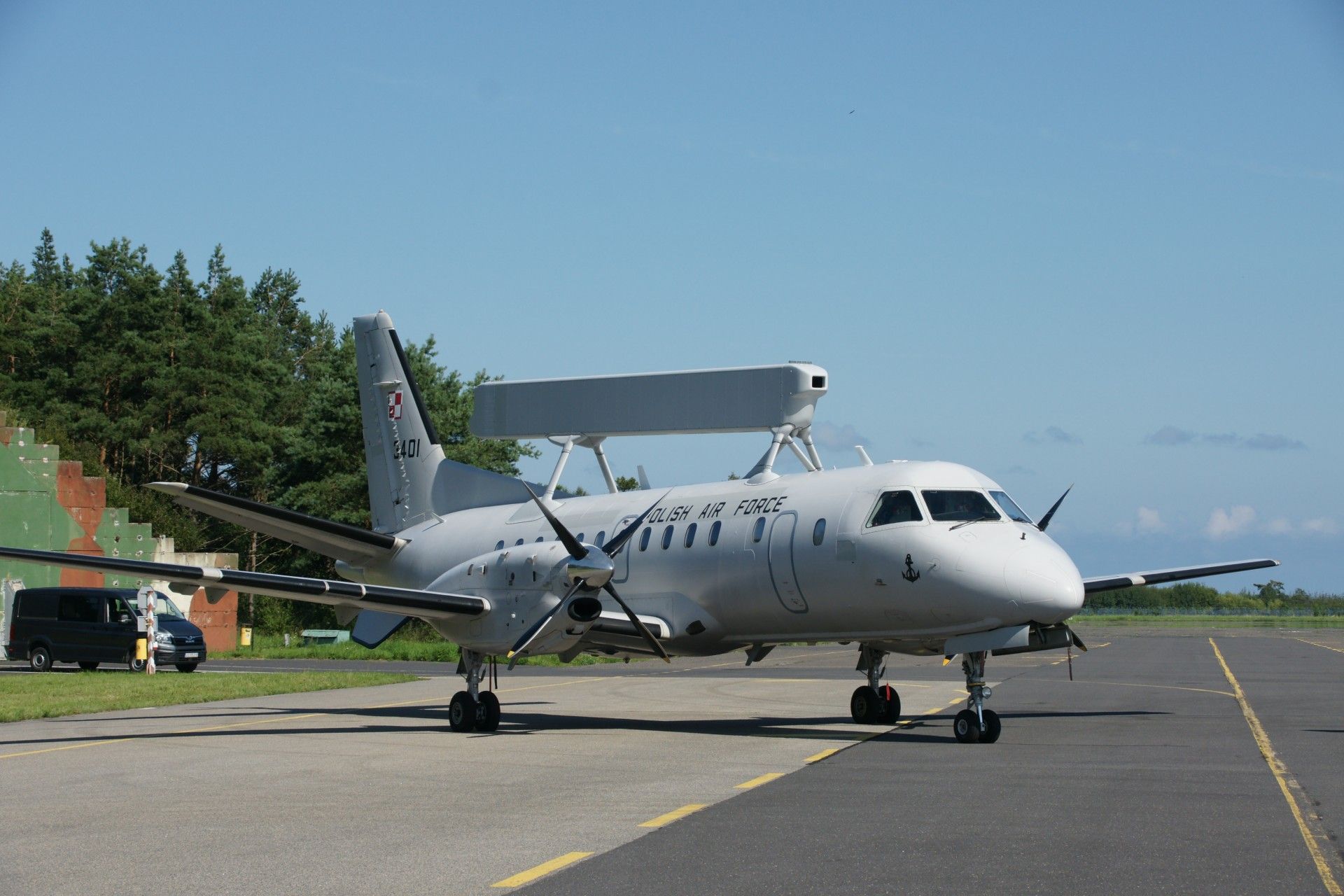
Photo. Jarosław Ciślak/Defence24.pl
Two aircraft appear to fit Poland’s needs: Saab’s GlobalEye and L3Harris’ Conformal AEW&C (CAEW). Both are thoroughly modern platforms based on the Bombardier Global 6500 business jet. Both L3Harris and Saab have recently scored wins in the international market. In October the Republic of Korea Air Force announced the selection of the CAEW to complement an existing fleet of E-7A Wedgetails. Merely two months later Saab signed a contract with the French Air Force for 2 GlobalEyes. Can L3Harris overcome Saab’s home field advantage in Poland? To find out more about the Conformal AEW&C, as well as other special mission aircraft in the American company’s portfolio, we sat down for a conversation with Re-Essa Buckels, L3Harris Technologies Marketing & Communications Senior Manager.
Antoni Walkowski, Defence24.pl: L3Harris’ catalogue includes special mission aircraft, which have gone under the radar (if you pardon the pun), at least to the majority of Poland’s public opinion. What are your company’s capabilities in this field?
Re-Essa Buckels, L3Harris Technologies Marketing & Communications Senior Manager: L3Harris is a global leader in missionized business jets and we view those platforms as highly capable, rapidly deployable airborne systems that strengthen NATO allies and other partners. Our mission sets cover ISR (intelligence, surveillance and reconnaissance), AEW&C (airborne early warning & control), electronic warfare and maritime surveillance — all delivered as interoperable, mission-tailored solutions that are built to operate in evolving threat environments.
We bring full life-cycle experience to those programs: design, systems integration, certification and sustainment. That heritage is why governments look to us as a proven mission systems integrator for business-jet platforms.
A few concrete examples: we were awarded the program to deliver modified Bombardier Global 6500 AEW&C aircraft to the Republic of Korea Air Force; that solution uses a conformal multi-array radar and is designed to create a networked battlespace with fifth-generation aircraft. Our design was chosen over the existing ROKAF E-7 fleet, and the Saab GlobalEye bid.

Photo. Bombardier
In collaboration with the Royal Australian Air Force and the U.S. Air Force, we are also delivering a first-of-its-kind multi-INT platform based on the Gulfstream G550 that will provide airborne EW and ISR as a force multiplier. It will serve as a critical link between air, land, and sea assets, delivering airborne EW and ISR capabilities that support decision makers and act as a force multiplier in a complex, dynamic environment. We have recently put into service our second operational Global 6500 missionized for ISR, offering greater survivability, longer standoff ranges, and larger payload capacity.
We are the platform integrator for the EA-37B/Compass Call effort, migrating the legacy EC-130H mission system to a highly modified G550, and last year the U.S. approved a foreign military sale of that EA-37B capability to Italy — a $300 million contract, in partnership with BAE Systems, to deliver two G550s with modern electromagnetic warfare systems. We’ve also integrated maritime surveillance systems — for instance on the Japan Coast Guard’s Falcon 2000s — and we continue to explore missionizing business jets for additional roles, including anti-submarine capabilities, always in close coordination with government partners and fully compliant with export controls and international law.
Finally, for Special Operations we’ve delivered multiple OA-1K Skyraider II aircraft configured for close air support, precision strike and armed ISR in austere environments.
What is the reason behind the CAEW system migrating to the Global 6500 platform? Some of your most recent special mission aircraft are based on the G550 airframe.
We’ve missionized thousands of aircraft across more than 130 platform types, so we operate with a platform-agnostic integration mindset: our goal is rapid sensor-to-platform missionization, smooth technology refresh cycles, and interoperability between legacy and next-generation systems. That lets us work with multiple OEMs (such as Bombardier, Air Tractor Inc., Dassault, Gulfstream Aerospace) and match capabilities to customer needs. The collaboration has been instrumental in strengthening our offerings – addressed to U.S. and international customers.
Practically speaking, our recent move toward the Bombardier Global 6500 for the CAEW role grew from a few factors. First, we partnered with ELTA/IAI to adapt a combat-proven conformal AEW system onto the Global 6500 for the Republic of Korea program — ELTA’s CAEW has strong operational pedigree. Second, Gulfstream has ceased G550 production and closed that production line, so continuing to rely on a legacy airframe presents supply-chain and sustainment constraints. The Global 6500 lets us modify the outer mold line under license and provides advantages in fuel efficiency and schedule/cost compared with restarting or sustaining an out-of-production platform. In short, the choice is driven by platform availability, life-cycle cost, aircraft performance and the ability to field a modern, upgradeable mission system.

Photo. L3Harris
What are the challenges involved in moving all of the mission systems to a new base aircraft? Does this process involve modifications to the airframe? Are you planning on transplanting all of your reconnaissance packages to the Global 6500 platform?
Moving mission systems onto a new aircraft type is a disciplined engineering and certification activity. The largest technical and programmatic challenges come from ensuring airworthiness after changes to the outer mold line and from preserving acceptable handling and performance qualities for the new base aircraft. We therefore invest heavily up front in aerodynamic, structural and flight-test work to ensure the system and aircraft together meet certification and operational requirements.
Our platform-agnostic integration approach mitigates much of the risk: we design for rapid sensor-to-platform missionization, and we build systems to be interoperable across legacy and next-generation aircraft so tech refreshes are manageable. You’ll see examples of “cross-decking” — we have migrated ISR, AEW, and electronic attack shapes from the G550 onto the Bombardier Global 6500 where appropriate. That said, each mission package requires its own trade studies and certification path; it isn’t a simple plug-and-play transplant in every case. We balance the technical feasibility, customer requirements, and export controls when deciding which reconnaissance or EW packages to field on which airframes.
L3Harris has supported the RC-135 Rivet Joint enterprise for decades, contributing to mission system modernization, SIGINT payload evolution, and sustainment across the U.S.–UK Airseeker fleet. The RC-135 remains the world’s most advanced airborne ISR platform, and our long-term role in its evolution reflects the depth of our mission-integration capability.
What are the advantages of the conformal array in comparison with a dorsally mounted antenna (either rotating or fixed)? Does the CAEW system provide full 360º radar coverage?
Missionized business jets are now battle proven and can be modified to perform airborne early warning, intelligence, surveillance, target acquisition, and reconnaissance, SOJ. They are designed to detect and identify threats, distribute information to decision makers, and degrade adversaries’ use of the electronic spectrum.
With evolving threats, the need for affordable, reliable, and high-performance AEW&C aircraft is growing as a global market need. The L3Harris AEW&C conformal aircraft design offers seamless 360-degree radar coverage that will detect, identify and track with unparalleled accuracy and range.
The conformal antenna approach does not impact the aircraft’s performance in terms of maneuverability, speed, and altitude. This approach provides a more maneuverable, agile, and survivable platform. The nose and tail array, coupled with the side cheeks provide full 360-degree radar coverage. The advanced fifth-generation conformal dual-band Gallium Nitride AESA radar is integrated with a combat-proven Battle Management Command and Control system, a solution that is currently operational in Asia, Europe, and the Middle East. This system will address current and future adversary threats to a country’s national security.
L3Harris showcased a model of the Global 6500 "Phoenix" AEW&C at the #TADTE2025. The aircraft, based on the Bombardier Global 6500 business jet, is equipped with the latest-generation EL/W-2085 CAEW (L&S) dual-band AESA radar from Israeli company ELTA Systems, using GaN… https://t.co/Jfms6K3XzA pic.twitter.com/0rnRYuRI8c
— 笑脸男人 (@lfx160219) September 20, 2025
In addition to guarding friendly airspace, can the CAEW platform also locate and track ground targets? Is it capable of operating in a contested environment?
We recently delivered our second Bombardier Global 6500 missionized for ISR, and it represents a significant leap in capability. The aircraft offers improved survivability, better targeting line of sight, and greater payload capacity and standoff range — all of which are essential for today’s complex missions. Both aircraft are already operating in the INDOPACOM region, where they’re equipped with a 29-foot underbelly fairing that houses one of the world’s most powerful long-range radars for GMTI (Ground Moving Target Indication) and precision targeting.

The South Korean Ministry of National Defence recently selected your CAEW aircraft in a competitive tender. Can you give us a brief overview of this programme?
We’re proud to have been selected to deliver the Republic of Korea Air Force’s new fleet of Bombardier Global 6500 AEW&C aircraft, a program valued at more than $2.26 billion. It’s a truly collaborative effort with Bombardier, ELTA Systems of Israel Aerospace Industries and Korean Air, bringing together the strengths of each partner.
The aircraft themselves offer clear operational advantages: they fly faster, operate longer and cruise at higher altitudes, enhancing both mission readiness and safety. Equipped with a combat-proven radar, they can detect and track threats more quickly, while their advanced communications suite ensures full interoperability with U.S., NATO and coalition partners — creating a networked battlespace designed to work seamlessly with fifth-generation aircraft and beyond.
Korea selected this next-generation solution over its existing E-7 fleet, and the modern, fuel-efficient Global 6500 paired with a conformal multi-array radar design provides exactly the combination of performance, persistence and interoperability needed for the future fight.
What is L3Harrisʹ special mission aircraft footprint in Europe? Can you describe your involvement with the Italian Air Force and their procurement of the EA-37B Compass Call?
We received a contract from Italy to deliver two Gulfstream G550 aircraft provisioned for a modern electromagnetic warfare system. L3Harris is also partnering up with BAE Systems on this solution, which represents the first time the U.S. government has approved an EA-37B sale to an international ally.
The modified G550 with electromagnetic attack capabilities will provide the Italian Air Force with an airborne jamming ability with range, altitude and endurance to disrupt enemy command and control communications, radars and navigation systems from an extended distance. Once complete, the aircraft will join the Italian Ministry of Defence’s fleet of special mission aircraft along with the Joint Airborne Multi-Mission Multi-Sensor System (JAMMS) effort to advance the country’s airborne capabilities. L3Harris is currently modifying two G550 ISR aircraft under JAMMS.
The JAMMS effort is another of L3Harris’ growing portfolio of multi-mission aircraft solutions hosted on a variety of commercial platforms, which support critical global security missions for the U.S., Australia, Canada, Japan, the Republic of Korea and other allies.

Photo. L3Harris
Can you discuss your participation in other programmes of record such as ATHENA in the United States and Peregrine in Australia?
We delivered our second operational Bombardier Global 6500 aircraft missionized with ISR capabilities. The aircraft has greater survivability and targeting line of sight along with more capacity for payloads and standoff ranges to support critical missions across the globe.
Meanwhile, in collaboration with the Royal Australian Air Force and the U.S. Air Force, we are on track to deliver the first-of-its-kind multi-INT aircraft to the U.S. Air Force by the end of the year. The modified Gulfstream G550 aircraft will deliver airborne EW and ISR capabilities. The U.S. State Department recently approved a potential foreign military sale to Australia that covers both the baseline upgrade and related equipment. That includes software and hardware enhancements that are essential for ongoing fleet maintenance. For us, it means ensuring that when we deliver these aircraft, they’re not only meeting today’s mission requirements, but are also adaptable to tomorrow’s challenges. The upgrades are designed to evolve with the threat environment, giving Australia and its allies confidence that this capability will remain effective and relevant for years to come.
What are the emerging trends in airborne early warning, electronic warfare, as well as signals and electronic intelligence? Are bizjet-based military aircraft here to stay?
We’re seeing a clear shift globally: airborne early warning, electronic warfare and signals intelligence have all become central to modern military operations. As the threat environment evolves faster than ever, commanders need rapid, accurate and relevant data to maintain decision superiority against increasingly capable peer adversaries. And because those adversaries are diverse and technologically mature, nations are looking for tailored solutions rather than one-size-fits-all platforms.
That’s where missionized business jets have really proven their value. They’ve shown in real operations that they can detect and identify threats, share information quickly with decision makers and even degrade an adversary’s ability to use the electromagnetic spectrum — all while offering speed, altitude, endurance and cost advantages.
To date, we’ve delivered 104 missionized business jets, with another 14 modifications currently in progress. Given their operational performance and adaptability, it’s clear that business-jet-based military aircraft are not just here to stay — they’re becoming an essential part of the modern ISR and EW force structure.

Photo. L3Harris


