












- WIADOMOŚCI
Portugal opens a new door for Rafale in Western Europe

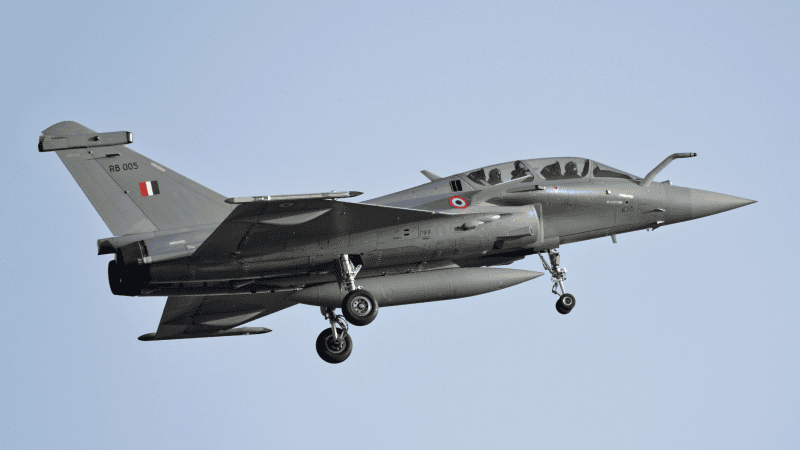
Dassault Aviation, acting on behalf of the Rafale partners Thales and Safran, has signed a memorandum of understanding with AED Cluster Portugal to explore industrial cooperation linked to Portugal’s future replacement of its F-16 fleet. The agreement follows the formal Rafale offer submitted to Lisbon in July 2026. This matters because Rafale has become one of France’s greatest defence export successes, but that success has so far been concentrated largely outside Western Europe.
Dassault currently lists eight Rafale export customers: Egypt, India, Qatar, Greece, Croatia, the UAE, Indonesia and Serbia. Only Greece, Croatia and Serbia are European customers, and among EU and NATO members the list is limited to Greece and Croatia. No Western European country outside France has purchased the aircraft. Portugal would therefore represent something more than another export contract: it would break a pattern that has followed Rafale throughout its history.
This does not mean Rafale has been uncompetitive in Europe. In the Netherlands in 2002, the JSF and Rafale achieved the highest system-effectiveness scores, but the Dutch government ultimately judged the JSF to be the most effective and cheapest option over its lifecycle, describing it as the „best aircraft for the best price”. Switzerland selected the Gripen over Rafale and Eurofighter in 2011, before that purchase was rejected in a 2014 referendum. In the second Swiss competition in 2021, the F-35A scored 336 points, at least 95 more than any rival, and was assessed as offering the highest overall benefit at the lowest cost. Finland also selected 64 F-35As after concluding that the F-35 offered the best overall military system among five candidates, including Rafale. Belgium chose 34 F-35As in 2018.
There are also cases where Rafale never reached the final competition. Dassault withdrew from Canada in 2018, citing difficulties meeting security and interoperability requirements in the closely integrated Canada-US environment. It had earlier withdrawn from the Norwegian process and, in Denmark, left the competition after the first request for information in 2005. Poland selected the F-35 through the US FMS route without a classic international competition involving Rafale, while Germany bought 35 F-35As primarily to preserve its role in NATO nuclear sharing – a requirement tied to US nuclear weapons that Rafale could not fulfil.
See also 

Portugal is therefore an important test for Dassault. Rafale has already proved that it can win major contracts in the Middle East, Asia and parts of Southern and Eastern Europe. The problem has been penetrating the Western European fighter market, where cost, NATO integration, interoperability with the United States and industrial participation have repeatedly mattered as much as the aircraft itself. The agreement with AED Cluster Portugal addresses precisely this last dimension. If Lisbon eventually selects Rafale, it would be one of the most politically and industrially significant European successes in the aircraft’s export history.
It is also worth remembering that Paris is still looking for a partner for the next-generation fighter, but does not want to share data…


