












- WIADOMOŚCI
The “Digital Brain” of air operations: US-Based Anduril wins NATO contract

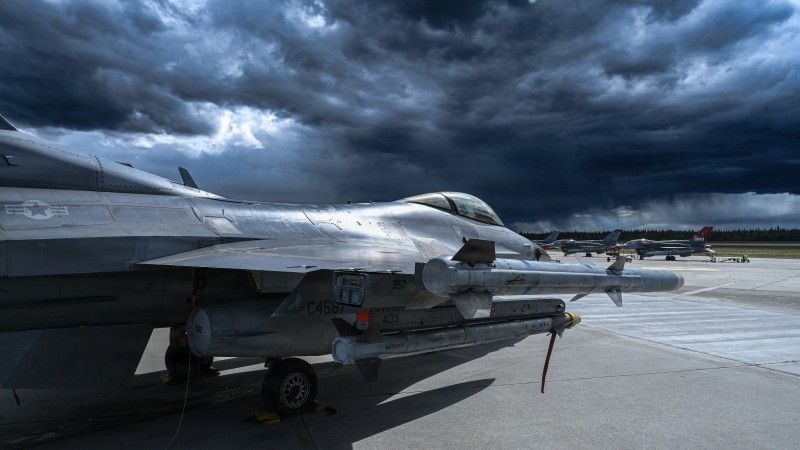
Photo. U.S. Air Force Tech. Sgt. Kentavist P. Brackin
US-based Anduril has scored another success in the European market. NATO has selected the defense company’s flagship Lattice platform for its eAirC2 Data Platform Initiative. The proposed solution is intended to integrate both new and existing systems while allowing every NATO member state to retain full control over its own operational data.
According to a press release, the NATO Communications and Information Agency (NCIA) has selected Anduril Industries as a supplier under the Enhanced Air Command and Control (eAirC2) Data Platform Initiative. During a nine-month evaluation phase, the company—working through Anduril UK and its European team—will deploy the Lattice platform within the NATO environment. It will integrate functions including air traffic control, airspace surveillance and force management, allowing NATO to assess the system against the Alliance’s operational requirements. The announcement was made during the NATO Summit in Ankara, which was dominated by decisions concerning new procurement initiatives and armament programs across the Alliance.
The Lattice Platform
It was further specified that Lattice integrates existing systems through an open architecture rather than replacing them with new solutions. It enables the secure exchange of operational data between organizations while allowing individual nations to retain full control over their own information assets. The manufacturer also emphasized that the system can continue synchronizing and distributing data in degraded or restricted communications environments. This highlights the importance of maintaining uninterrupted operational capability in the face of an adversary’s full range of electronic-warfare measures or attempted interference using cyber tools. As European NATO members modernize their command-and-control systems, Lattice will allow them to integrate both new and existing capabilities while ensuring that each nation retains complete control over its own operational data.
The press release explicitly states that modern air operations require the rapid and secure exchange of reliable information to support faster decision-making and more effective operational coordination. This challenge is compounded by the need to facilitate cooperation among 32 member states, each of which operates its own systems, procedures and information-security requirements. The modernization of NATO’s air command-and-control architecture is intended to allow Allied nations to conduct joint operations securely while retaining full control over their own data.

The eAirC2 Data Platform Initiative
The eAirC2 Data Platform Initiative represents the next stage in the development of NATO’s modular, data-centric architecture for the command and control of air operations. Under the project, Anduril will assess the Lattice platform’s ability to securely integrate existing systems, exchange operational data and support operations conducted by an integrated coalition of Allied nations. The eAirC2 program is described as one of NATO’s most important modernization initiatives currently under way. In practical terms, it involves building a digital nervous system for Allied air operations in a potential high-intensity conflict.
The objective of the eAirC2 capability is to enable NATO to manage all types of air operations seamlessly throughout the Supreme Allied Commander Europe’s area of responsibility. It is also intended to integrate air traffic control, surveillance, air mission control, airspace management and force-management functions. The program must additionally support multidomain surveillance, threat detection and threat assessment, integrated with the space and cyber domains. All of these functions are to be enabled by resilient, data-centric and interoperable command-and-control systems.
Who will gain the advantage on the modern battlefield?
Defence24 has repeatedly noted that Anduril Industries is steadily expanding its position on the international defense market, including in such important regions as the United States, Asia-Pacific and Europe. However, supplying various effectors and unmanned systems is one thing; entering the command-and-control domain with Lattice is another. This means earning trust in solutions that are essential to one of NATO’s key military capabilities. Let’s note that one of the factors distinguishing NATO’s military potential from that of Russia is the Alliance’s position in the air domain. The critical importance of airpower is reflected, among other things, in NATO’s deterrence and defense posture on its eastern flank. The decision is also likely to send a signal to the US authorities regarding the continuing importance of American companies in NATO modernization processes.
Moreover, modern systems supporting command and control are becoming even more important than kinetic capabilities. First, the battlefield (not only the air domain) is increasingly saturated with sensors and data sources. The ability to analyze this information allows commanders to manage forces and assets effectively, including the most expensive and valuable ones. Second, there is no longer any way back from multidomain thinking. Systems of systems and their underlying architectures must therefore ensure interoperability between diverse national, Allied and partner contributions and data sources. Although large-scale combat operations are once again being defined through conventional indicators, including quantitative measures such as the number of delivery platforms and effectors, the importance of C2—or, more broadly, the C5ISTAR enterprise—must not be overlooked. These are indispensable capabilities for achieving superiority and dominance at every level. This is true regardless of the specific campaign or operation being planned. Given the violence and speed of modern warfare, as well as the requirement to counter prolonged saturation attacks, such systems are essential.

Anduril's growing footprint on the global defence market
Anduril Industries became widely known in Poland primarily through an agreement under which the company is to manufacture low-cost Barracuda-family cruise missiles in the country. These weapons are intended not only for Polish requirements but also for regional allies, including at least Latvia and Estonia. The company is also closely associated with the emerging US approach to defence reindustrialization. Its business model is based primarily on combining large-scale manufacturing capacity with new technological solutions. Anduril has gained attention for its efforts to transform the way its new factories operate, allowing the company to achieve an entirely different level of production efficiency. The Barracuda missile family is one pillar of this approach, while the Lattice system is another.
Within the US Army, the implementation of the Ghost unmanned aerial system is being expanded to support soldiers at the tactical level, including during exercises in the European area of responsibility. At the same time, Anduril secured approval for the sale of counter-UAS systems to Kuwait in a deal worth USD 2 billion, with the Roadrunner-M interceptor playing a central role. The company is also responsible for providing technological enhancements to security along the strategically sensitive US southern border through a contract for Extended Range Sentry Towers. Its most prominent achievement in recent months, however, has been the success of the semi-autonomous FQ-44 unmanned aircraft in a program led by the US Air Force.
The current success of Lattice may enable the rapid development of similar solutions in the near future, as nothing supports the advancement of sophisticated C2 systems more effectively than access to a highly diverse operational environment. Defence24 has previously argued that operations such as Epic Fury will accelerate the growth and strengthening of major US technology companies. NATO will now be supported by solutions developed by this new global defense player—one that has emerged directly from the core of the American technology sector.


