- WIADOMOŚCI
- KOMENTARZ
The war in Ukraine has brought industrial warfare back to Europe

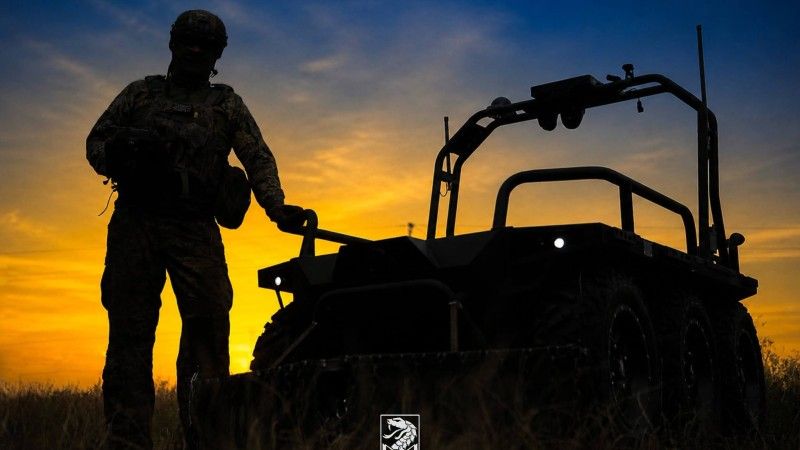
Photo. Ministerstwo Obrony Ukrainy/Defense of Ukraine (@DefenceU)/X
Russia’s full-scale invasion of Ukraine challenged the post-Cold War assumption that a large war between states in Europe had become unlikely. The conflict has restored the importance of troop numbers, artillery, ammunition, logistics and defence production, while bringing these familiar elements together with drones, satellite reconnaissance and digital systems.
For more than three decades, Western armed forces focused increasingly on expeditionary operations, stabilisation missions and conflicts with asymmetric opponents. The war in Ukraine has shown that this did not make conventional warfare obsolete. Russia’s invasion on 24 February 2022 began as an attempt to achieve its objectives quickly. When that failed, the conflict became a prolonged war of attrition, in which both sides had to replace losses and sustain large-scale operations.
The fighting has taken place along a front stretching more than 1,000 kilometres and has involved hundreds of thousands of troops. The scale of the conflict has brought back the importance of capabilities associated with industrial warfare. Advanced weapons matter, but they require ammunition stocks, production capacity and the ability to keep forces supplied over time. The war has become a confrontation between military forces and the industrial and economic systems that sustain them.

Artillery remains one of the main means of striking the enemy. During the most intense periods of the fighting, Russian forces were estimated to fire up to tens of thousands of artillery rounds a day. Ukraine also used thousands of rounds daily, despite constraints on ammunition supplies and industrial capacity. The scale of consumption has become a serious challenge for Ukraine’s supporters and for the defence industries of NATO countries.
The effect of artillery extends beyond destroying targets. It can restrict an enemy’s movement, damage military infrastructure, disrupt logistics and support defensive operations. Longer-range systems such as HIMARS have also been used to strike Russian ammunition depots, command posts and other elements of the military rear.
The fighting has exposed the difficulty of breaking through a prepared defence. Minefields, fortifications, drone reconnaissance and rapid artillery response have made fast manoeuvre operations more difficult. The battles for Bakhmut and Avdiivka became examples of a war of attrition in which neither side achieved a rapid strategic breakthrough.

The war has not simply returned Europe to the conditions of the 20th century. Satellite reconnaissance, drones and digital command systems make it more dangerous to concentrate large formations than it was in earlier wars. Armed forces need to combine mass with dispersal, resilience and the ability to adapt quickly.
Artillery, tanks and defence production remain central to the war in Ukraine. They operate alongside drones, cyber capabilities, satellite systems and digital technologies. The conflict shows how these traditional and newer elements now function together on the same battlefield. And, importantly, Ukraine can test those technologies in a very short period of time; this is unique.