- WIADOMOŚCI
- WYWIADY
How Lithuania prepares for war?

Though small in geographical terms, Lithuania has emerged as one of the most devoted NATO members, spending over 5% of its GDP on defence. Bordering Poland, it is also one of Warsaw’s closest allies, cooperating closely on border security, joint exercises, and weapons procurement.
In a conversation with Tomas Godliauskas, Deputy Minister of National Defence of Lithuania, dr Aleksander Olech talks about the recent developments in the Lithuanian military, including its whole-of-society approach, improved civil-military cooperation, and keeping pace with war technology, drones, and electronic warfare.
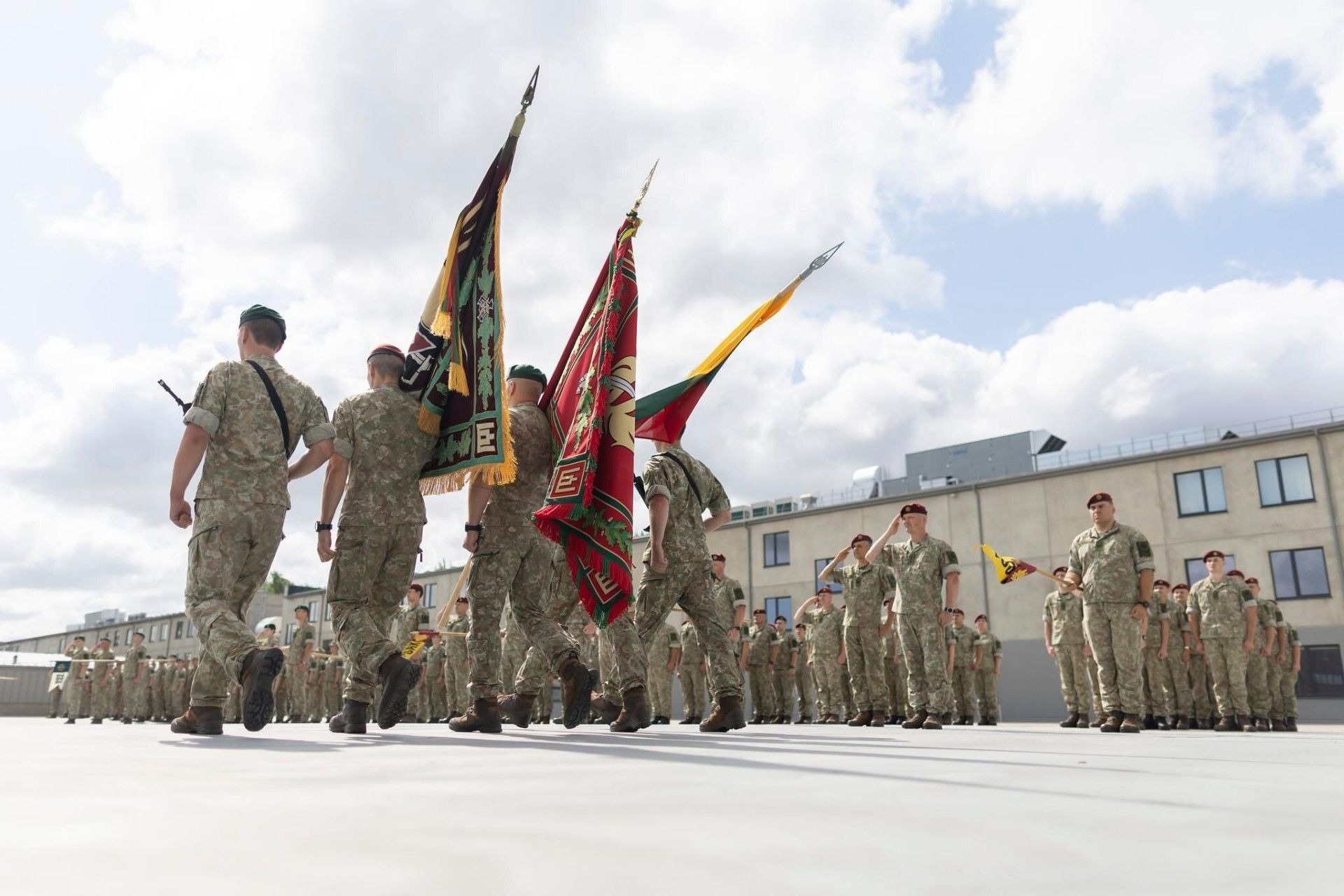
Dr Aleksander Olech: Lithuania is one of the frontline states facing Russia and Belarus. How do you currently assess the security situation on NATO’s eastern flank?
Tomas Godliauskas: The security of Lithuania depends heavily on the actions of our neighbours, and the most important factor is Russia’s long-term determination to increase and, if necessary, use its military power. Most of Russia’s military capabilities are currently concentrated on the front line in Ukraine. However, Russia is still able to continue implementing its Armed Forces reform and increasing its military capabilities in the Kaliningrad Region and near NATO’s eastern borders.
As a result, the likelihood of a direct military attack against Lithuania in the near term remains low. Nevertheless, Russia continues to pose risks through hybrid activities such as sabotage, cyberattacks, disinformation campaigns, and intelligence operations. Cybersecurity threats and hostile intelligence activities also remain significant concerns.
Belarus remains closely integrated with Russia in the military and defence-industrial sphere, although developments such as the deployment of Russian missile systems in Belarus are assessed mainly as strategic signalling rather than a significant shift in the regional balance.
Overall, while the immediate conventional military threat is limited, the security environment on NATO’s eastern flank remains tense. Continued vigilance, strong national defence, societal resilience, and close cooperation with NATO allies are essential for effectively deterring potential aggression.
The deployment of the German brigade in Lithuania is a major step for NATO’s forward defence. How will this presence change the military balance and deterrence posture in the Baltic region?
The deployment of Germany’s 45th Armoured Brigade Lithuania represents a major strengthening of NATO’s forward defence posture on the Alliance’s eastern flank. It integrates the NATO Multinational Battlegroup Lithuania into a larger and more capable brigade-level formation, significantly increasing the scale, readiness and combat power of NATO forces in the Baltic region.
This step directly implements decisions taken at the NATO Madrid Summit, where Allies agreed to strengthen the eastern flank by scaling up multinational battlegroups to brigade-size formations where and when required. The German brigade in Lithuania is one of the clearest examples of this shift from a tripwire presence toward a more robust forward defence model. As a long-term in-place force, the brigade enhances interoperability with Lithuanian forces and strengthens NATO’s ability to reinforce the region rapidly, including through additional units from Germany such as the 10th Panzer Division.
Overall, this presence improves response speed in a crisis, increases operational readiness, and raises the cost of any potential aggression against the Baltic region — thereby significantly strengthening deterrence and stability on NATO’s eastern flank.
See also 

Lithuania has been actively developing the concept of total defence and civil resilience. What are the key priorities in strengthening national readiness in the coming years?
Although military plays a key role in state defence, today’s war is becoming more and more the whole-of-society phenomena. There is a need to have tools to mobilise our societies and draw on whole of state resources. Besides armed defence, civil defence has become a core pillar of total defence.
Our goal is to make the total defence work. This is a continuous process of significant adjustments of how we conceptualize defence, how we structure and integrate our forces, technology, industry, governments, NGOs and society into national security already now — when we are still in peacetime. We have three major tasks:
First, to invest more in people, so that everyone will be ready to contribute to the state defence. Besides the military, strong societies are our first line of defence. High civil preparedness, societal resilience, and a will to fight — this is what we aim to achieve. We have upgraded civil preparedness training by introducing modules of required skills, launched UAVs« training programme, kicked-off training at schools.
Second, we need to focus on our societies« capacity to enable armed forces. This also concerns the whole state’s transition, survivability and functioning at war. The armed forces will draw on society to fully man their military units and to receive necessary materiel supplies and services. These supplies will also be required for the incoming Allied forces.
Third, we need to establish back-to-back cooperation between military and society. That is why one of our priorities was peacetime enablement of military commandants and their headquarters. Working together with the municipalities, their will strengthen that vital link.

Photo. Defence24
The war in Ukraine has significantly reshaped military thinking in Europe. Which lessons from the Ukrainian battlefield are most relevant for Lithuania’s defence planning and procurement decisions?
The Russian-Ukrainian war has revealed important lessons that may be of fundamental importance for Lithuania’s defence strategy. The most important lesson is that a multi-layered air and missile defence and counter-drones are vital condition for national survival. Not only expensive medium- and long-range air defence systems are needed, but also drone interceptors and mobile short-range and man portable very short air defence systems.
The (r)evolution of drones is noticeable — drones are replacing artillery and aviation, the importance of drones in logistics, evacuation, etc. is growing. In addition, electronic warfare is becoming one of the main domains, therefore the importance of alternative navigation systems, resilient communications, and infrastructure resistance to cyber and hybrid threats is growing. Prepared defences and fortifications are a critical component of effective deterrence, requiring pre-established defensive positions and a clearly defined distribution of responsibilities.
The lessons learned show that the enemy is prevented from concentrating forces and logistics in the secure seed districts. Therefore, it is necessary to develop deep precision firepower with its own reconnaissance, surveillance and target acquisition capabilities. No less important is the further development and enablement of manoeuvre units. A long war burns resources, so dispersed reserves, mobile forward repair bases and a national defence industry are needed. However, the formula for success is the understanding that the entire state is defending itself. In order to start acting effectively immediately in the event of crises, exercises and a serious attitude of state institutions and society are necessary.
In order to implement the development of capabilities as rationally as possible and in the shortest possible time, Lithuania is trying to use exceptions allowing simplified procurement procedures for projects of national security importance. Great attention is also being paid to strengthening its national defence industry in order to shorten supply chains as much as possible and ensure the most efficient supply of the armed forces. The aim is to apply industrial cooperation opportunities to all largest development projects.
Hybrid threats, including cyber operations and disinformation, remain a major challenge for the region. How is Lithuania strengthening its capabilities to counter these threats?
Lithuania is consistently strengthening its capabilities to counter hybrid threats, including cyber operations and disinformation. The response is based on strategic planning, interinstitutional cooperation, and preparedness. Lithuania’s efforts to strengthen resilience to hybrid threats are reflected in a broad range of practical measures and institutional initiatives. A key role in this area is fulfilled by the Hybrid Threats Resilience Division operating under the Total Defence and Crisis Management Group of the Ministry of National Defence of Lithuania.
The group contributes to the coordinating institutional efforts, assessing emerging threats and developing solutions aimed at strengthening the state’s defence system resilience to various forms of hybrid threats. A national resilience to hybrid threats concept covering the entire state defence system is currently being developed. Another key element is the coordinated inter-institutional cooperation through the National Security Commission, which enables rapid information sharing, risk assessment and a unified response to hybrid threats.
In addition, Lithuania regularly conducts cybersecurity exercises involving state institutions and operators of critical infrastructure. These exercises help test response mechanisms, strengthen cooperation and enhance the overall resilience of the national security system. Lithuania is also strengthening its response to information treats. A dedicated action plan to counter disinformation is currently being developed, which will outline measures to improve the ability of state institutions and society to identify, analyse and counter disinformation campaigns.
Lithuania is also deepening international cooperation within NATO, the European Union, and the Organisation for Economic Co-operation and Development, while further developing bilateral and regional partnerships. Such cooperation is particularly significant in addressing challenges such as the Russian „shadow fleet” and protection of critical undersea infrastructure, Belarus’s instrumentalisation of irregular migration, and cross-border smuggling operations involving meteorological balloons, which also pose a threat to civil aviation safety.
These challenges are amplified not only by shifts in the security environment and broader geopolitical turbulence, but also by rapid technological transformation. For this very reason, Lithuania’s experience is significant: resilience by design is being built not as an abstract ideal, but as a practical response to continuous uncertainty and strategic exposure to hybrid threats.

Poland and Lithuania play a crucial role in securing the Suwałki corridor and the broader Baltic region. How do you assess the current level of defence cooperation between our countries?
When it comes to defence, cooperation between Lithuania and Poland is quite robust. Both countries are among NATO’s top defence spenders, investing heavily in hard power and expanding their armed forces. Lithuania is currently developing a combat-ready infantry division with the aim of it being operational by 2030. This division will comprise tanks, tracked infantry fighting vehicles, artillery, mobile air defence systems, and all the other capabilities necessary for effective defence.
Together with Poland and the other Baltic states, we are strengthening the external borders of NATO and the EU. We are working to ensure the timely implementation of the Eastern Flank Watch Initiative, which aims to enhance our capabilities in areas such as drone defence and counter-mobility. As members of the Eastern Flank Watch Initiative, we work closely together to secure funding under the European Defence Industry Programme (EDIP).
On the defence procurement side, we are currently collaborating with Poland, Estonia, and Norway to jointly acquire Polish-made Piorun systems. We are very grateful to our partners for their successful negotiations with the manufacturer. However, given the current geopolitical situation, we must strengthen the defence industry in the region, shorten supply chains and collaborate with reliable partners who can guarantee an uninterrupted supply, even in times of crisis. Therefore, we must find ways to involve Lithuania in this process. Our manufacturers can offer highly successful products and contribute to niche areas with their laser and other technologies.
At a military level, Lithuania and Poland regularly conduct joint exercises in the region as part of the Orsha plan. Four exercises were held in 2025, two in Lithuania and two in Poland. Seven exercises are planned for 2026. These exercises aim to enhance the deterrence of the Suwalki corridor and improve the interoperability of the Lithuanian and Polish armed forces.
Among the latest developments is the establishment of a new training area in Kapčiamiestis. Due to its proximity to the Polish border, this training area will provide opportunities for our forces to train together where they may potentially need to operate in future.
Finally, Lithuania has been rapidly expanding its defence investments and military capabilities. What are the key priorities for the modernization of the Lithuanian Armed Forces in the coming decade?
Lithuania’s defence modernisation over the coming decade focuses on strengthening combat power, improving air defence, integrating new technologies, and expanding military infrastructure. A historic level of funding — around € 2 billion in the 2026 defence budget for weapons and military equipment -forms the backbone of these efforts and enables a significant upgrade of the Lithuanian Armed Forces« capabilities.
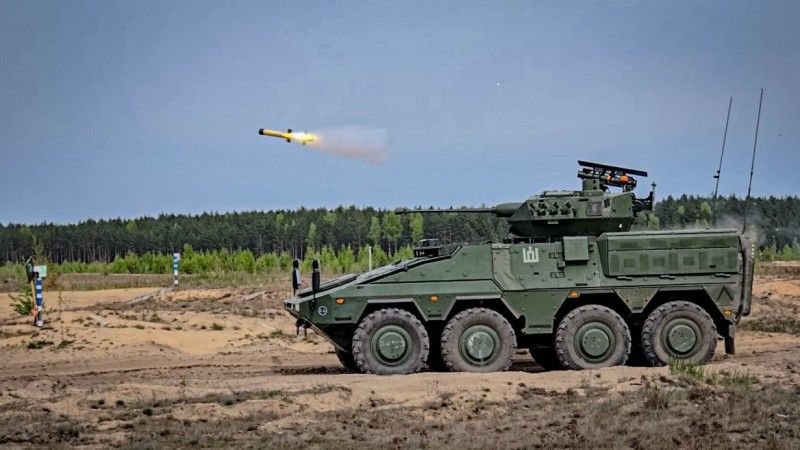
A central priority is the development of the National Infantry Division, which will serve as the core structure of Lithuania’s land defence. To support this goal, the country is accelerating previously planned acquisitions and expanding key combat systems. Major procurements include Leopard tanks, CAESAR self-propelled howitzers, and tracked infantry fighting vehicles, alongside additional SPIKE and JAVELIN anti-tank systems. Lithuania is also strengthening its long-range firepower with the introduction of HIMARS rocket artillery systems, with the first battery expected to arrive soon. Lithuanian personnel are completing training with support from U.S. forces already deployed in Lithuania, ensuring readiness to operate these systems effectively.
Another major priority is air defence and airspace protection. Lithuania is investing heavily in layered air defence, including the arrival of a NASAMS medium-range air defence batteries and the acquisition of mobile short-range air defence systems (MSHORAD). Additional investments are being directed toward integrated counter-drone defence systems, artillery radars, and other surveillance technologies. The Armed Forces are also maintaining aviation capabilities, with additional Black Hawk helicopters arriving from the United States.
Modern warfare technologies, particularly unmanned aerial systems (UAS), are becoming a key element of Lithuania’s defence strategy. Drawing lessons from recent conflicts, especially in Ukraine, Lithuania is rapidly integrating drones across multiple operational levels — from reconnaissance to combat roles. At the same time, the military is strengthening counter-drone capabilities, with more than €200 million allocated in 2026 for anti-drone systems. This includes the deployment of short-range Giraffe radars and passive TwinVis radar systems to improve detection and protection against aerial threats.
Alongside equipment modernisation, military infrastructure development is another strategic priority. In addition to the largest infrastructure development project in the history of independent Lithuania, when infrastructure for the German brigade is developed, Lithuania also plans to establish a new training area near Kapčiamiestis and expand the Tauragė training area in the Jurbarkas district to support the operational needs of the National Division of the Lithuanian Armed Forces.
Alongside equipment modernisation, military infrastructure development remains a key strategic priority.In addition to the largest infrastructure project in the history of independent Lithuania, aimed at supporting the deployment of the German brigade, Lithuania also plans to establish a new training area near Kapčiamiestis in the country’s southern region. Furthermore, the Tauragė training area in the Jurbarkas district will be expanded to better support the operational needs of the National Division of the Lithuanian Armed Forces.
In addition, a new military base in Kairiai (Klaipėda district) will be developed through a public-private partnership. Construction is expected to begin in 2027, with full infrastructure planned to be completed by 2030.
Overall, these modernisation efforts aim to strengthen firepower, troop protection, manoeuvre capability, air defence effectiveness, reconnaissance, logistics, and deterrence, ensuring that the Lithuanian Armed Forces remain capable of responding to evolving security challenges and contributing effectively to NATO’s collective defence.