












- WIADOMOŚCI
- WYWIADY
AI, interoperability, and the future of NATO wargaming

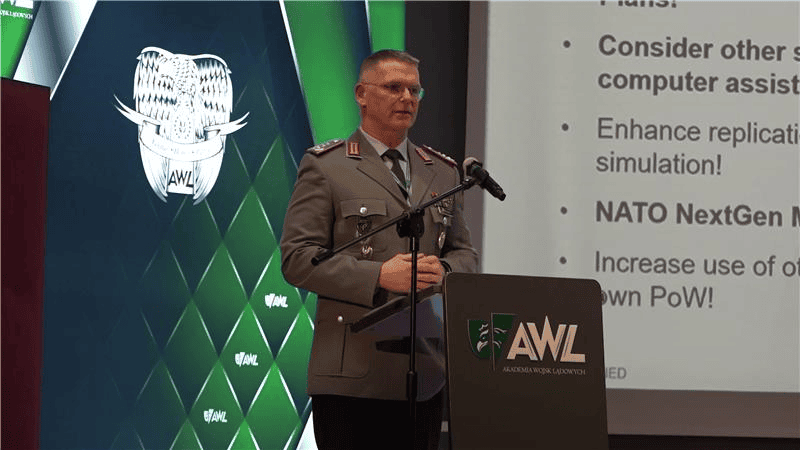
In this Defence24 interview, Olaf Werner from NATO’s Joint Force Training Centre in Bydgoszcz discusses the evolving role of computer-assisted wargaming in preparing multinational forces for modern operational challenges.
Werner explains that aligning simulated scenarios with real-world tactical plans remains one of the most complex aspects of training. Bridging the gap between virtual environments and battlefield realities requires constant adaptation, data integration, and close coordination among participating nations.
He highlights interoperability as a cornerstone of effective multinational exercises — from harmonising digital platforms and communication systems to ensuring that every participant operates under a common operational picture. These efforts, he notes, not only improve readiness but also enhance mutual trust within NATO’s joint force framework.
According to Werner, computer-assisted wargaming plays a crucial role in supporting decision-making under realistic operational constraints. By introducing dynamic, data-driven simulations, commanders can test strategies, assess outcomes, and refine procedures before deploying in the field.
Looking ahead, he points to the growing influence of artificial intelligence and machine learning in wargaming design. These technologies, Werner argues, will significantly enhance the accuracy, adaptability, and analytical depth of NATO’s tactical-level exercises — ensuring that future operations remain both agile and effective in an increasingly complex security environment.


