












- ANALIZA
- WIADOMOŚCI
Expert commentary on the judgment of the Shanghai Maritime Court

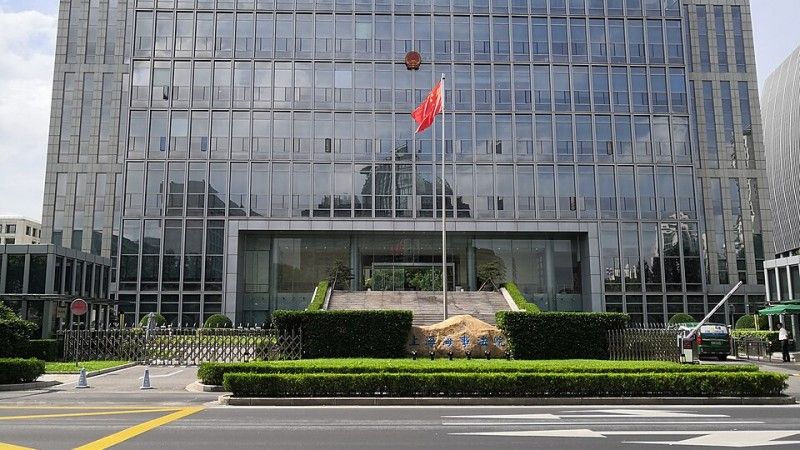
Photo. Wikimedia Commons
Over the past decades, companies engaged in international trade have grown accustomed to the fact that economic sanctions, although formally instruments of policy adopted by individual states or international organisations, may have effects far beyond the territory of the jurisdiction that imposed them. This is particularly true of US sanctions.
The importance of the US dollar, access to the US market and financial system, as well as the possibility of secondary sanctions, have meant that decisions taken in Washington have for many years influenced the conduct of companies with no direct connection to the United States.
This model of the global sanctions system is, however, facing an increasingly clear response from the People’s Republic of China. Its significance is well illustrated by a set of model maritime cases published on 24 June 2026 by the Supreme People’s Court of the People’s Republic of China (SPC). According to the SPC’s official description, this is the first case in which a Chinese court applied the Anti-Foreign Sanctions Law (AFSL) in a judgment to assess the conduct of a foreign company implementing sanctions imposed by a third country.
At first glance, the dispute was of a typically commercial nature. A Hong Kong company engaged a Singaporean carrier to transport a consignment of electronic products worth more than RMB 4.99 million from Shanghai to Panama. After accepting and loading the goods, the carrier refused to issue a bill of lading, citing the fact that the shipper had been placed under sanctions by a third country. Subsequently, despite an order issued by the Shanghai Maritime Court requiring the carrier to issue the bill of lading, the goods were returned to Shanghai.
The Chinese court’s position was unequivocal – under Article 12 of the AFSL, no organisation or individual may implement or assist in the implementation of discriminatory restrictive measures imposed by a foreign state against Chinese citizens or organisations. The carrier’s reliance on the risks arising from foreign sanctions therefore did not constitute a lawful basis for refusing to perform its contractual obligation. The court found such conduct to constitute a fundamental breach of contract and awarded the Hong Kong company damages corresponding to the value of the lost goods, together with interest. Neither party appealed, and the judgment therefore became final. This does not, however, mean that Article 12 of the AFSL establishes a general prohibition on companies taking account of all foreign sanctions. Its scope of application depends on the legal characterisation of the specific measures and the company’s conduct under the AFSL.
The significance of the judgment extends far beyond the outcome of this particular shipping dispute. The SPC itself presented it as the first judgment to confirm the mandatory application of the AFSL and to deny foreign unilateral sanctions legal effect as a basis for avoiding contractual obligations. In its official commentary, the SPC went so far as to state that the case draws a „legal red line” against foreign extraterritorial jurisdiction and unilateral sanctions. This gives rise to a problem that, only a few years ago, was primarily theoretical for most European companies. What should a company do if compliance with foreign sanctions, which it considers necessary to preserve access to one market, itself exposes the company to liability in another? As a consequence, compliance ceases to be merely a technical matter of ensuring that a company’s activities conform to applicable rules and becomes an element of its geopolitical strategy. The principal significance of the judgment lies precisely in the creation of a genuine legal risk on the other side of the sanctions equation. A company that complies with foreign restrictions must take into account the possibility that conduct resulting from such compliance may be challenged under Chinese law.
From a political response to a counter-sanctions system of its own
The Supreme People’s Court’s position in June represents another stage in China’s policy, developed over the past several years, of countering foreign sanctions. Beijing has gradually expanded the range of instruments available to respond to measures adopted by other states and to limit their effects on Chinese entities.
One of the best-known earlier examples was the series of events in March 2021. At that time, the European Union imposed sanctions on four Chinese officials and one entity in connection with the situation in Xinjiang. Beijing responded almost immediately with measures targeting European politicians, academics and institutions, including five Members of the European Parliament and the European Parliament’s Subcommittee on Human Rights. The European Parliament explicitly described China’s measures as retaliatory sanctions. Their consequences extended well beyond the inconvenience suffered by those placed on the Chinese sanctions list. The European Parliament refused to proceed with the ratification of the Comprehensive Agreement on Investment (CAI), the comprehensive EU–China investment agreement negotiated only a few months earlier, for as long as the Chinese sanctions remained in place. The measures adopted in response to European sanctions thus contributed to the suspension of one of the most important economic projects in EU–China relations.
The experience of 2021 also demonstrated that Beijing is prepared to bear the economic costs of its retaliatory policy. For the European Union, this in turn meant having to take into account in its sanctions policy the fact that China is not merely a target of restrictive measures, but itself has a growing range of instruments of pressure at its disposal. Since 2021, this arsenal has expanded considerably. Alongside traditional personal counter-sanctions, Beijing now has at its disposal the AFSL, the Unreliable Entity List, an extensive export control system, and the ability to restrict access to dual-use items. Taken together, these instruments increase China’s capacity to exert pressure on foreign entities applying restrictions directed against China. They differ, however, in their legal basis and the manner in which they are applied and should therefore not be treated as a single legal category.
From retaliatory sanctions to access controls in the defence sector
China’s counter-sanctions instruments have particularly significant potential in sectors dependent on supplies from China. The strong position of Chinese companies in selected segments of global supply chains allows the restrictions imposed by Beijing to have a direct economic impact. In this context, the defence sector is particularly significant. The modern defence industry depends not only on advanced technologies, but also on access to critical raw materials, specialised materials, electronics and dual-use components. This includes, among other things, rare earth elements and permanent magnets manufactured using them, which are used in a wide range of military systems – from aviation and unmanned systems to sensors, guidance systems and space technologies. This dependence means that the ability to restrict exports of specific products may provide Beijing with an instrument of pressure no less significant than traditional asset freezes or prohibitions on transactions.
This approach was already evident in 2025. In March and April, China’s Ministry of Commerce placed a total of 31 US entities on the Export Control List, prohibiting the supply of Chinese dual-use items to them. In November 2025, the implementation of some of these measures was suspended as part of a broader de-escalation of trade tensions between the United States and China. The temporary suspension of these restrictions also demonstrates how export controls can be used as a negotiating instrument, tightened or relaxed depending on the state of relations with another country. This flexibility may be particularly important for Beijing. Export controls allow it to concentrate pressure on specific sectors or entities and subsequently reduce its scope as the negotiating environment changes.
A considerably more important signal emerged in the autumn of 2025. On 9 October, China’s Ministry of Commerce announced new export control measures concerning technologies and products related to rare earth elements. The regulations covered exports of specified products and, in certain cases, products manufactured outside China using Chinese materials or technologies. Military applications were treated particularly restrictively: under the published rules, applications involving foreign military end-users and other entities included on China’s export control lists were, as a general rule, to be denied. This area provides a particularly clear illustration of the nature of China’s leverage. Economic pressure can be based on controlling access to raw materials, materials and components that require time to replace or whose substitution entails significant costs.
These measures should not be considered in isolation from the broader technological rivalry between China and the United States. For several years, Washington has used export controls to restrict China’s access to the most advanced semiconductors, equipment used in their production, and technologies related to artificial intelligence and supercomputing. Beijing has considerably less leverage in those segments in which it remains dependent on Western technologies. At the same time, however, it holds a very strong position in other parts of the supply chain. Further sanctions-related rivalry is therefore likely to focus on those areas in which each side enjoys its greatest economic or technological advantage. This mechanism is particularly significant for the defence industry: a company may be affected by Chinese measures even if it has no significant sales in the Chinese market. It is sufficient for its production to depend on a Chinese component, material or raw material that cannot be replaced quickly or whose substitution would be economically unviable. In such a case, the real sanction is not the loss of the ability to sell to China, but the loss of access to China as a source of supply.

The practice of recent months demonstrates that this risk is already materialising. In April 2026, China’s Ministry of Commerce imposed restrictions on seven European Union companies associated with the defence sector, placing them on the Restricted Namelist. They included the Belgian company FN Herstal. Chinese entities were prohibited from supplying the designated companies with dual-use items, while foreign exporters were called upon to cease any further transfer to them of specified products of Chinese origin. Beijing explicitly linked the measures to the involvement of these companies in arms sales to Taiwan. Compared with the counter-sanctions imposed on EU representatives in 2021, there is a fundamental difference. Those measures were primarily political and diplomatic in nature. Restricting a defence company’s access to Chinese dual-use items, by contrast, may directly affect its production capabilities and continuity of supply. The effectiveness of such a measure will in practice depend on the degree of the company’s dependence on Chinese supplies and the availability of alternative sources. The more difficult a particular component or material is to replace, the greater the pressure that may be created by the mere risk of its supply being restricted.
The retaliatory mechanism became even more apparent in the summer of 2026. After the European Union, as part of its 21st package of sanctions against Russia, designated fourteen companies from mainland China and Hong Kong, Beijing responded by placing fourteen EU entities on the Restricted Namelist. These entities became subject to restrictions on access to Chinese dual-use items. China’s Ministry of Commerce expressly presented the decision as a response to the European Union’s actions. From a European perspective, it is significant that a company may become subject to Chinese restrictions as part of Beijing’s response to the Union’s sanctions policy even if the company itself has taken no action against China. This creates a mechanism of interaction between sanctions regimes in which private companies become direct participants. They bear part of the cost of disputes between states despite having no influence over the political decisions that gave rise to them. For European businesses, this creates a risk whose source may lie entirely outside the decision-making sphere of the individual company. A tightening of the European Union’s sanctions policy may therefore trigger a Chinese response affecting private entities even where their own activities in relation to China have not changed.
Will Chinese sanctions become more frequent?
In the authors’ view, the significance of Chinese sanctions, counter-sanctions and export controls will continue to grow in the coming years. Beijing does not need to build an equivalent of the US OFAC system, as the sources of leverage available to the two countries are different. The United States’ advantage stems primarily from the role of the US dollar, the importance of the US financial system and market, and the widespread use of US technologies. China possesses a different kind of leverage: the scale of its domestic market, its manufacturing capacity and its exceptionally strong position in selected segments of global supply chains. Combining this economic position with legal instruments such as the AFSL increases Beijing’s ability to influence the decisions of foreign companies. Chinese instruments can therefore be expected to be used primarily on a selective basis, in areas where their application can impose a genuine cost on the targeted entity. Beijing has the greatest capacity to exert pressure in sectors in which replacing a Chinese supplier is difficult, costly or time-consuming.
The case identified by the Supreme People’s Court as a model case expands the range of these risks to include civil liability arising from compliance with foreign restrictions. Until now, a foreign company assessing its China-related risk could focus primarily on administrative measures: being placed on a list, an export prohibition, restrictions on its activities or loss of market access. It must now also take into account the possibility that compliance with a foreign sanction may become the subject of proceedings before a Chinese court. As the case involving the Singaporean carrier demonstrates, this risk is no longer purely theoretical.
This situation may be described as „triple compliance.” A company with exposure to the US, European and Chinese markets must simultaneously take into account US sanctions, EU regulations and the AFSL, together with China’s other blocking mechanisms and export controls. The most problematic situation will arise where no solution exists that would allow the company to remain compliant with all of these regimes simultaneously. US law may require a company to refuse a transaction with a particular Chinese entity. Chinese law, in turn, may treat the same refusal – where it results from the application of sanctions regarded by Beijing as illegal – as a basis for liability.
In the context of activities involving China, it is therefore becoming necessary to conduct the analysis in the opposite direction as well: does a decision taken to reduce sanctions exposure in the United States or the European Union simultaneously create legal exposure in China? In an extreme case, a company may find itself in a situation in which full compliance with all applicable legal regimes proves impossible, requiring it instead to assess the risks associated with each jurisdiction. Under such circumstances, sanctions analysis should also encompass the consequences of complying with the sanction itself. The scale of a company’s exposure to the respective jurisdictions will be relevant: the location of its assets, the activities of its subsidiaries, existing contracts, receivables and dependencies within its supply chains. Risk assessment is therefore increasingly becoming an assessment of the potential consequences of choosing between competing legal requirements.
From sanctions risk to a conflict of jurisdictions – law as an instrument of deterrence
The judgment under discussion should not be equated with a general prohibition on foreign companies complying with all US or European sanctions. Such a far-reaching conclusion is not supported by the practice to date. The judgment does, however, confirm that foreign sanctions need not be accepted by a Chinese court as a lawful basis for non-performance of an obligation towards a Chinese entity. For a counter-sanctions system to be effective, Chinese courts do not need to routinely award multi-million-dollar damages against Western companies. As with traditional economic sanctions, the mere risk of legal consequences is already significant.
The management board of a company considering terminating a contract with a Chinese counterparty must now take into account an additional category of risk. Alongside potential consequences from OFAC, European regulators or export control authorities, there is the possibility of proceedings before a Chinese court, liability for damages, administrative action or other measures available under the Chinese legal system. The greater the company’s exposure to China in the form of assets, subsidiaries, receivables, contracts or supply chains, the greater the practical significance of this risk.
In some respects, this mechanism resembles the deterrent effect of US sanctions, although it relies on different sources of economic leverage. If the cost of disregarding Chinese law becomes sufficiently high, companies will take it into account in their decision-making regardless of how they view Beijing’s policies. The Chinese system therefore increases the legal and economic risks associated with implementing foreign restrictions. Taking this risk into account in corporate decision-making may limit the practical effectiveness of US sanctions in relations with Chinese entities.
Where does the jurisdiction of a Chinese court end?
A fundamental question nevertheless remains: what can the Chinese legal system do to a company whose principal assets are located in Europe?
In the simplest case, the answer raises few doubts. If a foreign company has assets, bank accounts, shareholdings, subsidiaries or other financial interests in China, it cannot treat an adverse Chinese judgment as an abstract risk. There are assets within the reach of the local jurisdiction against which measures provided for by law may be taken.
A considerably more interesting question arises in the opposite direction: can the Chinese legal system also be used in disputes originating outside China but whose effects – directly or indirectly – concern Chinese interests? It is impossible at present to determine how broadly Chinese courts will interpret the instruments available to them in the future. It would also be premature to assume that a single judgment concerning the carriage of goods automatically opens the way to the enforcement in China of all claims related to foreign sanctions. The direction in which the regulatory framework is developing does, however, justify a much closer analysis than before of companies’ asset exposure to Chinese jurisdiction. In practice, the sanctions issue increasingly extends beyond the question of whether a particular decision of a state is effective outside its borders. Equally important is the question of where the assets of an entity against which a claim may arise are located and in which jurisdiction enforcement of that claim may be sought. It is precisely in this context that a case which, at first glance, concerns neither China nor Chinese sanctions becomes particularly interesting.
Euroclear – a test of the limits of the new legal reality?
Following the freezing of assets of the Central Bank of Russia held at the Belgian-based Euroclear in the aftermath of Russia’s aggression against Ukraine, Russian reserves worth more than EUR 200 billion were immobilised. Belgium has so far opposed the confiscation of these assets, citing, among other things, the associated legal and financial risks. The dispute over the Russian reserves has become one of the most significant legal and political issues surrounding the European sanctions regime. On 15 May 2026, a Moscow court upheld the claim brought by the Bank of Russia against Euroclear, awarding the Russian central bank the equivalent of approximately EUR 200 billion. The judgment was subsequently declared immediately enforceable. Euroclear appealed the decision, but on 16 July 2026, the appellate court dismissed the appeal and upheld the judgment. Euroclear does not recognise the jurisdiction of the Russian court and maintains that claims of this kind are not recognised under European Union law. From a European perspective, the Russian judgment itself may appear to have little practical significance for as long as Euroclear’s principal assets remain outside Russian jurisdiction. The significance of such a judgment, however, also depends on whether it can be recognised and enforced in another jurisdiction in which Euroclear holds assets.
The authors of this article therefore have the strong impression that the developing Chinese legal system may in the future also become relevant to disputes of this kind. In theory, an attempt could be made to seek recognition of a foreign judgment in China and subsequently to explore the possibility of obtaining interim measures or enforcement against assets located within Chinese jurisdiction. In doing so, the Bank of Russia does not need to base its legal strategy on Western law firms or limit it to instruments available in European jurisdictions. It may seek the assistance of Chinese lawyers and make use of instruments available under the Chinese legal system, pursuing the protection of its interests directly before Chinese courts. Such a scenario should, of course, not be presented as a foregone conclusion or even as the most likely outcome. The recognition and enforcement of a foreign judgment is a separate legal matter and requires the relevant procedural and substantive requirements to be satisfied. Nor can the judgment of the Shanghai Maritime Court be taken to mean that a Chinese court would automatically recognise the Bank of Russia’s claims against Euroclear. The Euroclear example nevertheless illustrates how complex risk assessment becomes when sanctions applicable in one jurisdiction may be regarded as unlawful or deprived of legal effect in another.
Only a few years ago, a European institution could analyse sanctions primarily through the lens of EU law and the law of the state in which it was established. In a world of reciprocal sanctions, counter-sanctions and blocking statutes, such an analysis may also need to take into account those jurisdictions in which a company holds assets or conducts business. The more global an entity is, the more difficult it becomes to confine the consequences of a legal conflict to the territory of the state in which that conflict originally arose.
China will not remain without a response
One Chinese lawyer personally known to the authors and regarded as one of the most effective practitioners in the country has drawn attention to another aspect of the issue. In his view, five thousand years of development of Chinese jurisprudence demonstrate that the Chinese legal system has both the capabilities and the solutions necessary to respond to sanctions regarded by China as illegal, and that the Middle Kingdom will be able to protect its own interests effectively against such measures. From a European perspective, the development of Chinese regulations may appear to be a relatively recent phenomenon – after all, the AFSL was only adopted in 2021. From Beijing’s perspective, however, these instruments form part of a much broader concept of protecting state sovereignty against external legal and economic coercion. From this perspective, there is no reason to assume that China’s response will remain limited to the AFSL in its current form. The continued use of sanctions and export controls as instruments of economic rivalry will likely lead to the further development of Chinese legal and administrative instruments.
Consequences for Europe and Poland
For European companies, the development of China’s counter-sanctions system primarily means that the way in which risk is assessed must change. Until now, sanctions and export controls have been analysed primarily from the perspective of European Union law and, where appropriate, US regulations. Increasingly, Chinese law will also need to be taken into account, particularly where a company has assets or counterparties in China or depends on Chinese supplies. This is particularly important for the defence industry and entities involved in trade in dual-use items. For Polish companies, regulatory security should become increasingly closely linked to security of supply. Diversification of supply sources will therefore also be relevant from the perspective of sanctions risk. In strategic sectors, dependence on Chinese suppliers should also be treated as an element of regulatory risk. Supply chain audits should include the identification of components and materials that would be impossible or excessively costly to replace at short notice, as well as an assessment of the time required to identify an alternative source of supply. In the defence industry, this may have a direct impact on continuity of production.
The new sanctions reality
It should not be expected that the Chinese system will replace the US OFAC regime or that companies will cease to comply with US and EU sanctions. A more likely development is the emergence of competing legal systems between which companies will have to navigate. In practice, this means a situation in which compliance with the requirements of one jurisdiction may increase the risk of violating the law of another. In this respect, the Chinese court judgment discussed above is significant precisely because it moves the sanctions conflict from the level of political declarations to that of specific commercial relationships and legal liability.
In the authors’ view, the significance of Chinese sanctions and counter-sanctions will continue to grow, particularly in sectors in which China enjoys an advantage that allows it to give legal instruments a tangible economic impact. The development of the AFSL and export controls, together with the first instances of their practical application, indicates that Beijing does not intend to remain merely a target of foreign sanctions pressure.
For many years, the fundamental question for a company engaged in international business was: do we comply with sanctions? In the coming years, companies will increasingly have to ask a more difficult question: what should we do if complying with the sanctions imposed by one state means violating the law of another?
About the authors:
Jaroslaw Kruk is the managing partner and founder of KW Kruk and Partners Law Firm and has over 30 years’ experience in advising on the detection and prevention of business crime and corruption. He is a recognised specialist in national defence and state security, with particular expertise in legal and regulatory matters concerning the defence sector, including sanctions-related issues. He advises on complex cross-border fraud and asset tracing matters, money laundering, white-collar crime and litigation. Jaroslaw has extensive experience in damages claims and the recovery of misappropriated assets, both in Poland and internationally.
Urszula Brzozowska is an attorney-at-law trainee at KW Kruk and Partners Law Firm. Her practice focuses on sanctions and white-collar crime. She also works on international trade and customs matters, particularly those involving cross-border business activities. Her work includes analysing sanctions and other regulatory restrictions, assessing their impact on businesses and identifying the legal risks arising from international transactions. She also conducts legal research on complex regulatory matters and assists in developing practical solutions for businesses operating in an international environment.
KW Kruk and Partners Law Firm is an independent Warsaw-based law firm that has been advising international clients and financial institutions for more than 20 years. The firm specialises in white-collar crime, dispute resolution, asset recovery and asset tracing, acting in both civil and criminal matters. It has a strong focus on national defence and security and advises clients from the defence sector on a broad range of legal and regulatory issues. The firm’s practice also covers sanctions, export controls, international trade and customs, including matters involving defence-related and dual-use goods. Its lawyers have extensive experience in complex fraud and economic crime cases, including matters involving major Polish companies and cross-border elements.


