












- WIADOMOŚCI
Forgotten victims of the 9/11 attacks

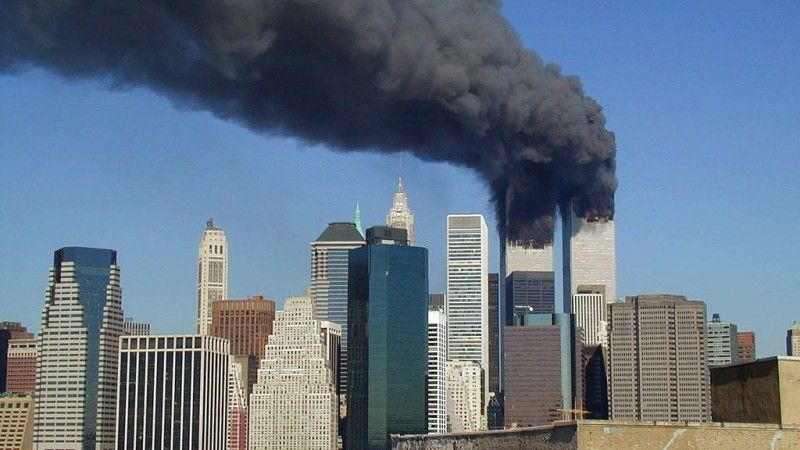
Photo. Michael Foran / Wikipedia commons / CC 2.0
The 25th anniversary of the 11 September 2001 attacks on the World Trade Centre and the Pentagon provides a fitting opportunity for numerous reflections and assessments. This is highlighted by the recently published report from the World Trade Centre (WTC) Health Programme, which indicates that the actual death toll of the largest terrorist attack in human history is higher than the commonly cited figure of approximately 3,000 killed.
Due to the sheer number, diversity, and significance of global events, political elites, the media, and public opinion alike are losing sight of the problem of terrorism. Yet, this threat not only persists but is significantly escalating in certain respects. The decline in interest in terrorism-related issues was only briefly halted by the 25th anniversary of the attacks on the WTC and the Pentagon on 11 September 2026. It also served as a valuable occasion to reveal new facts related to the attacks.
One such revelation is the report by the World Trade Centre (WTC) Health Programme. It focuses on cancer cases among survivors of the World Trade Centre attack. Their number has risen over the last decade from 3,200 to 57,000. While this is partly linked to the ageing of survivors, the primary cause is the harmful dust and other hazardous substances released by the explosions.
The number of confirmed cancer cases among those who lived, worked, or studied near Ground Zero is higher than among first responders and others involved in the rescue operation who were exposed to direct contact with dust or toxic substances. Specifically, 28,913 cases were recorded in the former group, compared to 28,131 among responders. Furthermore, increasingly rare types of cancer are being diagnosed. For instance, 82 cases of the extremely rare thymus cancer—a small organ located in the upper chest—have been registered. The specific nature of the threat is evidenced by the fact that thymus cancers account for less than 1% of all cancer cases.

Equally concerning is the finding by independent experts that the death toll from the 11 September attacks may still rise. This is because only about 15% of all individuals exposed to toxic substances have so far enrolled in the WTC Programme, which monitors such cases.
Sebastian Wojciechowski is the Head of the Department of Strategic Studies and International Security at the Faculty of Political Science and Journalism of Adam Mickiewicz University in Poznań. He is Chief Analyst at the Institute for Western Affairs in Poznań, an OSCE expert and a NATO DEEP eAcademy expert on internal and international security, as well as Editor-in-Chief of Strategic Review [Przegląd Strategiczny]. His recent publications include „The Evolution and Escalation of the Hybrid Terrorist Threat in the European Union”, „Europol and the New Terrorism Algorithm” and „Is Terrorism in Retreat?”.


