- sponsorowane
- WIADOMOŚCI
BRO Systems: Multiplying Mission Performance and Ensuring Superiority on the Battlefield

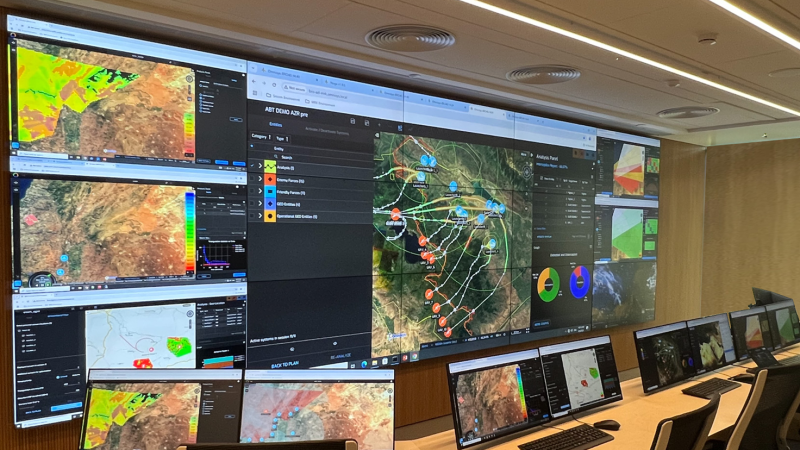
Combat-proven BRO™ optimization systems by Omnisys improve the processes of planning, conducting and analyzing complex combat operations. Now there is a chance that this AI-powered solution will also help the Polish Armed Forces perform these vital and complex tasks.
*Sponsored content
Some manufacturers of command-and-control (C2/C4I) systems claim that their systems also offer some sort of „mission planning and analysis” capabilities. However, when you get into the details, in most cases, significant limitations become evident, and it turns out that only a fragment of what is really needed is actually offered.
An outstanding solution in this area is BRO™ (Battle Resource Optimization) systems from the Israeli company Omnisys. This is proven not only by the manufacturer’s declarations, but also by the excellent combat results achieved with this solution.

Photo. Omnisys
BRO can operate as a standalone mission planning system. However, when it comes to situations where active recommendations are needed on the battlefield, BRO becomes a vital solution designed to work in tandem with any C2/C4I system. When integrated, it significantly enhances the effectiveness of deployed sensors and effectors for improved mission performance when time is a critical factor.
It is now worth considering what makes BRO so different from other, less sophisticated solutions, and what could be achieved by introducing BRO in the Polish Armed Forces.
Combat-proven experience and expertise
Omnisys has been accumulating experience in modeling, simulation, and planning systems development for military applications for approximately 25 years, bringing significant expertise to the market. Importantly, mission-specific BRO systems are later tested, proven in actual combat operations, and improved continuously to fit evolving battlefield realities. All this creates the tools needed by the mission commander to support the decision-making process, above all, by proposing reliable and combat-proven recommendations and courses of action (COAs).
All mission stages
BRO addresses three critical questions for every mission:
- What are the expected outcomes of the mission in unpredictable environments?
- How to optimize resources and determine the order of battle (ORBAT) – the organized structure, composition, and deployment of existing resources/weapons systems before and during the mission?
- How to achieve maximum mission performance in the minimum time available?

Photo. Omnisys
Working in this way, Omnisys has developed BRO systems that are useful across the entire mission lifecycle:
- pre-mission planning: organizing forces and creating ORBAT, and optimizing the deployment of sensors, weapons, and other effectors, while considering the type and behavior of threats;
- in-mission recommendations: proposing recommended COAs to increase efficiency and effectiveness based on a real-time situational picture in an ever-changing battlefield arena;
- post-mission debriefing: improving future mission planning performance by providing opportunities to conduct analysis, identify errors or anomalies, analyze threat behavior over time, create reports and conclusions, and advise on operational changes (e.g., adjustments to sensors and effectors deployment/locations, or updates to systems' configurations)
Multi-domain, multi-mission, multi-level
BRO also has the advantage of being multi-domain, technology/vendor-agnostic, and scalable:
- multi-domain: supporting land, sea, air, space, and electromagnetic spectrum domains;
- multi-mission: supporting defense, attack, and intelligence missions, including modeling of a variety of sensor types and features (e.g., radars, opto\-electronic systems, SIGINT, COMINT, electronic reconnaissance systems, and others), and various effectors (e.g., missiles, artillery systems, jammers, laser systems, electromagnetic cannons);
- multi-level: supporting tactical (battalion/single battery level planning), regional (multiple batteries planning), and up to central/national (with strategic planning and multi-user participation) deployments.

Photo. Omnisys
BRO suite of systems
Omnisys has thus created a versatile solution that is useful not only for planning and providing recommendations for air defense (BRO-AD) and air surveillance (BRO-AS) but also for intelligence gathering (BRO-IG), electromagnetic spectrum (BRO-SM), electronic warfare (BRO-EW), and organizing border (including maritime) protection (BRO-BSec). Each system is designed to maximize the effectiveness and efficiency of the missions carried out. Providing recommendations supporting military decision-makers, BRO is an essential system for complex mission planning.
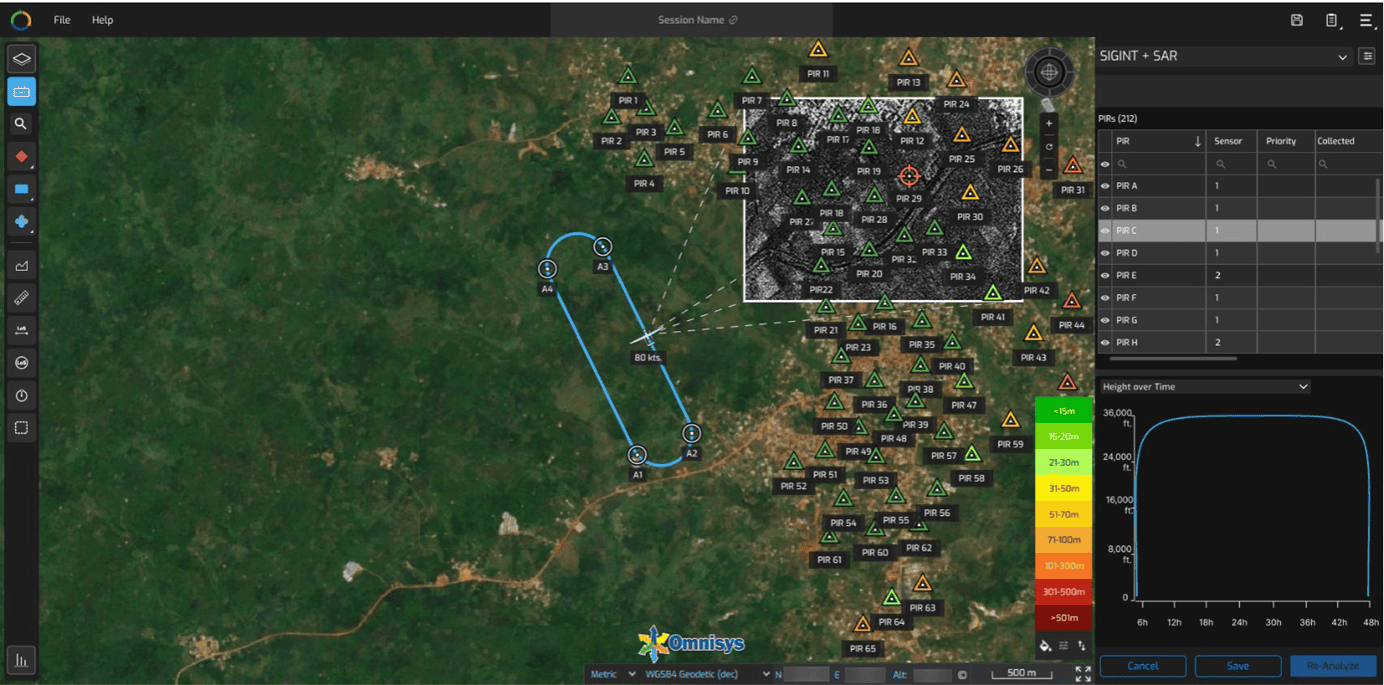
Photo. Omnisys
BRO-National
Omnisys also offers BRO-National, an integrated mission planning and management center to support defense, attack, and intelligence missions. Supporting the commanders and professional planners at the national level at a central site, BRO-National enables optimize mission planning, real-time operational recommendations, and post-mission debriefing of various multi-domain missions in ever-changing conditions and unpredictable arenas. BRO-National can play a key role in strengthening a country’s national security.

Photo. Omnisys
AI-driven BRO
The impressive results of the BRO multi-mission system have been achieved, among other factors, through the extensive use of artificial intelligence (AI). With AI capabilities included, the system can support fast mission planning and generate recommendations even when processing a large volume of data sources and managing high operational complexity. As mentioned, it enables the planning of actions using various types of effectors, including interceptors, jammers, and laser systems.
Moreover, AI capabilities allow for the analysis of historical data and current threat patterns to predict potential attack routes and scenarios, and to recommend optimal defense strategies.
Air defense and BRO-AD effectiveness
A good example that demonstrates the capabilities of the multi-mission BRO solutions provided by Omnisys is the BRO-AD (air defense) system. BRO-AD is a versatile solution that supports a variety of AD applications, including counter-unmanned aerial systems (C-UAS) and ground-based air defense (GBAD) missions.
BRO-AD is designed to operate independently or in conjunction with C4I systems. To advise on better use of resources and more efficient operation, BRO-AD considers the capabilities of all utilized, available, or even planned sensors and interception systems.
Furthermore, BRO takes into account environmental conditions (e.g., seasonal weather) and terrain characteristics, and recommends deployment locations where system performance will be optimal. These recommendations are further supported by performance deterioration alerts, which indicate when adjustments are needed during an ongoing mission. Such changes may be triggered, for example, by system performance degradation, systems that went offline, or the adversary’s use of unexpected threat tactics or combat methods.

Photo. Omnisys
By recommending actions, BRO-AD enables air defense commanders to make faster and more accurate decisions. The choice of a course of action always remains in the hands of these commanders; however, having such recommendations allows them to shorten the entire process of analyzing the situation (including, for example, evaluating their own resources and capabilities in relation to a specific „opponent”).
Additionally, BRO-AD is an excellent tool for planners and training teams, enabling them to prepare in advance for potential missions, develop leadership skills in mission command, and manage resources effectively.
BRO and Poland
As you can see, BRO is not intended to replace the command-and-control (C4I) systems currently being introduced in the Polish Armed Forces (e.g., IBCS, Jasmin, DUNAJ), but to enhance their capabilities. A synergy effect is achieved through C4I-BRO integration, as the decision-making process is accelerated and optimized, and the effectiveness of the systems used is enhanced.

Photo. Omnisys
A good example is the multi-layered air defense now being organized in Poland. In the case of the Russian Federation, we are threatened by a whole range of means of aerial attacks. Regarding these threats, it is necessary to use sensors and effectors that are not only effective but also optimally deployed and utilized. Poland must also plan for various attack routes that may be employed.
Poland’s response must vary depending on the threat: a tactical ballistic missile demands a different approach than a cruise missile or drone swarm. And there can be many more threats (e.g., artillery shells, unguided missiles, guided bombs, aircraft, helicopters).
Another critical issue that must be addressed is radio interference. This is particularly relevant in the context of the East Shield program. Focused on intelligent and physical border security, the program already incorporates a wide range of technological solutions for border protection, early threat detection, and interception. These are complex tasks that involve various radars, electro-optical systems, and interceptors – typically from multiple vendors.
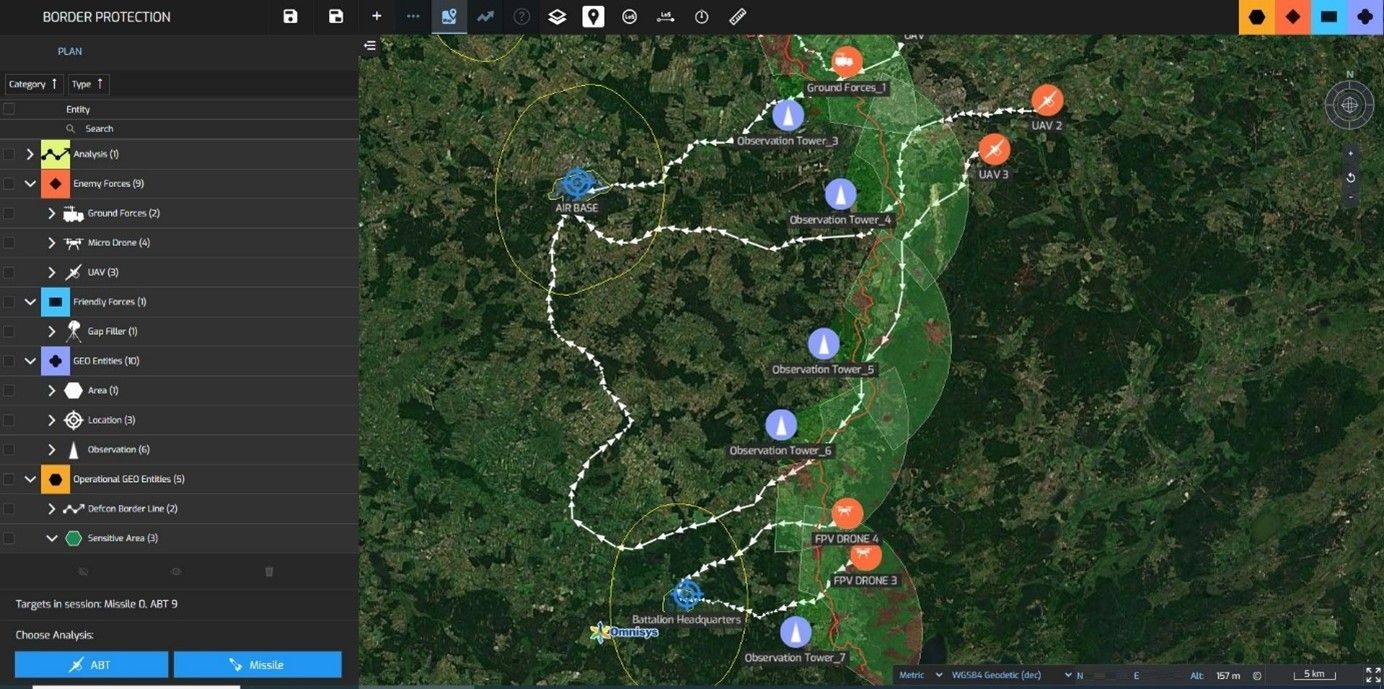
Photo. Omnisys
These systems are expected to be integrated with their own C2/C4I software to ensure proper control and management. But important questions remain:
- Will they be used effectively?
- Will they be deployed in the most strategic and effective locations?
- Were they the right choices during the initial procurement phase?
In addition, the proper support of action planning, working out orders (CONOPS), and analyzing potential threat penetration areas usually require an additional, specialized solution, optimizing at least the process of using the resources at hand.

Photo. Omnisys
There is, therefore, a growing demand for specialized software to support, for example, the planning and operational use of new strike weapon systems currently being acquired by the Polish Armed Forces. Only this approach can enable the proper and coordinated employment of advanced platforms such as HIMARS, F-35, Apache, K239 Chunmoo/Homar-K, and long-range loitering munitions – for instance, in selecting the optimal effector for a given mission.

Photo. Omnisys
There is also a growing need for more specialized solutions, such as the deployment and optimized use of counter-drone systems (C-UAS), which typically integrate multiple sensors and are designed to defend against a wide range of UAV threats.
While it’s possible to develop such solutions locally by ourselves, learning through trial and error at the cost of time and resources, a more efficient approach may be to adopt an existing, combat-proven solution. Ideally, such a system would support a wide array of sensors and effectors (including laser weapons and kinetic interceptors) and be capable of planning against any type of UAV.
Omnisys already provides such a solution that models and estimates the performance of C-UAS systems and enhances mission outcomes by recommending high-value courses of action.

Photo. Omnisys
This is particularly important in the context of drone threats, where non-kinetic („soft kill”) effectors are essential. The deployment of such effectors demands careful planning and management, as well as consideration of nearby friendly forces to avoid unintended interference or disruption.
Similar support is also relevant for ELINT (electronic intelligence), COMMINT (communication intelligence), COMJAM (communications jamming) systems, and PISR (persistent intelligence, surveillance, and reconnaissance) platforms.

Photo. Omnisys
Given this, it is worth seriously considering the introduction of BRO in Poland – especially as time is running out to identify or develop a comparable Polish solution. Importantly, Omnisys guarantees the full security of the system, which is designed for full autonomous operation, including the ability to implement modifications tailored to Poland’s specific operational needs and geopolitical context.
This approach would allow Poland to rapidly build strategic capabilities, while also laying the groundwork for developing similar systems independently in the future - ideally in collaboration with Israeli experts and through the mutual exchange of operational experience.