- WIADOMOŚCI
East Front News #68: FA-50PL to Receive New Radar, Industrial Cooperation Opportunities with Norway and Sweden

East Front News is a weekly newsletter summarizing the past week’s most important events concerning security and the situation in the Central and Eastern Europe region. It includes original opinions and comments, along with key news items significant from a Polish perspective. If you would like to receive this newsletter, please sign up by clicking
FA-50PL integrated with targeting radar
On 22 October 2025, Raytheon delivered the first PhantomStrike radar to Korea Aerospace Industries for integration with the FA-50 light combat aircraft, including the Polish FA-50PL version. The compact GaN-based AESA radar combines low weight and power requirements with advanced detection capabilities, outperforming legacy APG-68(v) systems while remaining below high-end SABR radars. Having completed successful flight trials on Raytheon’s Boeing 727 testbed and a laboratory integration phase launched in August, the system is now entering full integration with the FA-50. Its approval for Direct Commercial Sale (DCS) removes the need for FMS authorisation, ensuring that progress depends solely on technical work rather than political clearance.
The radar’s delivery marks a key milestone in the FA-50PL modernisation programme, as it is one of the aircraft’s most complex and decisive subsystems. Once integration is complete, the platform will be able to incorporate additional weapon systems, including the AIM-120 AMRAAM missile, pending export agreements. The successful completion of this stage will significantly enhance the aircraft’s situational awareness, targeting precision and combat value, strengthening Poland’s air capabilities in the medium term.
Author: Maciej Szopa
Another country seeks Chunmoo launchers — will Poland benefit?
Estonia and the Republic of Korea have agreed to proceed with support for Tallinn’s procurement of K239 Chunmoo multiple-launch rocket systems, with ministers from both countries signing a framework to advance the purchase process. The accord itself is not a final purchase contract: neither the number of launchers, the value of any future deal nor delivery schedules have been disclosed. At this stage the arrangement signals political intent and opens the way for more detailed negotiations between Estonia and Korean suppliers.
Poland could stand to gain commercially from the programme: reports indicate Polish industry may be tapped to produce some types of rockets destined for the Chunmoo family and to supply ammunition in both 239 mm and 122 mm calibres for integration with the systems. If procurement moves forward, Polish manufacturers could therefore become key partners in the supply chain, provided contractual terms and technical integration requirements are agreed.
Author: Damian Ratka
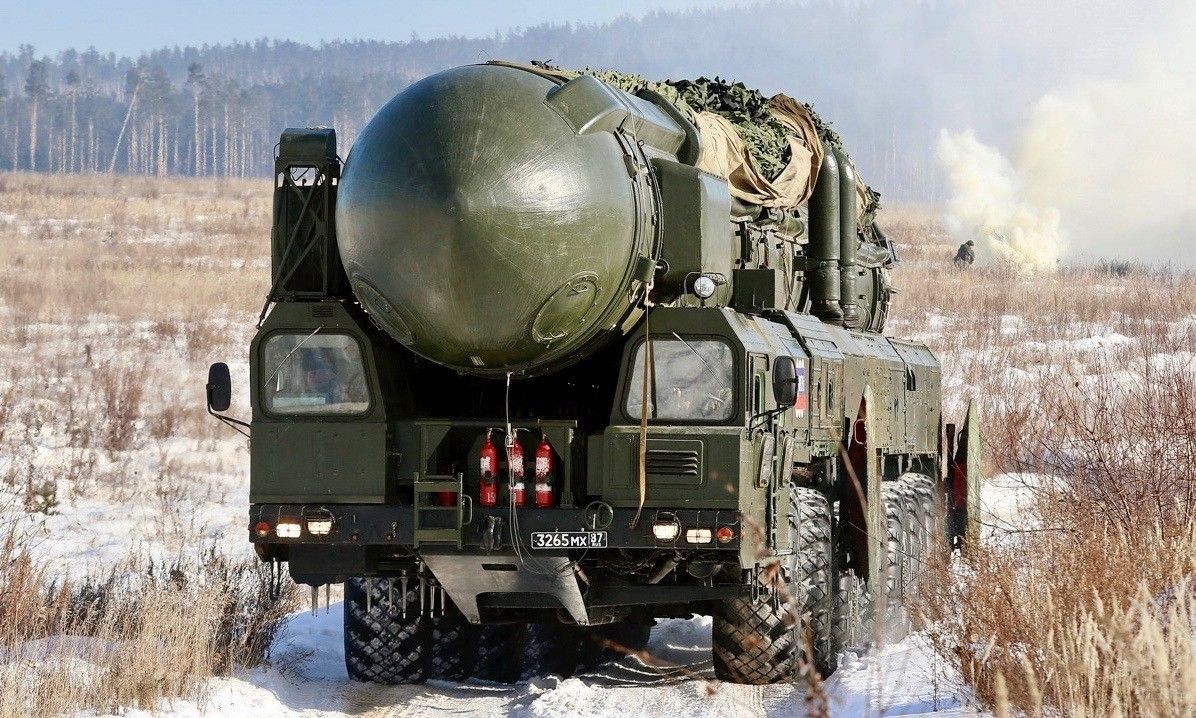
Nuclear weapons as a new pillar of state security?
The crisis of the contemporary global security architecture raises questions about how states can effectively protect their citizens today. Have we reached a point where real defense against a potential adversary can be provided only by nuclear weapons?
The crisis of American leadership, the unstable stance of U.S. President Donald Trump, and documents that will soon see the light of day and present a new U.S. approach to engagement in various regions of the world (the National Security Strategy and the „Global Posture Review” prepared by Pentagon deputy Elbridge Colby) mean that Washington’s existing allies may start to wonder to what extent the security guarantees previously provided by the Americans remain binding. This, in turn, means that those who until recently regarded such a scenario as science fiction are increasingly beginning to consider acquiring nuclear weapons.
Author: Michał Górski
Building strategic partnership between Poland and Sweden
On October 21, 2025, Poland and Sweden signed an International Cooperation Plan focused on joint defence and deterrence strategies. This agreement is a real step towards building an innovative industrial and defence base in the Baltic region. Ministers from both countries highlighted the importance of strategic partnership between Warsaw and Stockholm. A key component of the agreement involves enhancing collective procurement within SAFE program as both countries have significant potential in arms industry. Sweden contributes advanced capabilities in firearms, armoured vehicles, and its domestically produced fighter jet, the Saab JAS 39 Gripen. Meanwhile, Poland has supplied Stockholm with the short-range Piorun air defence missile system.
What is more, on October 23 during the Polish Swedish Defence Industry Forum, Saab and Dezamet signed a pivotal agreement enabling Dezamet to license-produce Saab mortar ammunition in Poland. This strategic partnership between defence contractors has the potential to strengthen the Polish defence industry and the capabilities of the national armed forces.
Cooperation between Poland and Sweden is a cornerstone in shaping the broader European security architecture. By reinforcing regional networks across the Baltic Sea, it boosts collective resilience against military and hybrid threats. Moreover, it opens new opportunities for cooperation not only in defence sector but also in areas such as green energy or digital transformation.
Author: Amelia Wojciechowska
A dire warning for Europe from gen. Zaluzhny: how can we avoid war?
A special commentary by the former Commander-in-Chief of the Armed Forces of Ukraine for the Eastern Flank Institute. Author: Gen. Gen. Valeriy Zaluzhny, Ambassador of Ukraine to the United Kingdom, Commander-in-Chief of the Armed Forces of Ukraine (2021–24)
European security depends on unity of purpose and the will to act
How did the war in Ukraine begin?
The war in Ukraine is the result of a long series of foreign-policy mistakes stretching back to independence. From the early 1990s our leaders pursued a so-called multi-vector policy. Kyiv tried to maintain good relations with both the West and Russia in order to reap benefits from each direction. That approach ultimately led the state into a grave misfortune and for a long time prevented it from resisting external influence. At the same time, it brought economic gains — credits and investments from Europe and the United States, and from Russia preferential gas prices and market access. In return, the Kremlin systematically built influence on both banks of the Dnieper: it supported loyal political parties and individual leaders, used energy resources, Russian-speaking communities and investments in strategic enterprises for political ends. Russian propaganda flowed into Ukrainian media in a broad stream.

Polish and Ukrainian leaders hold talks on defence at EU Summit
On October 23, 2025, during the European Union summit in Brussels, Polish Prime Minister Donald Tusk met with Ukrainian President Volodymyr Zelensky. The discussion focused primarily on cooperation in the fields of security and defence, including joint industrial projects and the potential use of the EU financial instrument SAFE to support investments in the defence sector. The leaders also addressed the issue of ongoing Russian attacks on Ukraine’s energy infrastructure and the need to strengthen the protection of Ukrainian airspace, which Zelensky emphasized as crucial for the security of the entire European continent.
The meeting took place in the context of ongoing EU talks on further support for Ukraine, including the possible use of frozen Russian assets and the expansion of sanctions against Moscow. The expressed interest in deepening defence cooperation and involving European companies in the reconstruction and modernization of Ukraine’s defence industry highlights the growing integration between Kyiv and EU member states. The conclusions from the meeting confirm that Ukraine’s security is increasingly viewed as an integral part of Europe’s overall security and that political and economic cooperation in this area is gaining strategic importance.
Author: Justyna Smoleń
Qatar and hosting the World Cup as a pretext for arms modernisation
Since FIFA’s decision in 2010 to award the World Cup to Qatar, Doha has used the tournament as both a catalyst and a justification for a vast defence modernisation programme. Between 2010 and 2021, Qatar’s defence spending increased by more than 430%, reaching USD 11.6 billion (around 5% of GDP). The country acquired 96 combat aircraft from the US, France and the UK, reinforced land forces with German Leopard tanks and PzH 2000 howitzers, and built an entirely new navy of seven Fincantieri vessels. Air defence was enhanced through Patriot batteries and an integrated Air & Missile Defence Operations Centre (ADOC). The 2022 World Cup therefore became not only a sporting spectacle but also a demonstration of Qatar’s ability to coordinate multi-layered national defence involving nearly twenty international partners.
The post-World Cup phase has continued this trajectory. Qatar is prioritising counter-drone systems, MALE-class drones, and helicopter and naval deliveries, while considering new combat vehicles and additional Typhoon fighters. Its defence budget is forecast to rise to USD 19 billion by 2027, signalling long-term commitment to security and strategic autonomy. At the same time, Doha faces heightened threats from Iran, terrorist organisations, and regional instability, while also wielding sport as a geopolitical instrument — from mediating in the Israel–Hamas conflict to shaping UEFA decisions. Hosting the World Cup thus served as a pretext for Qatar’s transformation from a small Gulf state into a regional military actor whose use of sport, energy, and arms purchases are all intertwined within a single national power strategy.
Author: Aleksander Olech
If you would like to receive this newsletter, please sign up by clicking.
East Front News is a weekly newsletter and article on Defence24.com summarizing the past week’s most important events concerning security and the situation in the Central and Eastern Europe region. It includes original opinions and comments, along with key news items significant from a Polish perspective.