- ANALIZA
- WIADOMOŚCI
How extensive was NATO military aid to Ukraine?

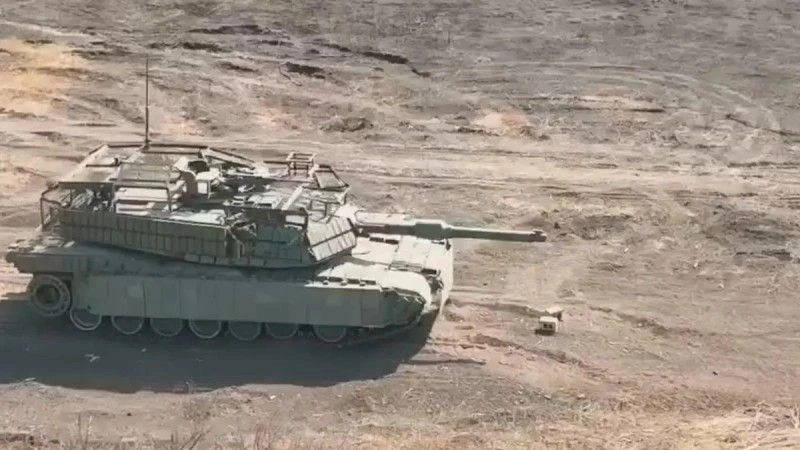
Photo. 47. Brygada Zmechanizowana
Military assistance provided to Ukraine by NATO member states and their non-NATO allies has been highly significant. However, the general public is not always aware of just how extensive this assistance has been, or at the same time how poorly some of the combat equipment supplied to Ukraine has been employed. This article will attempt to illustrate the scale of that assistance and describe how poorly it was utilised, with negative consequences for Ukraine in the ongoing war.
Heavy assets
Let us begin with the most important form of assistance: heavy equipment for the land forces. For obvious reasons, NATO countries were only able to supply such equipment on a piecemeal, or “drip-feed”, basis, as it often came from reserve stocks and first had to be restored to operational condition and properly prepared. However, primarily for political reasons and due to a lack of patience, the employment of this equipment was poorly organised, resulting in unnecessary losses of irreplaceable soldiers and extremely valuable equipment. This issue will be addressed later. For now, let us examine the scale of assistance in numerical terms. The Oryx website was used as the source.
In terms of main battle tanks supplied, the assistance was as follows:
- 33 M1A1SA-UKR tanks (Oryx lists 31 vehicles, but U.S. documents refer to 33);
- 49 M1A1AIM tanks;
- 14 FV4034 Challenger 2 tanks;
- 580 T-72M/T-72M1/T-72M1R/T-72A/T-72EA tanks, including more than 200 from Poland;
- 30 M-84 tanks;
- 170 Leopard 1A5/Leopard 1A5BE tanks;
- 10 Leopard 2S/Strv 122A tanks;
- 73 Leopard 2A4 tanks;
- 21 Leopard 2A6 tanks;
- 60 PT-91 Twardy tanks (other estimates refer to 30 such vehicles and a larger number of T-72Ms);
- 28 M-55S tanks.
This gives a total of 1,068 main battle tanks.
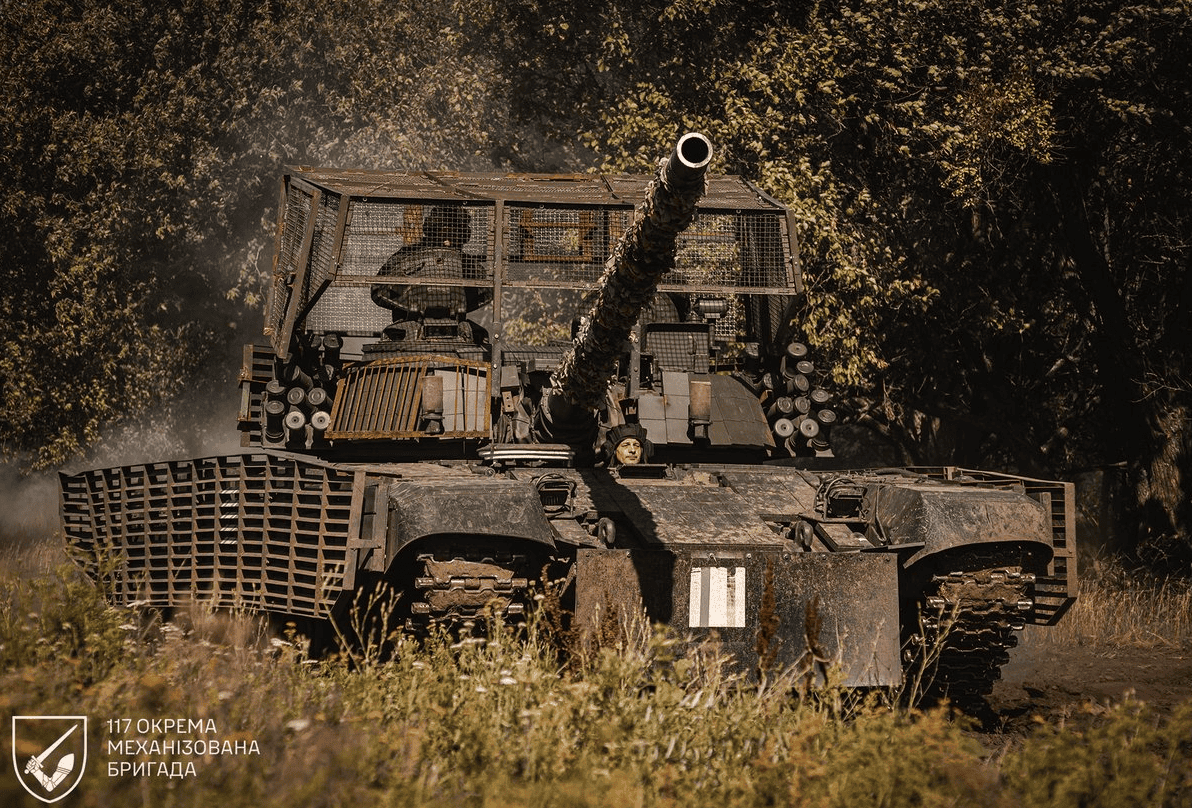
Photo. 117th Mechanized Brigade/Defense of Ukraine
In terms of infantry fighting vehicles:
- 300+ M2A2ODSs and 7 M7 BFISTs,
- 190 Marder 1A3s,
- at least 426 BMP-1/BWP-1/BVP-1/Pbv 501 vehicles, although the actual number may be considerably higher,
- 80 BMP-2/BVP-2s,
- 50+ CV9040Cs,
- 35+ CV9035NLs,
- 68 M-80As,
- 64 LAV-2s,
- several dozen to 100 Rosomak wheeled armoured personnel carriers, transferred from Polish Armed Forces stocks. Another 100 were reportedly to be purchased using funds provided by the United States and the EU, although this almost certainly did not happen,
- AIFV-V-C25 vehicles, with estimates ranging from several dozen to more than 100,
- 15 KF41 Lynx vehicles, although reportedly only one prototype was delivered for testing and deliveries of production vehicles did not take place,
- 9 Boxer RCT30 vehicles, whose deliveries have yet to begin,
- 25 IFVs of an unknown type supplied by the Czech Republic.
Overall, more than 1,500 infantry fighting vehicles were pledged, of which at least 1,350 were delivered.

Photo. Lycksele-Nord / Wikimedia Commons
NATO also supplied a very large number of armoured personnel carriers:
- 155 LAV 6.0 ACSVs;
- 400 M1117s;
- 414+ VABs;
- 20+ XA-185s;
- 28 BvS 10s;
- 90+ BvS 206s;
- 110 BTR-60PBs;
- an unknown number of BTR-50s;
- an unknown number of TAB-71Ms;
- 20 Valuks;
- 156 Warthogs;
- 2+ Pumas 4x4/6x6;
- 42 Patria 6x6 CAVSs;
- 61 ACMAT Bastions;
- 153 URO Vamtacs.
In total, NATO declared that it would provide Ukraine with more than 5,000 vehicles classified as armoured personnel carriers, the vast majority of which were delivered. It should be noted, however, that some vehicles, such as the URO Vamtac, should instead be classified as armoured cars.

Photo. Ukrainian Logistics Command
Other classes of armoured fighting vehicles supplied included:
- 9+ Fenneks;
- 40+ AMX-10RC/AMX-10RCRs;
- 23 FV107 Scimitars Mk2;
- 47 CALVs;
- 16+ BRDM-2s;
- 68 BvS 10s;
- 1+ B1 Centauros;
- 295 armoured vehicles of unidentified types supplied by Poland;
- 1+ BPzV Svatavas.
In total, NATO pledged more than 500 such vehicles, generally specialised armoured vehicles, most of which were delivered.

Photo. 503 Окремий батальйон морської піхоти/Facebook
MRAP-class vehicles were also supplied:
- 1 RG31 Nyala MEDEVAC vehicle,
- 2 BMR MEDEVAC vehicles,
- 120 Bushmaster PMVs,
- 7 Alvis 4 Mambas,
- 462 M1224 MaxxPros,
- 200 BMC Kirpis,
- 6+ BMC Kirpi IIs,
- 50 Dingos,
- 20 Dingo 2s,
- 37 Cougars 4x4,
- Cougars 6x6 (unknown number),
- M-ATVs (unknown number),
- 400 FFG MRAPs,
- 46 Mastiff PPVs,
- 1 Ridgeback,
- Wolfhounds (unknown number),
- 520+ MRAP vehicles delivered by the USA.
Altogether, approximately 1,872 MRAP-class vehicles were pledged, most of which were delivered. Ukraine’s own production, such as Kozak-2 vehicles, should be added to this figure.

Photo. Roman Shimonov
Various types of armoured cars should not be overlooked either:
- 5,000+ HMMWVs,
- 400 Husky TSVs,
- 2,640 Roshel Senators,
- 19 AMZ Dzik-2s,
- 374+ LMV Lynxes,
- 20+ Otokar Cobra IIs,
- 25 Caracals 4x4,
- 13 Ghurka LAPVs,
- 66 BATT UMGs,
- 200+ JLTVs,
- 65 MSFVs,
- 26 BOVs,
- 4 Iveco M 40.12 WM/Ps,
- 2 Bronco ATTCs.
More vehicle types were delivered, but establishing their exact numbers is difficult. It is estimated that more than 8,500 vehicles of the types listed above were delivered in total.

Photo. Cpl Si Longworth RLC/Wikipedia
One must also remember the enormous assistance provided in the form of tube and rocket artillery.
Towed howitzers:
- 197+ M777s,
- 24+ FH-70s,
- 45+ D-30s,
- 124 L118/L119/M119s,
- 21 TRF1s,
- 25 M101s,
- 10 D-44Ms.
Several other types were also delivered, although the scale of those deliveries is unknown. Even so, this amounts to more than 446 towed howitzers of various calibres.

Photo. Ukrainian MoD/X
Self-propelled howitzers:
- 108 AHS Krabs,
- 58 PzH2000s,
- 175 M109s,
- 182 Caesars,
- 105 AS90s,
- 112 2S1 Gvozdika vehicles — the number supplied by Poland; other countries delivered an unknown number,
- at least several hundred 2S22 Bohdana systems, produced in Ukraine with financing from NATO countries,
- 43 Dana/Dana M2s,
- 15 Ditas,
- 24 Zuzanas,
- 26 Archers,
- 54 RCH 155s, whose deliveries have not yet begun.
Overall, this amounts to at least 1,120 self-propelled howitzers of various calibres pledged, most of which were delivered to Ukraine. In addition, NATO financed the production of several hundred Ukrainian 2S22 Bohdana self-propelled howitzers.
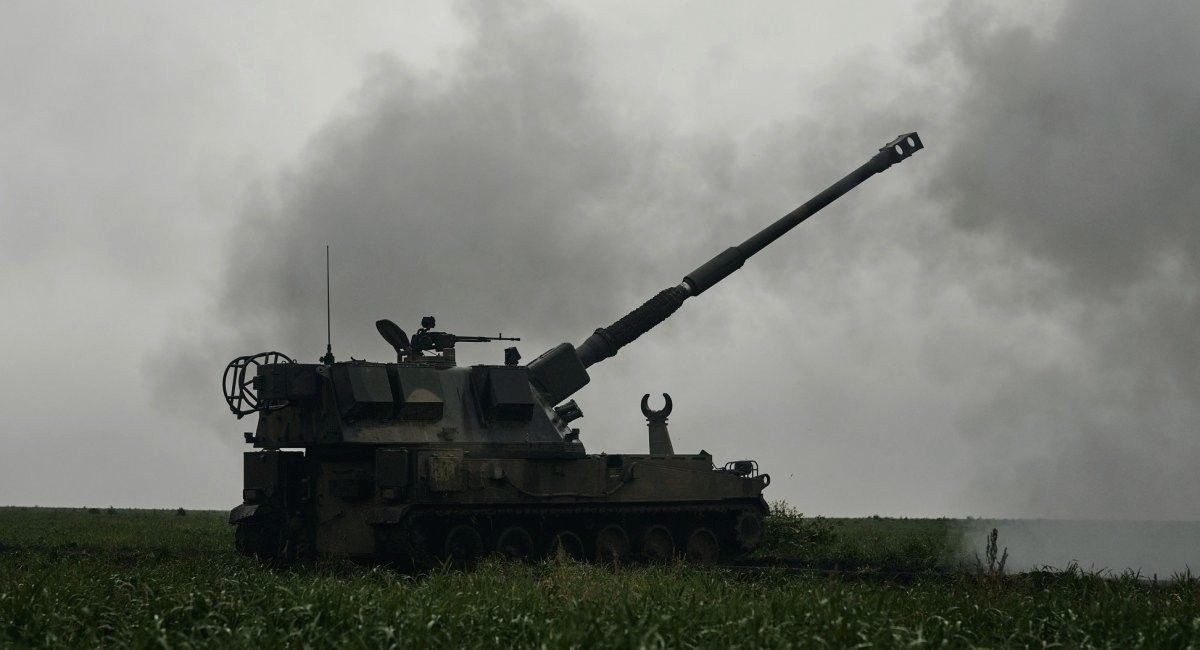
Photo. 26 артилерійська бригада ім. генерал-хорунжого Романа Дашкевича
NATO support in the field of rocket artillery was as follows:
- 43 M142 HIMARS,
- 25 M270 MLRS,
- 20+ RM-70s,
- 34+ BM-21s. In practice, the number of the latter two types may have been significantly higher.
In addition to the systems listed above, small numbers of other systems were also supplied. Overall, more than 122 multiple launch rocket systems of various types were delivered.

Photo. General Staff of the Armed Forces of Ukraine, Twitter
Apart from the equipment listed above, very large quantities of other types of military equipment were also supplied. One must also remember the quantities of ammunition, spare parts, fuel and other operating fluids delivered, which are impossible to verify numerically. In total, NATO supplied at least approximately 9,800 medium and heavy armoured fighting vehicles, more than 8,500 light armoured vehicles, 446 towed howitzers, 1,120 self-propelled howitzers, and considerably more than 122 multiple launch rocket systems.
In the second part of the article, we will discuss organisational structures and Ukraine’s ability to employ this equipment.
Equipment and organisational structures
Now that we know the approximate quantities of heavy equipment transferred, how does this translate into the organisational structures of Ukraine’s land forces and their ability to form combat elements? It is not known what the current organisational structure of tank battalions and mechanised and motorised infantry battalions looks like. In previous years, however, these battalions generally consisted of 31 combat vehicles. Taking the collected data into account, we can therefore estimate, in very simplified terms, that Ukraine would have been able to form:
- approximately 50+ main battle tank battalions;
- approximately 50+ mechanised battalions equipped with infantry fighting vehicles;
- approximately 100+ mechanised/motorised battalions equipped with armoured personnel carriers.

Photo. Lithuanian MOD/X
Historically, Ukrainian armoured brigades generally fielded three tank battalions and one mechanised battalion, while mechanised brigades had the reverse structure: one tank battalion and three mechanised battalions. As can therefore be seen, the assistance received would have allowed Ukraine to re-equip, or even form, many new brigades. This process was indeed initiated, but very serious mistakes were made along the way.
Ukraine's Mistakes
The mistakes made by the Ukrainians are important for understanding the course of the war. First, there was haste and insufficient training time. Standard training for combat vehicle crews takes approximately three months at the individual vehicle-crew level. This allows crews to adequately master the necessary skills. However, subsequent training involving the integration and collective training of platoons, companies and battalions at the brigade level takes considerably longer. It can be said that, when introducing new Western equipment, the Ukrainians treated this issue as an afterthought.
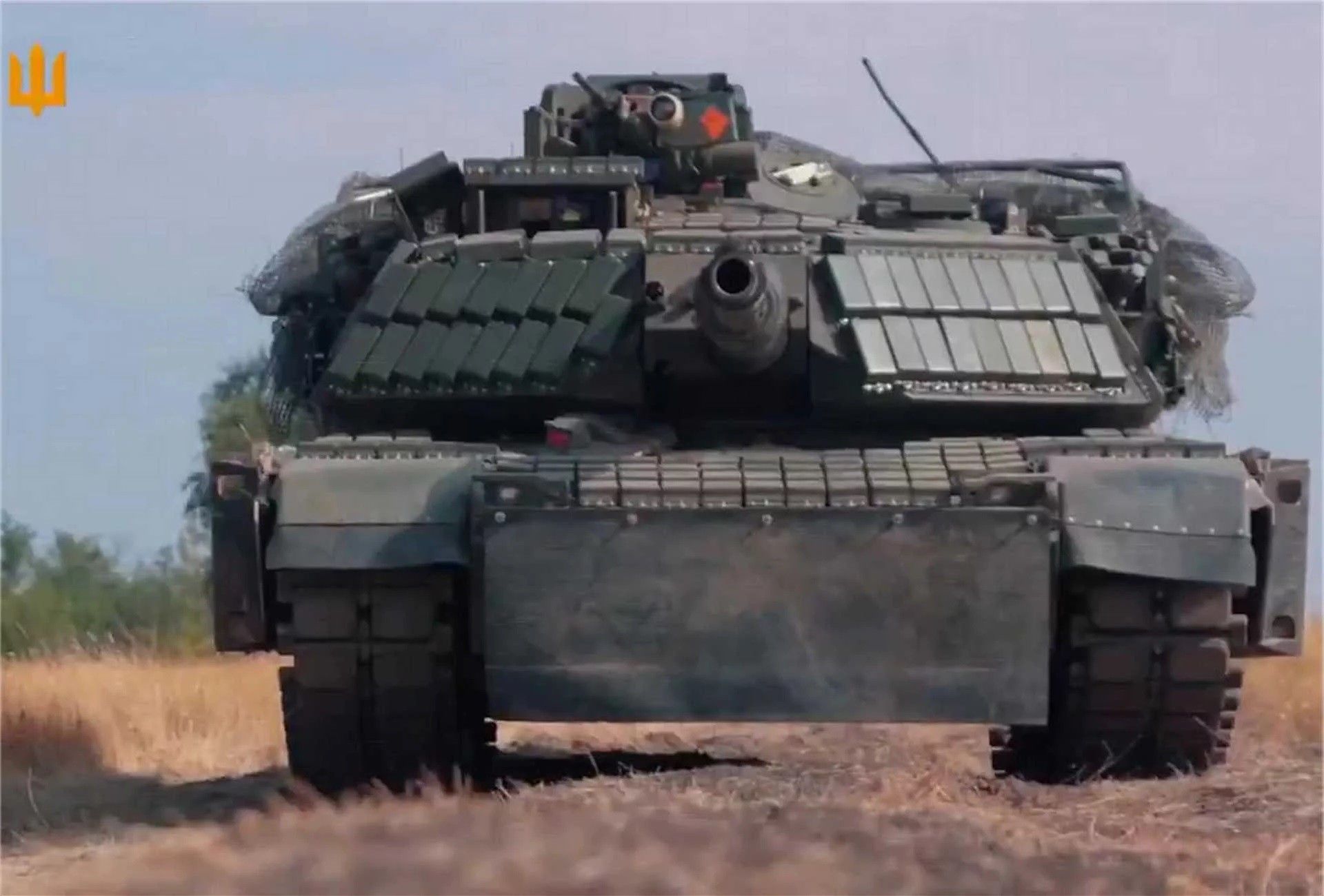
Photo. Ukrainian MoD
Another issue was logistics. Because deliveries of practically all of the equipment were based on donations rather than normal procurement, the Ukrainians relied on spare parts included in the logistical packages supplied together with the equipment. Most likely, the development of a proper logistics support base with adequate reserves was neglected entirely. To this day, evidence of spare-parts purchases can only be found in publicly available U.S. documents, but relatively few such purchases were made, and it is unclear exactly what parts were involved or whether they covered all types of U.S.-supplied equipment.
Another problem was the poorly considered employment of the equipment. As noted at the beginning of this article, various objective factors meant that equipment could only be delivered on a piecemeal basis. This resulted, among other things, from the need to carry out repairs and from the time required for transportation, including from overseas. Ukrainian propaganda blaming Western countries for deliberately supplying equipment in smaller batches does not help in this regard, as this is inconsistent with the facts and with logic.

Photo. Генеральний штаб ЗСУ / General Staff of the Armed Forces of Ukraine/Facebook
As a result, on the one hand the Ukrainians delayed their counteroffensive while waiting for equipment deliveries, while on the other hand they rushed to launch it using newly received equipment. This did not allow soldiers and subunits to be properly trained. In addition, their poorly considered propaganda signalled to the Russians approximately where the attack would take place. The Russians consequently had both the time and the knowledge required to prepare defensive lines in the relevant area. It is difficult not to draw parallels with how the Germans prepared Operation “Zitadelle” in 1943 and ultimately lost it for very similar reasons.
The conduct of the operation itself also raises numerous concerns. When employing Western equipment, favourable battlefield conditions for its use were not created. First, fortifications, and Russian minefields in particular, were not properly reconnoitred. As a result, entire vehicle columns were immobilised and became vulnerable to enemy fire. Moreover, once the first vehicle had been immobilised, the vehicles behind it, instead of stopping or withdrawing, entered the same minefield.

Photo. General Staff of the Armed Forces of Ukraine / X
It is remarkable that smoke screens were not deployed, either using launchers mounted on the vehicles themselves or by artillery. Artillery support also appears, based on the available material, to have been inadequate. There was insufficient air and air-defence cover. Preparations for mine-clearing operations were also inadequate. There were too few specialist vehicles, and they lacked proper support. In addition, tank platoons and companies lacked vehicles equipped with mine-clearing systems.
Another mistake was the change in tactics. Following the initial failures and the gradual descent into positional warfare, the Ukrainians, much like the Russians, began sending individual vehicles into combat, often without infantry, air-defence or air support. Many vehicles were lost in pointless offensive actions, often as part of persistent fighting for the ruins of villages with little operational significance, let alone strategic importance. The defence of larger urban centres was similar and, in the longer term, resulted in the loss of personnel and equipment.

Photo. Defense of Ukraine/X
With hindsight, it is also apparent that spectacular offensive operations promoted by propaganda were likewise a waste of valuable forces and assets. Given the Russian Federation’s advantage in manpower and materiel, Ukraine should have transitioned to the defensive, conserving its own limited resources while attempting to neutralise as much Russian manpower and equipment as possible. It should be remembered that, in warfare, the defending side, provided it has suitable defensive lines, can generally minimise its own losses while maximising those of the enemy. It should be emphasised here that both the Russians and the Ukrainians have major problems with conducting combined-arms operations.
Ultimately, it also appears that the Ukrainian side made another critical mistake: it came to believe its own propaganda. The purpose of propaganda, however, is to make the enemy believe it. Ultimately, the much-praised proliferation of drones on the battlefield did not actually produce a breakthrough or reduce friendly losses. The only effect of this drone-centric battlefield has been an endless positional war of attrition, while combat on the front is most tragic for the infantry, which is forced to operate in conditions resembling a “meat grinder”. Unfortunately, incorrect conclusions are often drawn from this situation as a result of an uncritical fascination with unmanned systems.
In the longer term, this situation is unsustainable for both sides. Voices are already emerging in Russia calling for a return to manoeuvre warfare. In order to achieve this, however, countermeasures must be introduced, such as active protection systems for vehicles capable of neutralising FPV drones. These drones have become a mass-produced substitute for anti-tank guided missiles. It should be emphasised here that only vehicles can be equipped with effective protection against FPV drones; infantry cannot implement equivalent protective solutions. In order to return to effective battlefield operations, infantry must cooperate closely with armoured fighting vehicles equipped with active protection systems.
It is also worth noting that, in reality, losses of Western equipment have not been particularly high, as we have previously reported. Of the 82 M1A1SA-UKR/M1A1AIM tanks supplied, the Ukrainians have permanently lost 15, of which 10 were destroyed. Of 74 Leopard 2A4s, 22 were permanently lost, while eight Leopard 2A6s were lost. More information on the remaining vehicles can be found in the previously mentioned article. The situation is similar with other equipment. The Ukrainians have not lost all of the vehicles supplied as military assistance, but it cannot be ignored that many were lost primarily because of improper employment.
What should have been done?
What should have been done? It can of course be argued that decisions are easier to assess in hindsight. That is true, but this is precisely the purpose of analysing events. First and foremost, despite considerable political pressure, the Ukrainians should have refrained from committing units being re-equipped with Western systems. Those formations should have remained in the rear as part of a reserve corps, where training and collective unit integration could have continued. New soldiers should also have been mixed with veterans, allowing longer-serving and more experienced personnel to train newcomers. This would have produced better training results and reduced battlefield losses.

Photo. 21 окрема механізована бригада/Facebook
The Ukrainians should also have refrained from launching the counteroffensive in the Zaporizhzhia region, particularly once it was already known that the enemy had prepared defensive lines. These defences were not properly reconnoitred, while the Russians employed minefields very effectively: instead of the standard depth of 120 metres, they established obstacles up to 500 metres deep. There was also an insufficient number of vehicles equipped with mine ploughs and mine rollers. Errors were also made at the lowest command levels, where vehicles moving in columns entered the same minefield one after another and, once immobilised, were subsequently finished off by the Russians.
Furthermore, the Ukrainian side should have been aware that NATO’s stocks of heavy military equipment, particularly in Western Europe, are limited. The United States, because of its global position and commitments worldwide, would not transfer its entire strategic stockpile because of its own mobilisation plans. Equipment and soldiers therefore had to be conserved by adopting a defensive strategy. Only an appropriate defensive posture could offset Russia’s advantage in manpower and materiel.

Photo. 160th Separate Mechanized Brigade
Brigades being re-equipped with Western systems could additionally have acted as a “frontline fire brigade”, reinforcing defences in areas where the Russians were close to achieving a breakthrough or encircling Ukrainian units. Once their task had been completed, they could have been withdrawn to rest and replace losses. This would have allowed further training, the development of logistical support structures and preparation for a point at which their potential could be fully exploited. The West also made mistakes. Deliveries of cluster munitions were withheld for a long time, even though, particularly in 2022–2023, they could have played an important role, including in defensive operations such as the Battle of Bakhmut. They were ultimately supplied from July 2023 onward, during the offensive and after the fall of the city, which had been under assault from late 2022 until May 2023. There is also the question of how much Ukrainian operations were influenced by political considerations and by delays in assistance caused by such considerations.
Concluding notes
To summarise, Ukraine received enormous quantities of military equipment from NATO member states and NATO-friendly countries. This assistance could have allowed it to form at least several strong divisions. Unfortunately, as is always the case in such situations, the influence of political factors, an incorrect strategy and insufficient training time resulted in improper use of the equipment and losses that could have been avoided.

Photo. mil.gov.ua
This does not mean, however, that all of the assistance was wasted. The question is whether Ukraine will be able to solve the problems that have emerged on the battlefield. Will the government in Kyiv decide, in cooperation with the West, to finance the introduction of protection systems capable of countering drones, thereby enabling a return to manoeuvre warfare? In the longer term, positional warfare based on attrition will lead only to defeat.