












- WIADOMOŚCI
- ANALIZA
Strategic partnership between Poland and South Korea in the shadow of global rivalry




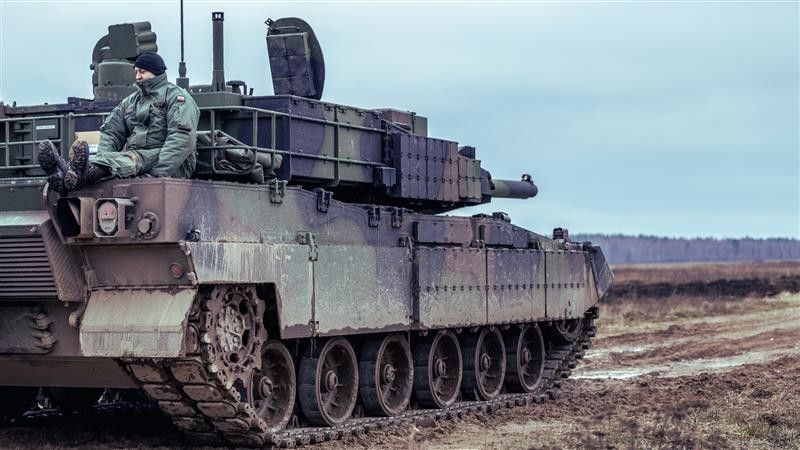
Photo. Defence24
Military cooperation between Poland and South Korea has evolved into a long-term partnership of strategic importance. These relations are being built around an increasing emphasis on conventional deterrence and against the backdrop of the complex geopolitical situation of both countries.
Military cooperation with Poland – a partnership for decades
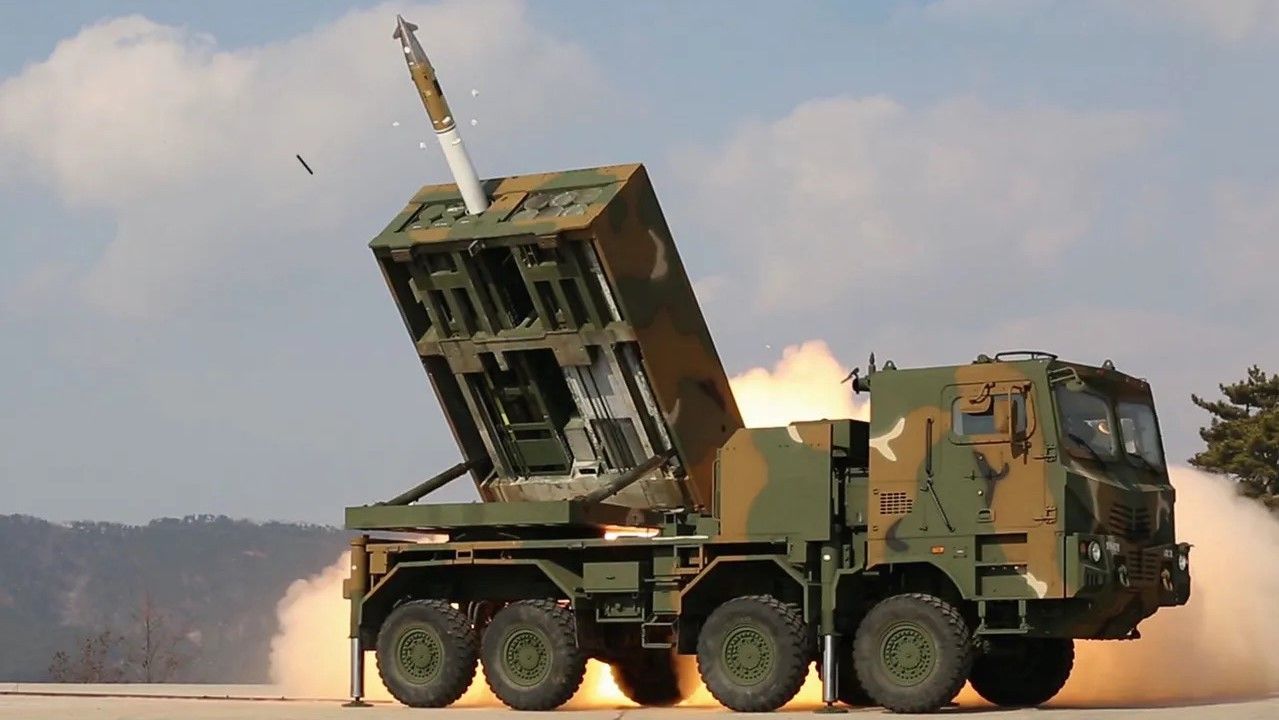
The cumulative value of Polish orders in the Republic of Korea is estimated at an impressive $27 billion. Poland has ordered, among other things, 292 Homar-K multiple rocket launchers. This is an exceptionally large number and may be equivalent to all rocket launchers in service with the countries of Western Europe. In addition, Warsaw is contracting for more than 360 tanks in the K2 and K2PL variants. Poland has also purchased K9 self-propelled howitzers in quantities exceeding the current holdings of the Republic of Korea’s own armed forces (both the Army and the Marine Corps). Thanks to the scale of the order, Poland is by far the largest export user of the K9 system in the world.
The key to the long-term partnership is not only the purchase of equipment, but above all its extensive Polonisation and the transfer of technical expertise. The servicing of the South Korean engines powering K2 tanks will ultimately be carried out at Wojskowe Zakłady Motoryzacyjne in Poznań. In turn, the Polonisation process for the K2 combat vehicles themselves will be carried out at the Bumar-Łabędy plant. For Polish industry, this represents a tremendous opportunity to revitalise key manufacturing sectors after years of stagnation caused by misguided political decisions.
Weapon system | Estimated order scale | Key location in Poland |
Homar-K | 292 rocket launchers | Systems cooperation |
K2 / K2PL Black Panther | More than 360 units | Bumar-Łabędy (Polonisation) |
K9 Thunder | Scale exceeding South Korea's holdings | Poland as the export leader |
Engine servicing | Full technical support | WZM Poznań |
The "Three-Axis" doctrine and conventional deterrence
Seoul’s main response to the deadly threats emanating from North Korea is the so-called “Three-Axis” doctrine. The strategy envisages covering the country with a comprehensive umbrella of modern air and missile defence. Another pillar is the creation of an exceptionally fast and resilient command-and-reconnaissance chain designed to reduce response time to a minimum. The final element of the doctrine is maintaining a high capability to rapidly conduct a massive strike against enemy infrastructure using conventional means of attack.
To implement these objectives, the Republic of Korea’s missile arsenal is being continuously expanded. The Koreans have unveiled an entirely new ballistic missile from the Chunmoo family, an absolute technological colossus with a total weight of 36 tons. Western analysts estimate that this missile carries a gigantic warhead weighing approximately 6 tons. The warhead is made of an exceptionally heavy metal and equipped with an advanced thermobaric charge. Its primary purpose is the effective destruction of the highest command posts of the North Korean military, which are most often hidden deep underground in granite mountains.

Complex relations with Russia and a major transfer of technology
Despite its unequivocally pro-American course, Seoul’s relations with the authorities in the Kremlin remain highly complex and cautious. South Korea is currently the world’s fifth-largest recipient of Russian energy resources, transferring huge amounts of cash to the Russian Federation. Seoul seeks to avoid antagonising Moscow, hoping that this will prevent Vladimir Putin from providing stronger military support to the Pyongyang regime. In exchange for North Korean deliveries of ammunition and troops to the front, the Russian Federation is transferring drone systems and technologies supporting naval forces to its Asian ally. Moscow is also supporting North Korea in the development of automated command-and-control systems using AI, helping to close the gap in conventional capabilities.
Historically, however, the South Korean defence sector drew extensively on cooperation with the Russians. After the collapse of the USSR in 1991, as part of the repayment of an enormous debt, Moscow transferred state-of-the-art weapons systems to South Korea, including T-80UD tanks and BMP-3 infantry fighting vehicles. Russian expertise and technical know-how served in South Korea as the basis for the independent development of numerous areas of industry. For example, the design of the modern M-SAM (Cheongung) air defence system was based directly on technologies and designs borrowed from the Russian S-350 system and Russian missiles.
Shipbuilding industry and nuclear prospects for the navy
The Republic of Korea is currently the world’s second-largest producer in the shipbuilding industry, ranking behind only China. Ultra-modern submarines are being built at automated shipyards located on Geoje Island as part of the prestigious KSS-III programme. The industrial localisation of the construction of these units has reached an exceptionally high level, exceeding 90 percent. As unique designs by Western standards, KSS-III submarines feature built-in launchers intended to fire short-range ballistic missiles. Thanks to a political “green light”, the Koreans now possess the capabilities to design and build nuclear-powered submarines in the near future. The strong development of shipbuilding technology is closely linked to the advancing demographic decline; widespread digitisation and automation of processes (e.g. the introduction of large welding machines) drastically reduce the demand for shipyard personnel.
Global operational conditions: the military alliance with the United States
The close military alliance with the United States has remained an unshakable foundation of South Korea’s security since the 1950s. In the event of a full-scale war on the Korean Peninsula, the nearly 400,000-strong South Korean army would immediately come under the direct command of the American general leading the UN forces. The government in Seoul is currently under considerable pressure from the U.S. authorities to involve its armed forces in allied operations in the Middle East, in the Persian Gulf region. Behind the scenes in military circles, there are lively discussions about options for sending specialised equipment and personnel to the area of confrontation with Iran. The scenarios under discussion include deploying naval mine countermeasures vessels, advanced surveillance aircraft, special forces, or designated air defence units. Such military expeditionary operations alongside the Americans would not be unprecedented, as it should be remembered that, as early as the 1960s, the armed forces of the Republic of Korea provided significant and sizeable support to the U.S. contingent during the Vietnam War.
Deep technological ties and the unprecedented scale of the Polish government’s purchases mean that the Warsaw–Seoul partnership goes far beyond ordinary commercial contracts. South Korean power is based not only on unique doctrines of conventional deterrence, but also on an outstanding manufacturing industry. Poland gains exceptionally powerful modernisation support, while Seoul is consolidating its European industrial foothold on NATO’s eastern flank, becoming one of the major shapers of global security.


