












- WIADOMOŚCI
- WAŻNE
- ANALIZA
NATO establishes Forward Land Forces in Finland


Photo. Puolustusministeriö
On June 6, 2026, NATO officially established Forward Land Forces in Finland. This is the ninth NATO unit of its kind and the first to be deployed in the Far North.
What exactly are NATO's Forward Land Forces?
Forward Land Forces (FLF) are a key element of NATO’s military presence along the eastern flank, deployed as multinational battle groups on Alliance territory. The core principle of their operation is that they rely not on the sheer number of units, but on a political signal; their presence alone is intended to demonstrate that an attack on one Ally will be an attack on the entire Alliance.
The FLF concept is a direct response to Russian aggression. Initially, four battle groups were established in 2017 in Estonia, Latvia, Lithuania, and Poland following the annexation of Crimea. After the full-scale invasion of Ukraine in 2022, four more were added in Bulgaria, Hungary, Romania, and Slovakia. Each is led by a so-called framework nation, which provides the core command structure and logistics.

How Finnish is the FLF in Finland?
The core of the FLF in Finland consists of a Swedish battalion-sized battle group, approximately 600 soldiers, stationed in Boden in northern Sweden. These units are capable of rapid deployment to Finland. The group is commanded by a Multinational Staff Element in Rovaniemi, the capital of Lapland.
Both the battle group and the staff came under the command of the Supreme Allied Commander Europe (SACEUR), General Alexus G. Grynkewich. The FLF itself falls under the area of responsibility of Joint Force Command (JFC) Norfolk, one of NATO’s three joint commands.

Sweden serves as the framework nation, while Denmark, France, Iceland, Norway, and the United Kingdom expressed interest in participating in the unit’s development in June 2025; Italy joined the group in the fall of 2025. Thus, FLF Finland is not „Finnish” in the strict sense — it is located on Finnish soil, but its core and support are provided by various member states, led by Sweden as the framework nation.
Between symbolism and strength
Minister Antti Häkkänen announced that the forces are ultimately intended to grow to the level of a brigade, which means the current state is merely a starting point. A battalion of 600 soldiers, even if perfectly trained and adapted to Arctic conditions, cannot independently repel a major attack. Its role is not so much to defend territory as to guarantee that any aggression will involve multiple Alliance nations from the first moment and automatically trigger the collective defence mechanism.
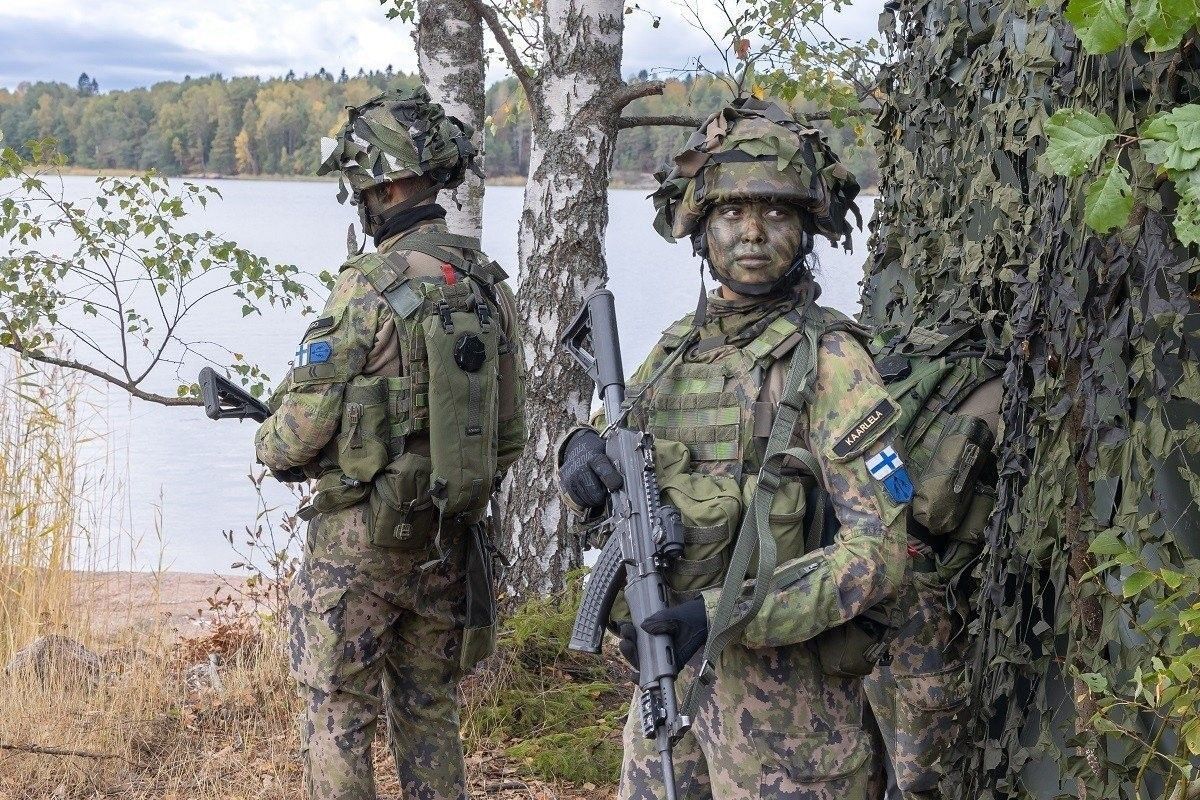
In other words, the real value of FLF Finland — as with any other unit of this type — lies primarily in the political signal rather than in its firepower alone, although the latter also provides a degree of deterrence.
The growing Russian threat on the Finnish border
The Finnish-Russian border spans 1,340 kilometers and is the longest stretch of direct contact between Russia and any NATO state. 2023 proved to be a watershed year. It was the year Finland abandoned decades of neutrality and joined NATO in direct response to the Russian invasion of Ukraine.
However, Russia has not remained passive in its reaction toward Finland. According to reports from the Wall Street Journal and the New York Times, confirmed by NATO officials, satellite imagery shows the expansion of Russian military infrastructure along the border with Finland. This includes tents, warehouses capable of housing military vehicles, and renovated shelters for combat aircraft. In Kamenka alone, approximately 60 km from the border, over 130 military tents capable of housing up to 2,000 soldiers have been erected since February 2025 on land that was still undeveloped in 2022.
See also 
SACEUR himself placed the unit’s establishment in this context, but also pointing to growing Chinese interest in the Arctic alongside Russian military activity. FLF in Finland is therefore a response both to the increased Russian military presence near the border and to the strategic competition over the Arctic region, which is gaining importance every year.
At this point, however, interpretive caution is advised. According to the Finnish Deputy Chief of Staff for Strategy, Major General Sami Nurmi, the Russian buildup was expected and does not pose an immediate threat at this time. To some extent, it is also a response to the NATO expansion to include Finland and Sweden — creating a security spiral in which each move by one side justifies a move by the other.
Strengthening Finnish-Swedish integration
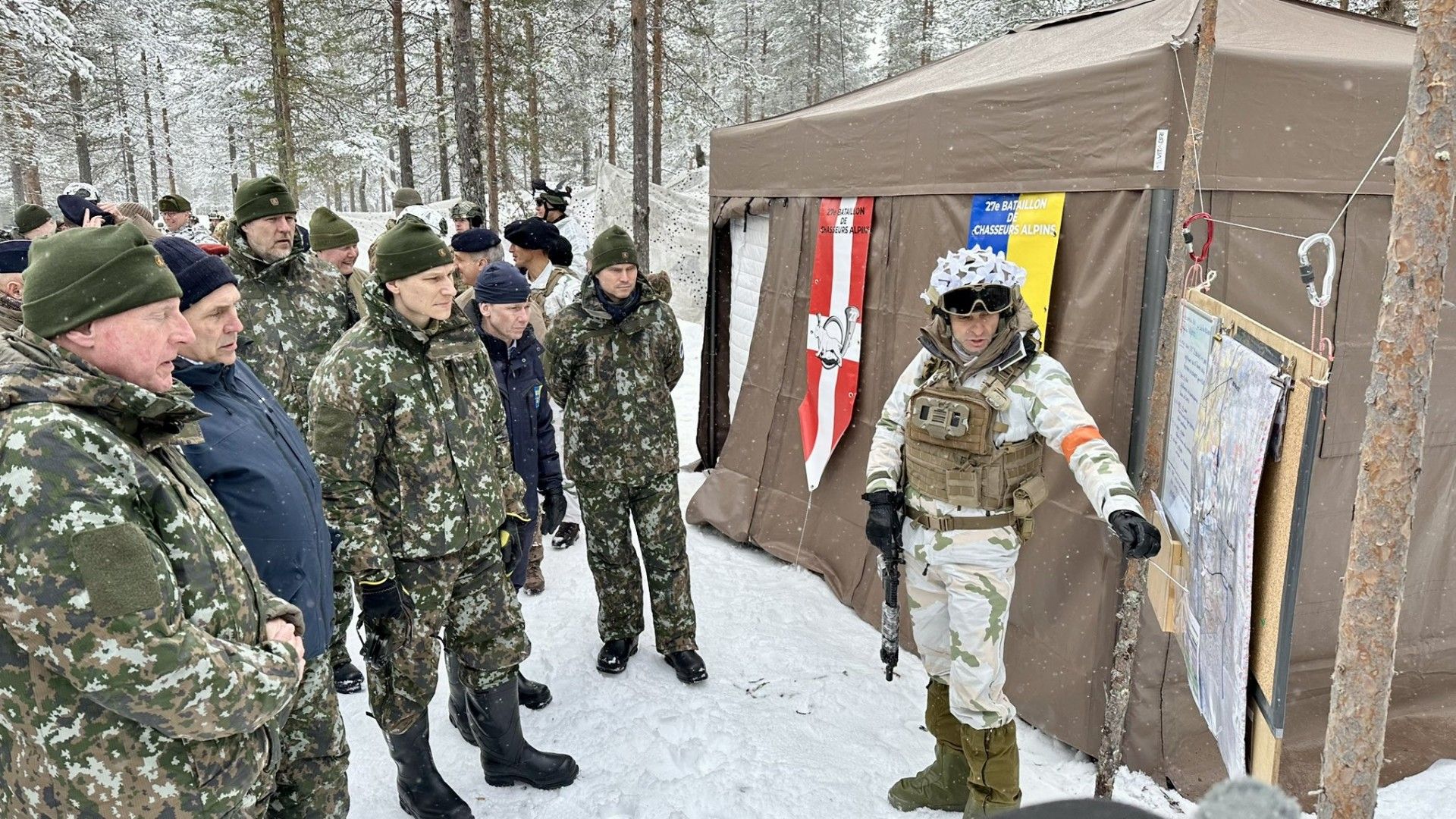
FLF in Finland is a textbook example of Finnish-Swedish integration — two nations that abandoned long-standing neutrality to join NATO. The Swedish battalion’s ability to rapidly deploy from Boden to Finland is more than just a rhetorical declaration: the group practiced this maneuver during this year’s Cold Response 26 exercises. Boden and Rovaniemi are only about 250 km apart in a straight line, making such a deployment feasible within a matter of dozens of hours.
FLF highlights the importance of the long-standing and deep defence cooperation between the two countries, which has indeed allowed them to move from plans to real operational capability in a short time.
What is missing?
The creation of FLF in Finland is a positive step forward in building European deterrence capabilities; however, certain issues remain undefined at this stage. First, the schedule. Scaling up to a brigade is a goal without a specific date or even a timeframe.
Second, there is a lack of detail regarding financing and the division of responsibilities. Six nations declared their „participation in development,” but the declaration does not specify who will contribute soldiers, who will provide equipment, and who will offer only political support.
Third, recent events in the context of the transatlantic relationship are not insignificant here either. Despite the fact that the FLF is on European soil, its core is based on SACEUR, which is commanded by an American general. Such a unit, therefore, remains as credible as Washington’s commitment remains credible.
Net Positive — but no time to rest on laurels

The establishment of FLF in Finland is a tangible step whose significance — especially political — should not be underestimated. The unit in Rovaniemi geographically closes NATO’s northeastern flank, institutionalises Finnish-Swedish cooperation, and embeds the defence of the Far North into the Allied command structure. It is also a clear signal of the growing importance of the northeastern front and a sober recognition of the threat from Russia.
However, Europe cannot stop there. The question of how and when the battalion will grow into the promised brigade remains open, as does the distribution of duties among allies, with it being crucial that the core of these forces consists of European nations.


