- WIADOMOŚCI
- KOMENTARZ
America cuts NATO’s war capabilities

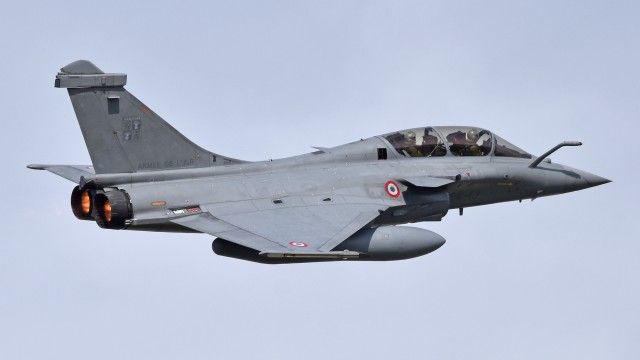
The United States is not withdrawing from NATO, but it is reducing the assets that matter most in the first phase of a major crisis in Europe. This is no longer only about staff posts, expert centres or rotations. It concerns fighters, tankers, reconnaissance aircraft, warships and the capabilities that allow NATO to see, strike and sustain operations at distance.
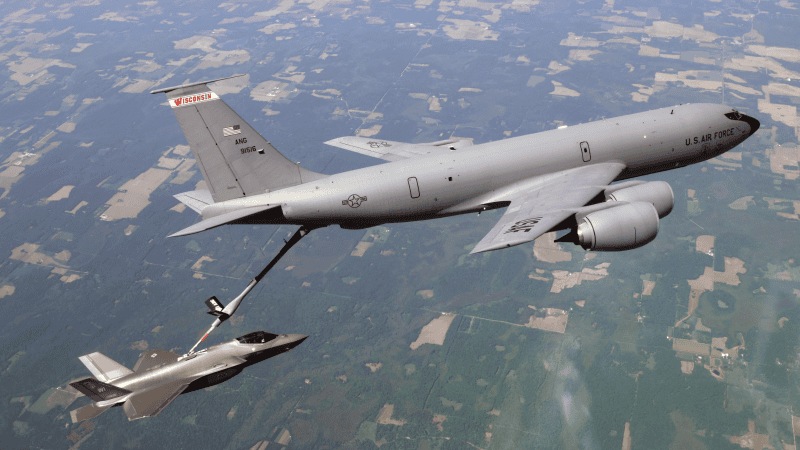
According to reports based on senior European officials, Washington plans to significantly reduce the aircraft and naval assets made available for NATO operations in Europe. The number of U.S. F-16 and F-15E fighters assigned to European NATO operations could fall from around 150 to 100. Maritime reconnaissance aircraft could be cut from 26 to 15. The United States also plans to remove all eight aerial refuelling tankers previously made available to Europe.
These numbers are important because they concern capabilities that European states have struggled to provide at scale for years. Fighters can be replaced on paper by European aircraft, but not immediately and not always with the same support structure. Maritime reconnaissance aircraft are essential for monitoring the North Atlantic, the Baltic Sea, the High North, the Mediterranean and approaches to Europe. Tankers are even more sensitive, because without air-to-air refuelling, long-range air operations become shorter, weaker and more dependent on forward bases.
The reported plan may also include the redeployment of a missile-launching submarine, an aircraft carrier, several warships and the dozens of aircraft that operate with the carrier group. One of two bomber groups previously assigned to Europe’s defence could also be reallocated. If implemented, this would affect not only NATO’s air presence, but also long-range strike, maritime deterrence, surveillance and the ability to reinforce Europe quickly in a major crisis.
See also 

This comes after another American reduction inside NATO structures. The United States has already been limiting its presence in expert formats, including NATO Centres of Excellence. Around 200 posts in NATO structures were expected to be cut, mainly by not replacing personnel after rotations end. That was less visible than the possible withdrawal of aircraft and warships, but it weakened the American role in places where NATO prepares analyses, exercises, scenarios and procedures for future crises. Now the discussion is moving from institutional presence to operational capabilities.
Washington presents this as burden-sharing. NATO itself has argued for years that Europe and Canada must invest more and build more capabilities. A NATO spokesperson stated that the Alliance has historically relied too heavily on U.S. forces and that the balance of responsibility can shift as European allies spend more and develop their own military capacity. This is politically understandable. Militarily, however, the transition is difficult, because the United States is reducing assets in exactly those areas where European dependence remains high.
The pressure is not new. Donald Trump’s administration has repeatedly accused European governments of underinvesting in defence and relying too much on American protection. Washington has pushed allies to raise defence spending to 3.5% of GDP for core military needs. In 2025, the United States still accounted for around 62% of total NATO military spending. That number explains both sides of the problem: Europe has relied on the U.S. for too long, but NATO also still depends on American capabilities in areas that cannot be replaced quickly.

The Ankara NATO summit on 7–8 July will therefore not be only about declarations and spending targets. It will be about what Europe can actually provide if the United States reduces its contribution to the NATO Force Model. U.S. European Command has already spoken about “rightsizing” its contribution, without giving full details. That word sounds administrative, but the practical meaning may be much more serious for Europe.
For Poland, the Baltic states and the eastern flank, this should be read together with the earlier American withdrawals from NATO expert structures. The U.S. will remain the most important ally, but it is narrowing the areas in which Europe can assume automatic American presence. The American security guarantee may remain, but the operational weight behind it is being recalculated. That distinction is crucial.
Europe now has to answer a question it has avoided for too long. If the United States provides fewer fighters, fewer reconnaissance aircraft, no dedicated tankers, fewer naval assets and possibly fewer bombers for European defence, then European states must build the missing capabilities themselves. This means air-to-air refuelling, maritime patrol, air defence, long-range fires, ammunition, drones, electronic warfare, command structures and logistics.
The problem is not that NATO is collapsing and, again, President Trump is changing his mind. The problem is that NATO is becoming less American in practice before Europe is fully ready to become more capable. This gap will not be visible in speeches, but it will matter in the first days of a crisis, when aircraft must fly longer, ships must monitor wider areas, intelligence must be collected continuously and forces must be moved quickly. Europe has been warned many times and now the warning is becoming operational with the limitation of American war tools.