- WIADOMOŚCI
- WYWIADY
Türkiye wants to arm NATO

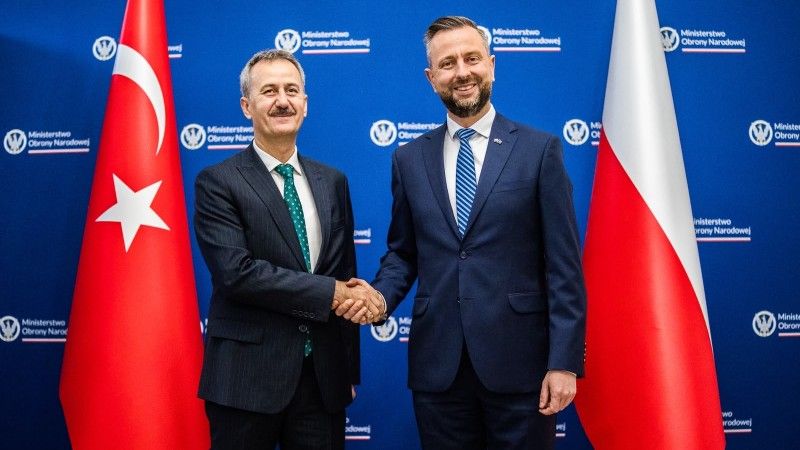
Ahead of the NATO Summit in Ankara, Türkiye wants to show that it is no longer only a large military ally, but also a serious defence-industrial actor. In an interview with Dr Aleksander Olech, Prof. Haluk Görgün, Secretary of Turkish Defence Industries, argues that Turkish companies can strengthen NATO through drones, air defence, naval systems, cyber capabilities, command-and-control solutions and technology partnerships.
The Turkish defence industry has become one of the most visible examples of how quickly a NATO member can build its own industrial base when technology, exports and security policy are treated as one strategic project. In this interview, Prof. Haluk Görgün explains why Ankara wants to be seen not merely as a supplier of equipment, but as a partner able to support allies with production, training, maintenance, modernisation and long-term industrial cooperation.
Dr. Aleksander Olech (AO): Türkiye has become one of the most dynamic defence-industrial players in NATO. What are the main priorities of the Turkish defence industry today, especially in terms of exports, technological independence and cooperation with allies?
Prof. Haluk Görgün, Secretary of Turkish Defence Industries (HG): Türkiye’s defence industry has undergone a profound transformation over the past two decades. We have moved from a period in which we were largely dependent on external procurement to an era in which our companies can design, develop, produce, modernise, sustain and export advanced systems across different operational domains.
Our main priority today is to consolidate this transformation in a sustainable manner. For us, technological independence is not a slogan; it is a strategic necessity. It means securing critical technologies, strengthening our supply chains, developing our own engineering capabilities and ensuring that our security forces have access to reliable systems whenever they need them.
Türkiye’s aim is to contribute more effectively to NATO’s deterrence and defence posture, while also developing long-term partnerships with friendly and allied countries.
In exports, we do not see success only in numbers. Of course, export growth is important for the sustainability and scale of our industry. But our real objective is to build trust-based, long-term and mutually beneficial cooperation models. We want Turkish defence products and technologies to serve deterrence, legitimate security needs, regional stability and peace.

Turkish defence companies are increasingly visible in Europe, the Middle East, Africa and Asia. Which products and capabilities are currently the most important for Türkiye’s export strategy?
Türkiye has developed a broad, mature and highly capable defence-industrial ecosystem. Today, we possess the industrial depth and human capital to produce, maintain and sustain almost every major category within the defence industry spectrum through national and indigenous capabilities.
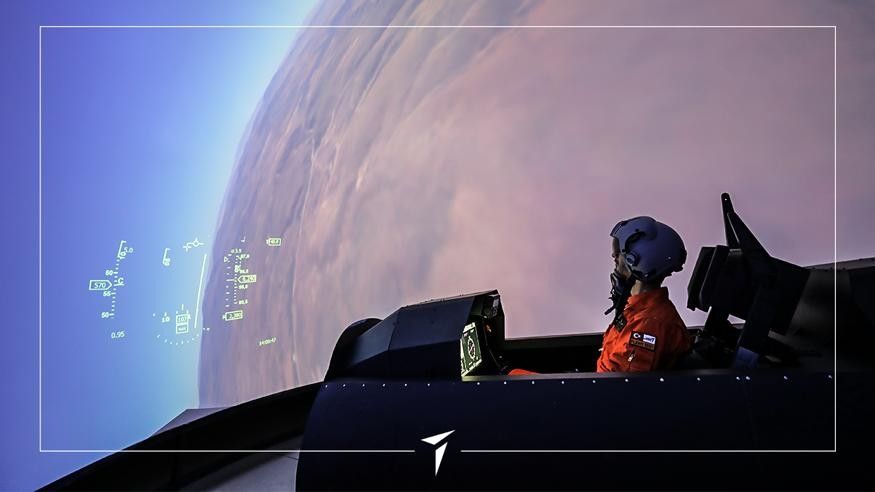
This includes naval platforms, land vehicles, manned and unmanned aerial systems, electronic warfare systems, radar technologies, precision-guided munitions, missile systems, air defence systems, command and control solutions, cybersecurity capabilities, simulation and training systems, and maintenance-modernisation services.
Therefore, I would not limit Türkiye’s export strategy to a single product, platform or geography. Our strength lies precisely in this diversity. We are able to offer integrated solutions, not merely individual pieces of equipment.
Our export approach is also partnership-oriented. We do not want to be seen only as a supplier. We want to be regarded as a strategic partner that can support training, maintenance, modernisation, local capacity building and, where conditions are suitable, joint production and technology cooperation.
See also 
Türkiye has achieved major success with unmanned systems, including combat-proven UAVs. What lessons from recent conflicts are shaping the next generation of Turkish unmanned platforms?
Recent conflicts have shown that unmanned systems are no longer auxiliary assets. They have become central elements of modern warfare. They affect intelligence, surveillance, target acquisition, precision engagement, operational tempo, cost-effectiveness and deterrence.
The first major lesson is the importance of autonomy and artificial intelligence. Future unmanned platforms will need stronger decision-support capabilities, advanced mission planning, target recognition, swarming concepts, and higher levels of human-machine teaming. Artificial intelligence will not replace human responsibility, but it will significantly increase speed, accuracy and operational flexibility.
The second lesson is integration. No platform can be considered separately from the wider operational network. Unmanned aerial, land and naval systems must communicate securely with command and control centres, air defence systems, manned aircraft, naval platforms and, increasingly, space-based assets. The future battlefield will be shaped by systems of systems.
The third lesson is survivability. Low radar signature, electronic warfare resilience, secure data links, indigenous engines, modular payloads and flexible munitions integration are becoming more important every day. We are therefore working not only on the platform itself, but on the entire architecture around it: engines, sensors, munitions, communication systems, ground stations, maintenance infrastructure and operational concepts.
Another important dimension is compatibility with our wider air combat ecosystem. Our next-generation unmanned systems are being developed with future interoperability in mind, including compatibility with Türkiye’s fifth-generation National Combat Aircraft, KAAN. In the coming period, manned and unmanned systems will increasingly operate together, complementing each other in complex operational environments.
We also attach importance to the diversification of payloads and munitions. Modern conflicts have shown that operational success depends on flexibility. A platform must be able to carry out different missions with different payloads, sensors and effectors.
At the same time, Türkiye attaches importance to rapid, scalable and geographically distributed production and training capabilities. In this context, the vision of establishing drone production and training facilities across all 81 provinces reflects our broader approach: building a nationwide technological capacity, expanding the talent base and ensuring that know-how is not concentrated in only a few centres.
Ultimately, the main objective is clear: to achieve the highest level of deterrence. Türkiye’s unmanned systems are being developed not to escalate crises, but to prevent them by making aggression costly, ineffective and unsustainable.

Many countries are now looking not only for equipment, but also for technology transfer, local production and industrial partnership. How flexible is Türkiye in offering such models of cooperation to its partners?
You can import many things, but you cannot import security. Every country needs a certain level of national resilience and defence-industrial capacity. Recent global crises have shown us that in times of emergency, supply chains can become fragile and access to critical equipment can be restricted.
We saw this very clearly during the Covid-19 pandemic. The pandemic showed very clearly that export restrictions, supply disruptions and emergency measures can affect access to critical equipment. This was an important lesson for the whole world. Today, we are facing a similar reality in the geopolitical domain — a kind of geopolitical pandemic, where crises spread rapidly across regions and sectors.
Türkiye was prepared for the Covid-19 pandemic as a country, and we are also prepared for this period of geopolitical turbulence. Now, we are offering to share this experience, infrastructure and industrial capability with our friends and allies.
Our aim is to develop relationships based on mutual benefit, mutual respect and long-term trust. We do not believe that a simple buyer-seller relationship is sufficient in the defence sector. Nor do we believe that asymmetric models creating one-sided dependency are sustainable.
The direction set out for us by our President is very clear: Türkiye must be a country that develops its own capabilities, shares them responsibly with its friends and allies, and builds long-term partnerships based on mutual benefit.
In this framework, Türkiye offers highly flexible and partnership-oriented models in technology sharing, joint production and industrial cooperation. We assess each country’s existing capabilities, industrial base, human capital and strategic priorities, and then develop tailored cooperation models accordingly.
This approach is beneficial for both sides. Our partners strengthen their own security infrastructure and industrial capacity, while Türkiye also gains the opportunity to integrate complementary capabilities into its own projects and ecosystem.
Depending on the partner country’s needs and capabilities, our cooperation models may include direct procurement, local assembly, joint production, technology cooperation, maintenance and sustainment infrastructure, training, information exchange, joint R&D and, where feasible, cooperation for third-country markets.

Which major procurement and modernisation programmes in Türkiye will be most important in the coming years, and how could they influence Turkish export capabilities?
Several strategic programmes will shape the next phase of Türkiye’s defence industry. Among them, KAAN, KIZILELMA, ANKA III, TB3 and our layered air defence systems are particularly important. Our naval aviation vision, including future aircraft carrier-related concepts and short-runway naval aviation capabilities, will also have a significant impact.
KAAN is not only a combat aircraft project. It is a national technology ecosystem. It contributes to Türkiye’s capabilities in system design, advanced materials, avionics, sensors, mission computers, software, weapons integration and test infrastructure. The knowledge generated through KAAN will strengthen many other areas of our defence industry.
KIZILELMA and ANKA III represent the next chapter in unmanned combat aviation. These platforms are being developed with a view to future air combat concepts, where manned and unmanned assets will operate together within an integrated architecture.
TB3 is also strategically important because it introduces a new operational concept. Its ability to operate from short-runway naval platforms offers new possibilities for maritime airpower, particularly for countries that need flexible and cost-effective solutions.
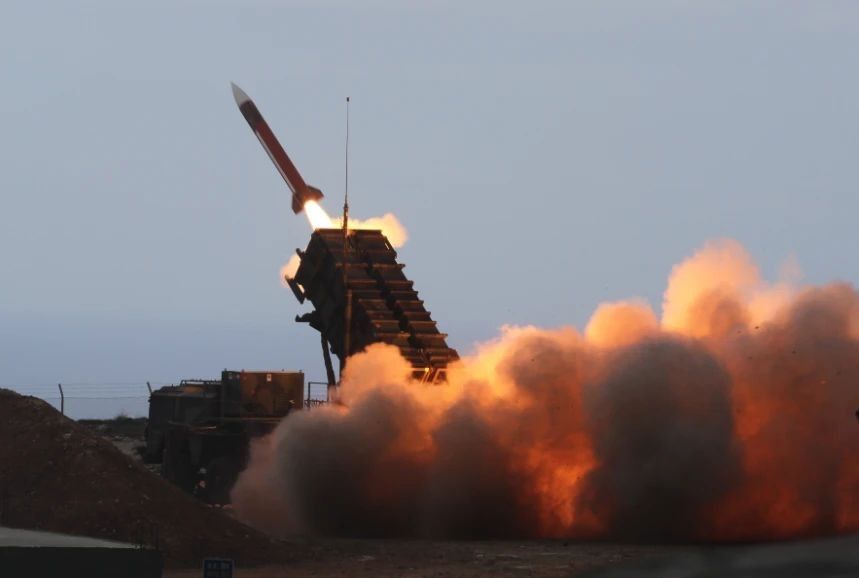
Air defence is another critical area. Recent conflicts have shown that layered air defence is no longer a luxury; it is a necessity. Türkiye’s work on air defence systems, radars, sensors, command-control networks and secure communications will strengthen both our national defence and our international cooperation potential.
In the naval domain, Türkiye will continue to develop indigenous platforms, unmanned naval systems and future naval aviation capabilities. Our work in this field is not limited to one platform; it is part of a broader maritime security vision. This includes national warships, unmanned surface vehicles, naval air platforms and future concepts that can support power projection, maritime situational awareness and deterrence.
The common feature of all these programmes is that they are not isolated projects. They build an ecosystem. And as this ecosystem matures, Türkiye’s export capabilities will become more comprehensive, more integrated and more strategic.
Ahead of the NATO Summit in Ankara, how does Türkiye want to present its defence industry to allies? Could this be an important moment to promote Turkish equipment, technologies and industrial cooperation within NATO?
The NATO Summit in Ankara will be an important occasion for Türkiye, not only politically and militarily, but also in terms of defence-industrial cooperation.
We want to present Türkiye’s defence industry as reliable, innovative, interoperable, operationally proven and partnership-oriented. Türkiye is a NATO ally with a strong industrial base, a broad engineering ecosystem and growing capabilities across land, sea, air, space, cyber and electronic warfare domains.
The current security environment requires stronger supply chains, faster innovation cycles, greater interoperability and more balanced burden sharing. Türkiye can contribute to all these areas. Our companies can support NATO capability needs in unmanned systems, air defence, command and control, secure communications, electronic warfare, naval systems, cyber resilience and emerging technologies.
Türkiye contributes to both the European Union and NATO not only through its military capabilities, but also through its advanced defence technologies, industrial capacity and operationally proven systems.
A recent and concrete example of this contribution was Türkiye’s role in NATO’s Steadfast Dart 26 exercise. Conducted in Germany as one of NATO’s most comprehensive live exercises of 2026, Steadfast Dart 26 demonstrated the Alliance’s ability to rapidly deploy and integrate Allied Reaction Force elements. Within this framework, the Turkish Armed Forces deployed a force of approximately 2,000 personnel over a distance of 6,450 kilometres / 3,480 nautical miles, with land and naval components, while also demonstrating the mobility, readiness, interoperability and operational value of Turkish capabilities. This contribution clearly showed that Türkiye supports NATO not only with its military presence, but also with its defence-industrial strength, indigenous platforms and field-proven systems.
We also attach importance to innovation cooperation within NATO. Future security challenges cannot be addressed only with traditional procurement models. We need to bring together armed forces, industry, research centres, universities and start-ups in a more dynamic manner.
Türkiye is ready to take more responsibility within NATO’s defence-industrial ecosystem. Our message to allies is clear: a stronger Turkish defence industry means a stronger Alliance.

What message would you like to send to international partners regarding Türkiye’s role as a defence-industrial actor within NATO and beyond?
We are no longer living in the world into which we were born. Today, there is almost no such thing as a purely regional crisis. A conflict in one geography can affect energy security, food security, migration, trade routes, supply chains and defence planning in many other regions.
Therefore, security has become increasingly indivisible. Either we will build a world in which more countries feel secure, or we will all face growing risks together.
Türkiye steps forward at precisely this point. Through our diplomacy, our military capabilities, our humanitarian approach and our defence industry, we are working to contribute to a more stable and secure international environment.
We see our defence industry not only as a national capability, but also as a contributor to global trust, resilience and long-term cooperation.
Türkiye is a NATO ally, a regional stabilising actor, a technological producer and a reliable partner for friendly and allied countries. We offer not only products, but also experience, training, sustainment, technology cooperation and strategic partnership.
Our defence industry will continue to serve deterrence, legitimate security needs, peace and stability. We are ready to work with all partners who share this understanding. Together, we can build a more resilient security architecture for the future.