- ANALIZA
- KOMENTARZ
- WIADOMOŚCI
Europe’s unspoken divide: Italy’s quiet pivot toward Türkiye

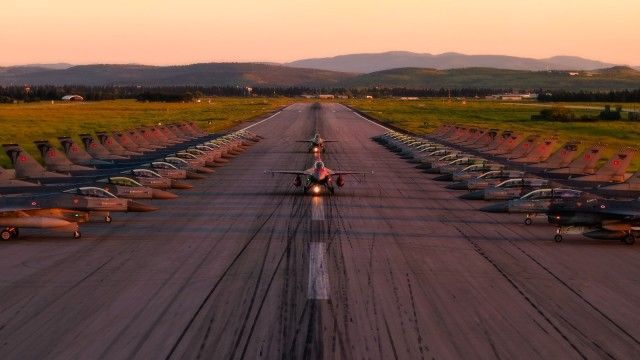
Photo. Ministry of National Defence of the Republic of Türkiye - official website
Relations between Italy and Türkiye seem to be entering a completely new phase, especially in defence and armaments.
Just a few years ago, defence cooperation between Rome and Ankara was viewed primarily as a technical element of NATO’s southern flank. Today, given the changes taking place within the alliance itself, it increasingly resembles a strategic political project that could have far-reaching consequences, especially for the future of the European security architecture.
The paradox of current relations, however, is that they are taking place at a time when the European Union is being more vocal than it has been in years about „strategic autonomy,” building a common arms industry, and the need for greater independence from the United States. Despite this rhetoric, the actual military capabilities Europe urgently needs—especially in the fields of drones, air defence systems, and unmanned technology—are increasingly coming not from Germany, France, or Spain, but from Türkiye, which, despite years of efforts, is still not a formal member of the European Union. In this sense, Italy’s turn toward Türkiye is not just a pragmatic economic choice, but also a signal that some European countries (though not all) are involuntarily beginning to see Ankara as an informal, though increasingly indispensable, partner in Europe’s security.
Why Türkiye?
From an Italian perspective, Türkiye possesses several characteristics that make it an exceptionally attractive partner.
First, Ankara has the second-largest army in NATO, after the United States. Its armed forces operate in the Black Sea, Syria, Libya, Iraq, East Africa, and the Eastern Mediterranean. Türkiye is therefore not only a weapons manufacturer but also a country with operational and combat experience, further enhanced by its key geographic location.
Second, the Turkish defence industry is developing faster than most of its European competitors. Over the past decade, Ankara has developed its own drone, missile, naval, and air force programs. Turkish companies are able to offer equipment faster, more cheaply, and often with a greater willingness to transfer technology than their Western competitors.
Third, Türkiye remains a key player in regions crucial to Italian security policy: Libya, North Africa, the Middle East, and the Eastern Mediterranean. Rome realises that without cooperation with Ankara, it will be unable to effectively influence issues such as migration, energy security, or the stabilisation of Libya.
In practice, this means that Türkiye is beginning to play a role vis-à-vis Italy that the EU cannot provide, for example, by supplying ready-made military capabilities and enabling rapid action when European programs remain delayed or ineffective.
At the same time, this cooperation is gaining importance not because the two countries share identical interests, but because there is a gap between Europe’s growing security needs and the limited willingness of the European Union – specifically, some member states hostile to Türkiye – to include Turks in new defence initiatives. As a result, Rome and Ankara are developing cooperation primarily on a bilateral basis and within NATO.

SAMP/T and air defence: Turkey enters Europe through Italy
One of the most symbolic examples of this new rapprochement is the talks regarding the SAMP/T air defence system.
Türkiye has been pursuing an advanced long-range air and missile defence system for over a decade. Ankara has been interested in the SAMP/T system since 2014 and, in 2018 signed a potential co-production agreement with the Eurosam consortium.
However, this project was put on hold, primarily due to French resistance. As a result, Türkiye opted to purchase Russian S-400 systems, leading to a crisis in relations with the United States and Ankara’s exclusion from the F-35 Lightning II program.
Today, the situation seems to be different. Events in recent months – particularly the tensions surrounding the US-Israeli-Iran conflict and the related missile incidents near NATO member states’ borders – have shown Türkiye that it needs a modern air defence system sooner than previously anticipated. According to reports, four missiles were intercepted over or near Turkish airspace by allied systems. Ankara saw this as evidence of the urgent need to strengthen the country’s air defence.
It is worth noting, however, that Türkiye is still reluctant to buy ready-made products, as this involves the risk of increasing maintenance and repair costs in the future and, consequently, making the country dependent on a foreign partner. Ankara is therefore setting very specific conditions: technology transfer, participation in production, localisation of part of the industrial process, and access to know-how. This is precisely why Italy is becoming so important to Türkiye. Rome is seen as a more flexible partner than, for example, Paris, and Italian companies can act as intermediaries between Turkish needs and the European defence industry.
If an agreement is reached on the SAMP/T system, its significance will extend far beyond air defence alone. It will mean that Italy will become Türkiye’s main European partner in the field of strategic technologies.

Bayraktar TB3: Italy turns to Turkish drone power
An even more spectacular example of this convergence is the Italian Navy’s planned purchase of Bayraktar TB3 drones for the aircraft carrier Cavour.
The Italian Navy’s decision is historic, as it will make Italy the first European operator of an armed drone capable of operating from the deck of an aircraft carrier. At the same time, it will be the first time an EU country has decided to integrate Turkish technology so deeply into its own armed forces.
The Bayraktar TB3 represents the next stage in the evolution of the TB2 platform, which is also used by Poland and gained international recognition through its performance in conflicts in Ukraine, Libya, and Syria. The TB3 version has been adapted to operate from the short decks of aircraft carriers and amphibious assault ships. The drone features foldable wings, reinforced landing gear, and the ability to carry precision weapons. Crucially, the TB3 is ready „here and now,” while European drone programs are still in the design, discussion, or chronic delay stages. For example, the Eurodrone program faces significant financial and political challenges. The United Kingdom has tested MQ-9B Mojave drones but has not yet made a procurement decision. France, meanwhile, is considering withdrawing from some unmanned systems projects.
Türkiye, on the other hand, has a finished product that has already been tested in combat and operational conditions.
It is also worth noting that Italy’s decision to purchase the TB3 follows the drone’s highly successful performance during Steadfast Dart 2026 in the Baltic Sea, the Alliance’s largest exercise of the year. Approximately 10,000 troops from 13 countries participated in the exercise, notably without the participation of US forces. In practice, the exercise also became a test of Europe’s ability to project force independently without direct US support.
In this context, the TB3 performed exceptionally well. Three prototypes operating from TCG Anadolu completed over 200 combat sorties from January to March 2026, operating in extremely challenging weather conditions, with temperatures dropping to minus 6 degrees Celsius, strong winds, and heavy snowfall. The highlight, however, came on February 14, when the drone autonomously launched from a ship, destroyed a naval target with two precision-guided missiles, and then safely returned to the deck. This was the first full combat cycle of a carrier-based drone in the history of NATO exercises – from takeoff, through attack, to landing. The TB3 also completed an eight-hour, 1,700-kilometer flight alongside Eurofighter Typhoon fighters, demonstrating the interoperability of manned and unmanned platforms.
TB-3 UAV, launched from TCG Anadolu, conducted an 8-hour flight in the Baltic Region in coordination with Enhanced Vigilance Activities in the region. See more👇 https://t.co/IZipgyNVEU
— NATO Allied Joint Force Command Brunssum - JFCBS (@NATOJFCBS) February 21, 2026
For the Italian Navy, this was a sufficient demonstration, convincing Rome that Türkiye had not only developed a modern unmanned system but had also built a new naval doctrine around it. Italy’s purchase of the TB3 therefore represents more than just filling a technological gap. It is also a political recognition that Türkiye has surpassed Europe in some areas.

Leonardo and Baykar: the birth of a new industrial model
The collaboration between Leonardo and Baykar occupies a unique position in the process of building international cooperation in the defence sector, demonstrating that such a partnership does not need to rely solely on the export of finished products. The Italian and Turkish companies have created a joint industrial structure – LBA Systems – dedicated to the design, production, and maintenance of unmanned systems, which appears to meet the needs and expectations of both parties. For Italy, this means access to drone technologies that are still limited in Europe. For Türkiye, it means entering the European market through a reputable EU partner.
Furthermore, it offers a way to circumvent political constraints. Products jointly developed by Leonardo and Baykar can be perceived as „European”, even if the key technologies originate in Türkiye. This allows Ankara to access certain programs and funds that are formally closed to non-EU countries.
Maritime cooperation as a new strategic frontier
Italian-Turkish cooperation is not limited to drones. Maritime technologies are also gaining increasing importance.
In this context, it is worth mentioning the companies Havelsan, Piloda Defense, and VN Maritime Technologies, which are jointly developing new unmanned and hybrid surface vessels for Italian state services. While the equipment will be manufactured in Italy, the autonomous technologies, management systems, and artificial intelligence will come from Türkiye.
It is worth noting that these platforms will be used not only by the Navy but also by the Italian Coast Guard, the Guardia di Finanza, and institutions responsible for the protection of the marine environment. This means that Turkish technologies can be integrated into the daily functioning of the Italian state in the areas of internal security, surveillance, and border control, demonstrating that Ankara is becoming not only an arms supplier but also a full-fledged industrial partner.

Italy prioritises pragmatism over ideology
It cannot be ignored that Ankara continues to arouse distrust in many European capitals, primarily because of its relations with Russia, the purchase of S-400 missiles, its policy toward the Kurds, and its actions in Syria and Libya. Rome is not indifferent to these issues either and does not seek to ignore them. However, from the perspective of political interests, pragmatism appears to have recently prevailed in Italy. Italian elites are gradually reaching the conclusion that Europe can no longer afford to marginalise Türkiye. Ankara possesses the military potential Europe needs, i.e., combat experience, industrial capacity, and a strategic geographic position.
This also leads to a significant change. For years, EU relations with Türkiye were defined primarily by political disputes, human rights issues, and the frozen accession process. Today, they are increasingly shaped by specific strategic interests such as drones, missiles, warships, air defence, and security in the Mediterranean.
Italy has traditionally pursued a policy based on three „circles”: Atlantic, European, and Mediterranean. In practice, this means that Rome simultaneously strives to maintain strong relations with the United States, strengthen its position in the EU, and play a stabilising role in the Mediterranean. However, after 2022, Italy’s priorities have clearly shifted. The war in Ukraine forced Rome to become more involved on NATO’s eastern flank, while maintaining its traditional southern focus. For Italy, Türkiye is therefore becoming not so much a problem as a necessity, a fact well known to the government led by Giorgia Meloni, who differs significantly from her predecessor, Mario Draghi. The current Italian Prime Minister places greater emphasis on national sovereignty, border security, migration, the protection of critical infrastructure, and cooperation with conservative partners.
Italy, therefore, needs Türkiye as a regional partner and intermediary in areas where it has limited influence. Türkiye, in turn, needs Italy as a gateway to European political, industrial, and defence structures.
At the same time, it should not be forgotten that Turkish-Italian industrial cooperation does not eliminate rivalry. Türkiye is increasingly competing with Italy in export markets, particularly in Africa, the Middle East, and Central and Eastern Europe. The Turkish arms industry is developing faster, benefits from lower labour costs, and is more willing to transfer technology than European companies. This could limit the competitive advantage of Italian manufacturers in the long term.

Conclusions
The Italian-Turkish rapprochement poses a fundamental question for Europe: should Türkiye be part of the European security architecture, or will it remain merely an external partner used on an ad hoc basis?
For now, the EU’s answer remains ambiguous. Formally, Türkiye remains outside most EU defence programs. In practice, however, European countries are increasingly utilising Turkish potential.
This creates a growing contradiction between rhetoric and reality. Europe speaks of strategic autonomy but is unable to independently deliver many of the necessary technologies. As a result, it must rely on Turkish solutions.
Italy seems to understand this reality more quickly than others. Rome is not waiting for a common position from Brussels, Berlin, or Paris. Instead, it is building its own model of cooperation with Ankara, which is based on pragmatism, co-production, and shared strategic interests.