












- ANALIZA
- KOMENTARZ
- WIADOMOŚCI
Türkiye and Spain: The HÜRJET Program as a test of European defence cooperation

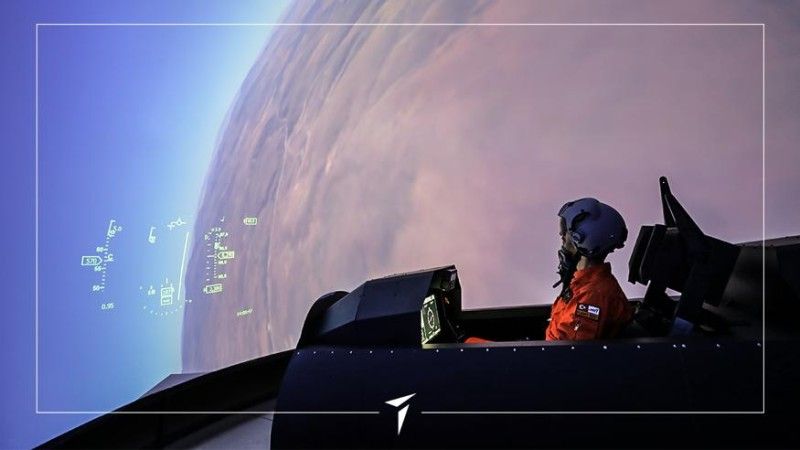
Photo. Official Twitter/ X account of Turkish Aerospace Industries
Spain has signed an agreement with Türkiye to incorporate the HÜRJET combat trainer aircraft into the training system of the Spanish Air and Space Force, which should be interpreted not only as a procurement decision but also as part of a broader strategy to modernise training capabilities and deepen industrial and defence cooperation between an EU Member State and Türkiye.
While formally involving the acquisition of approximately 30 aircraft, which in their Spanish configuration will be designated as SAETA II, the project in fact carries much broader political significance. This is particularly important at a time when the European Union is declaring the need to build strategic autonomy but is simultaneously facing limitations in its industrial base, production capacity, and delivery timelines.
The signing of the agreement in Madrid, at Airbus facilities, attended by representatives of the Turkish defence industry, Spanish authorities, and the European aerospace giant, demonstrates that Türkiye is increasingly entering the European security architecture not only as a NATO ally but also as a supplier of advanced military technologies, as previously demonstrated in its cooperation with Italy.
HÜRJET as SAETA II: More than just an aircraft purchase
Developed by Turkish Aerospace Industries, the HÜRJET will be tailored to the requirements of the Spanish Air and Space Force. The SAETA II program aims to replace Spain’s aging fleet of F-5M trainer aircraft. While Airbus serves as the main contractor, Spanish companies will be responsible for a significant portion of the components, avionics systems, simulation infrastructure, and training support. Companies such as Indra, GMV, Sener, AERTEC, Grupo Oesía, and Orbital will participate in the program. According to the program framework, approximately 60 percent of the workload will be allocated to the Spanish industry, indicating a clear economic policy component. This model thus achieves several goals simultaneously: it strengthens the national defence industry, distributes economic benefits across regions, and builds long-term technological competence
Spain, however, decided not to limit its procurement to the aircraft platform alone. A key feature of the SAETA II program is the shift in focus from the aircraft itself to the entire training system. Rising aircraft operating costs, the increasing complexity of combat systems, and the need for multi-domain training are driving modern air forces to develop extensive simulation systems. The project, therefore, encompasses a comprehensive, integrated combat pilot training system (ITS-C), in which the aircraft is just one element of a broader ecosystem that includes simulators, training infrastructure, and digital solutions. This means that future pilots will not be trained solely through flights on a live platform, but will operate within a closed training cycle, where data from simulations, procedural exercises, and actual flights are analysed and used to improve the training process.
This is crucial from the perspective of European strategic autonomy. Autonomy means more than simply owning platforms. It also requires the ability to integrate, modernise, maintain, train, and further develop systems. By leveraging a Turkish platform, Spain simultaneously strengthens its own industrial competencies. Türkiye, in turn, acts not only as an equipment exporter but also as a technological partner in NATO and European defence projects.

Türkiye as a Technology Partner for Europe
For Türkiye , the contract with Spain is of both symbolic and strategic importance. Until now, the Turkish defence industry has been primarily associated with unmanned aerial vehicles, ground systems, military electronics, and relatively cost-effective but operationally proven solutions. The HÜRJET elevates this perception to a higher level. It demonstrates that Ankara seeks to be perceived not only as a drone manufacturer but also as a supplier of complex manned platforms in the aviation sector.
While Spain’s selection strengthens HÜRJET’s credibility on the international market, Airbus also acts as the integrator and political stabiliser of the project. In the defence sector, the so-called „reference country factor” is crucial. Acceptance of the platform by a NATO member state that is also part of the EU could facilitate its promotion in other countries seeking a modern yet affordable training aircraft.
For Ankara, this is also part of its broader defence diplomacy. Türkiye not only exports equipment but also builds industrial, training, and logistics networks. Such projects strengthen its position, as the joint production model increases the project’s political acceptability and can facilitate access to additional markets.

Risks and Limitations
Despite its significant potential, the program is not without risks.\ First of all, the HÜRJET platform must be effectively adapted to Spanish requirements. Integrating national systems, avionics, simulators, and training infrastructure can be complex and, therefore, time-consuming and prone to delays. Industrial cooperation also requires a high level of trust in areas such as technology transfer, certification, data security, and export controls. The current Turkish–Spanish project will therefore test the stability of relations between the two countries.
Second, the delivery schedule will be a significant test of the credibility of the Turkish–Spanish–Airbus cooperation model. Delays could undermine the project’s export potential, as is often the case in comparable international programmes.
Third, the political context of Türkiye–EU relations remain unstable and marked by a certain lack of mutual trust. Any serious tensions in the Eastern Mediterranean, particularly in the context of relations with Greece and Cyprus or within NATO frameworks, may influence the perception of similar projects.
See also 

Spain as a Gateway to Europe
Spain’s role in this context is far from accidental. Madrid has maintained relatively pragmatic security relations with Ankara for years, while the foreign policy orientations of both countries towards third actors have become increasingly aligned. Unlike some EU Member States, Spain is less likely to perceive Türkiye solely through the lens of disputes in the Eastern Mediterranean, tensions with Greece, or political frictions in Ankara–Brussels relations. Spain instead approaches Türkiye primarily through the lens of NATO, the defence industry, and functional cooperation. This creates space for projects that would be more difficult, and often impossible, to implement at the European Union level due to political tensions and blocking mechanisms.
In this sense, Spain can act as one of the bridges between Türkiye and the European security system. This is not about full political normalisation of Ankara–Brussels relations, but rather a practical model of sectoral cooperation. Faced with tensions within NATO, uncertainty surrounding US policy, and mounting challenges on the southern flank, European states are increasingly prioritising functionality and speed over institutional cohesion.
The agreement between Spain and Türkiye on the HÜRJET/SAETA II program demonstrates, therefore, that the continent’s viable defence architecture is developing within flexible networks of cooperation rather than within a single institutional framework. Similar dynamics can be observed in Italy’s cooperation with Türkiye in the unmanned systems sector and in the United Kingdom’s relations with Ankara in combat aviation, confirming the growing importance of pragmatic industrial partnerships that transcend political divisions.
The Shadow of American Uncertainty
The significance of the HÜRJET/SAETA II program should also be understood in the context of growing uncertainty surrounding the American military presence in Europe. In recent days, Donald Trump has hinted at the possibility of reducing US troops in Spain and Italy, criticising both countries for their lack of support for US policy towards Iran. According to Reuters and other media reports, Trump described Spain’s position as „absolutely horrible” and criticised Italy for failing to provide sufficient support.
As of December 2025, approximately 3,800 US troops were stationed in Spain, over 12,600 in Italy, and more than 36,000 in Germany. The sheer scale of these numbers demonstrates that a potential reduction would not automatically lead to a deterioration of Spain’s security but would have significant political implications. It would undermine the existing logic of NATO’s southern flank, based on US bases, military presence, and the ability to project power into the Mediterranean, North Africa, and the Middle East.
In this context, the Spanish–Turkish HÜRJET program takes on added significance. It does not replace the US military presence, but forms part of a broader process of diversifying defence partnerships. Madrid, like other European countries, must increasingly assume that American guarantees will remain crucial, albeit less politically predictable. This reinforces the importance of projects that develop national capabilities, domestic industry, and cooperation with partners capable of rapidly delivering advanced technologies. SAETA II is precisely such an example. It does not replace the United States but demonstrates that Europe is beginning to build security networks that extend beyond the traditional model of dependence on Washington.

Conclusions
The Spain–Türkiye agreement may mark a turning point for HÜRJET in the global market. Countries seeking a modern training aircraft consider not only technical parameters but also whether the platform has been selected by a reliable user.
Spain, as a member of the EU and NATO, could serve as such a reference user. If the program is completed on schedule and SAETA II meets the requirements of the Spanish Air and Space Force, the HÜRJET could gain greater opportunities in international tenders. This is particularly relevant for countries seeking alternatives to more expensive Western designs while maintaining compatibility with NATO training standards.
For Türkiye, the contract marks its entry into the European segment of advanced manned aircraft platforms and confirms the growing maturity of its defence industry. For Spain, it represents an opportunity to build a modern pilot training system and strengthen its industrial ecosystem. For Europe, however, it signals that the future security architecture will not be based solely on autonomy, but on pragmatic interdependence.


