












- WIADOMOŚCI
Berlin to invest €12 billion in long-range missile arsenal

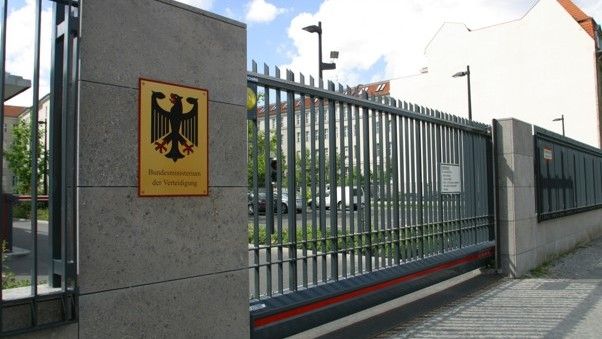
Photo. www.bmvg.de
Germany is developing a new long-range strike arsenal capable of hitting command centres, airfields, missile launchers and supply hubs hundreds or even thousands of kilometres behind a potential front line.
Defence Ministry documents estimate the cost at nearly €12 billion, describing the programme as a priority for both Germany and NATO. The core objective is to maintain a conventional response capability just below the nuclear threshold. While the necessary funding is already factored into government budget planning, the initiative still requires formal approval from the Bundestag.
The procurement strategy unfolds across four layers. First, Berlin aims to acquire affordable cruise missiles suited for mass production. The leading candidates are Covenant Industries’ Anthem, the Ukrainian-linked BARS and Fire Point’s Flamingo. Germany is reportedly negotiating with two of these suppliers, aiming to secure test missiles by late 2026 and begin fielding them from 2027.
Second, Chancellor Friedrich Merz confirmed in July that Washington had approved Germany’s purchase of Tomahawk missiles and ground-based Typhon launchers. These systems are intended to close an immediate capability gap, with an initial operational target set for the end of the decade.

The final two layers are being developed alongside Britain under the Trinity House framework. This joint effort focuses on a stealth cruise missile and a hypersonic glide weapon with ranges exceeding 2,000 kilometres, both expected to enter service in the 2030s. Internal estimates allocate nearly €9 billion to the hypersonic project and €1.8 billion to the development and procurement of the cruise missile. Once maintenance is factored in, these combined sums total roughly €11 billion, while the broader financial requirement approaches €12 billion.
Berlin is applying a tactical lesson from Ukraine: deploying affordable weapons in large numbers can strain enemy air defences, ensuring that scarce premium missiles are reserved for harder targets. The programme also reflects a sobering assessment by the Bundeswehr that Russia could be capable of launching a large-scale attack on NATO territory from 2029.


