


- WIADOMOŚCI
- ANALIZA
Canada deploys entire NATO brigade towards Russia's border. The end of symbolic deterrence

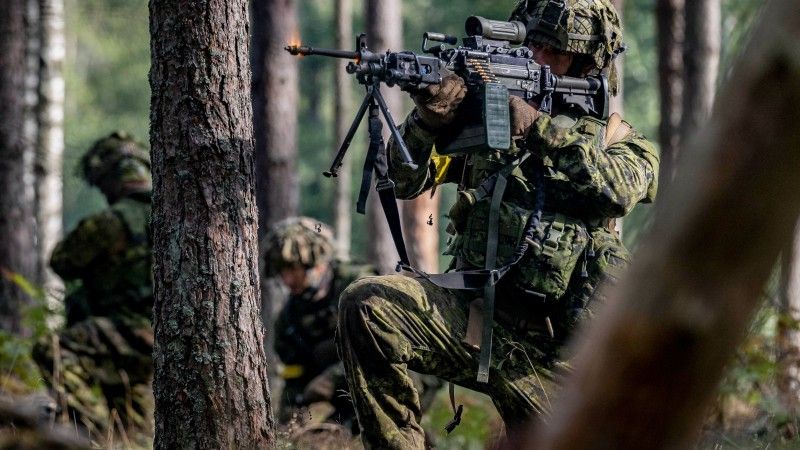
Photo. Canadian Army/X
Canada has deployed its entire NATO multinational brigade to eastern Latvia, near the borders with Russia and Belarus. Approximately 3,000 troops and 1,000 military vehicles are participating in the largest exercise of its kind ever conducted in Latvia. Importantly, Canadian commanders are no longer talking merely about deterring Russia, but about being ready to defend NATO territory. Ottawa has also extended its military presence in the region until 2031.
Exercise Resolute Reforger 2026 runs from 26 October to 8 November. Units from 14 NATO countries, including approximately 2,000 Canadian troops, have been moved from bases in Ādaži and Ceri towards Daugavpils, Rēzekne, Alūksne and other locations in eastern Latvia.
The forces are using road and rail transport while practising the construction of defensive positions, logistics, command and control, and the maintenance of supply lines. The units are expected to return to their bases after the exercise.

This represents an important change in how Allied forces are deployed. Speaking to CTV News, Lieutenant Colonel Simon Mailloux, commander of the multinational battlegroup, emphasised that since 2017, Canada’s presence in Latvia has evolved from reassuring Allies, through deterrence, to being ready to defend. In practice, this means preparing troops to fight in a specific area rather than simply waiting for additional NATO forces to arrive.
An even stronger statement came in May 2026. Colonel Kris Reeves, then commander of the brigade, told Defense News: “Right now I have a brigade, there is nothing on the other side of the border that can take out this brigade.”
This was a particularly firm assessment of Russian military capabilities in the region. Reeves also emphasised that NATO was preparing positions closer to potential combat areas and that the presence of Allied troops was intended to enable an immediate response to threats.

Canada is also assuming greater responsibility within NATO’s command structures. During the Alliance’s July summit in Ankara, Prime Minister Mark Carney announced the extension of Operation REASSURANCE until 2031. Ottawa also joined Denmark and Latvia as the third framework nation of Multinational Division North. This means greater Canadian involvement in planning, commanding and coordinating the defence of NATO’s eastern flank. Polish troops have also served as part of the multinational force in Latvia since 2017.
The importance of the war in Ukraine cannot be overlooked. Russia’s use of drones, artillery and attacks against logistics demonstrates that the mere presence of troops is not enough to ensure effective defence. NATO forces are therefore practising the movement of large formations, securing supply lines and conducting operations across dispersed areas. These are precisely the capabilities that would be essential in the opening hours of a potential conflict with Russia.
In my assessment, Canada is no longer limiting itself to deploying troops whose presence would merely symbolise NATO’s commitment to Latvia. It now commands a multinational brigade, is developing defensive positions and is practising actual military operations near the borders with Russia and Belarus.

Moscow must therefore recognise that any attack on Latvia would mean confronting not only the Latvian Armed Forces, but also troops from more than a dozen NATO countries already prepared to defend Allied territory from the very first hours of a conflict.
As we can see, transatlantic cooperation is not only about military support from the United States. Canada is also taking direct responsibility for Europe’s defence, deploying thousands of soldiers and demonstrating that NATO’s security commitments extend far beyond Washington.


