












- WIADOMOŚCI
Danger zone near the border with Poland. Russian aviation and missiles are still a threat


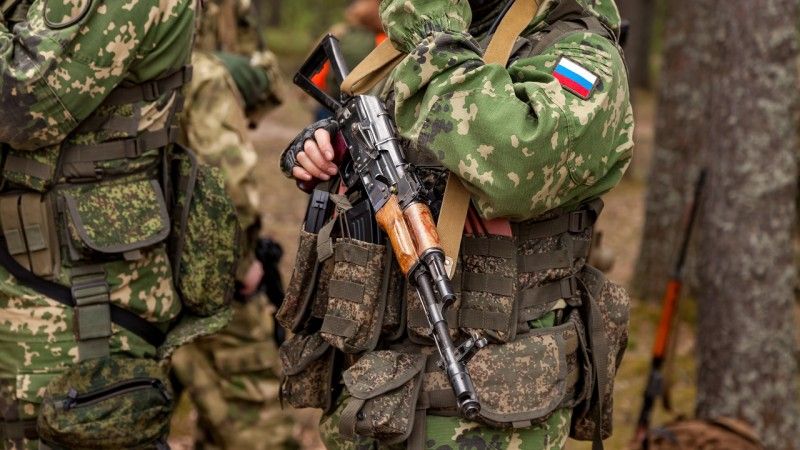
The military significance of the Kaliningrad Oblast is constantly highlighted in the context of Russian provocations and hybrid warfare against NATO. Even in the face of dwindling infantry in the Russian exclave, the Kaliningrad Oblast remains a threat zone for Poland – Russian aviation and missiles remain in a state of combat readiness.
Threat zone in Kaliningrad
The Kaliningrad Oblast is constantly cited as a zone of direct threat to NATO, as well as one of the starting points for a potential invasion of Poland or the Baltic states.
For over a decade, NATO has looked with concern at the Suwałki Gap – a strip of territory in Poland and Lithuania separating the Kaliningrad Oblast from Belarus. This is precisely where Russian forces are expected to deliver the first strike in the event of an invasion. Is Russia truly capable of this today?
The war in Ukraine has severely depleted the Kaliningrad barracks – most of the Russian ground forces from this area have been transferred to the front in Donbas. A land invasion from this direction is highly improbable, indeed close to zero.
“We are closely monitoring, as you can imagine, the Kaliningrad exclave. There are practically no troops there,” said the Minister of Foreign Affairs, Radosław Sikorski, on 11 September.

No infantry, but still dangerous
This does not mean, however, that the area of the Kaliningrad Oblast is now a safe zone – on the contrary. From this territory, Russia continues to conduct various hybrid operations and provocations against NATO states – including Poland. Among the most prominent, we can include the recent violation of Polish airspace by a Russian helicopter or the interceptions of Russian aircraft by Polish fighter jets.
Furthermore, Russian aviation and missiles remain in the area – including systems capable of carrying nuclear weapons, although according to all available knowledge, none are currently located within the Russian exclave. And even this does not exhaust the subject.
“More than 8 years ago, the line of fortifications on the oblast’s sea coast was expanded. These facilities are also prepared for missile strikes across the entire Baltic Sea. GPS signal jamming equipment has also been developed there, reaching as far as the North Pole and the Mediterranean Sea to the south. This is a significant threat to all countries situated on this sea,” said Prof. Tadeusz Baryła, an Eastern affairs expert specialising in, among other things, the Kaliningrad Oblast and Polish-Russian relations.


