


- WYWIADY
- WIADOMOŚCI
Is NATO’s collective defence a myth? An unequivocal answer [INTERVIEW]

Photo. NATO/X
“Regardless of all the political rhetoric, if you look at actual policy, budgets or practical engagement, I have no doubts whatsoever about the Americans’ commitment to NATO (…) There is a clear understanding within the Alliance that Europe’s security rests on the shared commitment of all parties,” Marcos Perestrello, President of the NATO Parliamentary Assembly, tells Defence24.
In the event of a genuine threat, will countries thousands of kilometres from Russia come to the defence of NATO’s eastern flank? Are the Alliance’s collective defence arrangements and the famous Article 5 of the North Atlantic Treaty a reliable mechanism, or merely a declaration on paper? Marcos Perestrello, President of the NATO Parliamentary Assembly, answers these and other questions.

Photo. Iman DJELASSI
Michał Górski, Defence24: Let us begin by discussing what the NATO Parliamentary Assembly is. What are its main tasks? How can this institution have a tangible impact on events and on our security?
Marcos Perestrello, President of the NATO Parliamentary Assembly: Parliamentary diplomacy is essential to building a common position among the parliamentarians who take the most important decisions in each of our countries — the Allied nations.
Another important aspect is that parliamentary engagement provides a privileged channel for building relations with countries outside the North Atlantic Alliance. These are partners around the world. Ukraine is an excellent example. Over many years, we developed a strong partnership with Ukraine, which grew closer after 2014 and the annexation of Crimea, and particularly in 2022, following Russia’s full-scale invasion. We have succeeded in building very close relations with Ukraine’s parliament, the Verkhovna Rada. This has been crucial in establishing a clear understanding across the Allied countries that we must provide strong support for Ukraine.
We should also remember that parliaments are responsible for approving budgets, drafting public procurement legislation and building political consensus across party lines. In short, the role of parliamentarians in reinforcing NATO’s values and its relations with partners is probably one of the most important aspects of the Assembly’s work.
See also 

Does the NATO Parliamentary Assembly also have a role to play in maintaining transatlantic relations?
It is an extremely important forum for meeting American and Canadian legislators, which is enormously valuable in strengthening those relations.
In recent years, we have experienced many periods of tension between Allies, some of which have stemmed from the current US administration’s approach to diplomatic relations and its view of international affairs. Against that backdrop, members of the United States Congress have played a crucial role in securing and maintaining strong ties across the Atlantic.
Let me give you a specific example. At the beginning of this year, in January, following a rise in tensions over Greenland, the Assembly managed to issue a statement signed by parliamentarians from both sides of the Atlantic — Americans, Canadians and many Europeans. It addressed the need for a collective approach to Arctic security and the absolute necessity of respecting states’ territorial integrity and sovereignty. It referred directly to the situation concerning Greenland. At that time, it was extremely important for the Danish parliament to see the NATO Parliamentary Assembly take a clear position, backed by US members of Congress, on Denmark’s sovereignty and territorial integrity, and on the need to establish mechanisms within the Alliance to ensure Arctic security. Shortly afterwards, NATO developed a clear security strategy for the region. That is a concrete example of what we can achieve.
Did that cooperation with members of Congress involve both Democrats and Republicans?
The agreement I am referring to was signed by members of Congress from both parties — it rested on bipartisan consensus. One important point worth highlighting is precisely the strong bipartisan support that NATO and transatlantic relations enjoy in both the Senate and the House of Representatives.
I was in Washington in April, where I had the opportunity to meet many US representatives and senators. Their position is clear. Looking at US policy towards NATO, although the Americans are asking more of Europeans and Canada, we all now agree that both Europe and Canada need to increase and accelerate investment in the defence and security of the Euro-Atlantic area. The Americans remain firmly committed to fulfilling all the obligations they have undertaken within the Alliance.
Regardless of all the political rhetoric, if you look at actual policy, budgets or practical engagement, I have no doubts whatsoever about the Americans’ commitment to the Alliance. This came through clearly at the NATO summit in Ankara in July this year. There was an unequivocal reaffirmation of the commitments under Article 5, which is the cornerstone of the Alliance. It states that an attack on one Ally is an attack on all, and that all are obliged to support and assist the country under attack.
In my view, that declaration in Ankara, made by the leaders of all NATO member states, clearly reaffirmed every member’s commitment to the Alliance.
Following on from your reference to Article 5, let us turn to collective defence within NATO. I am interested in how this issue looks from Portugal’s perspective. How are Russia and the threats it poses perceived in a country so far away from it?
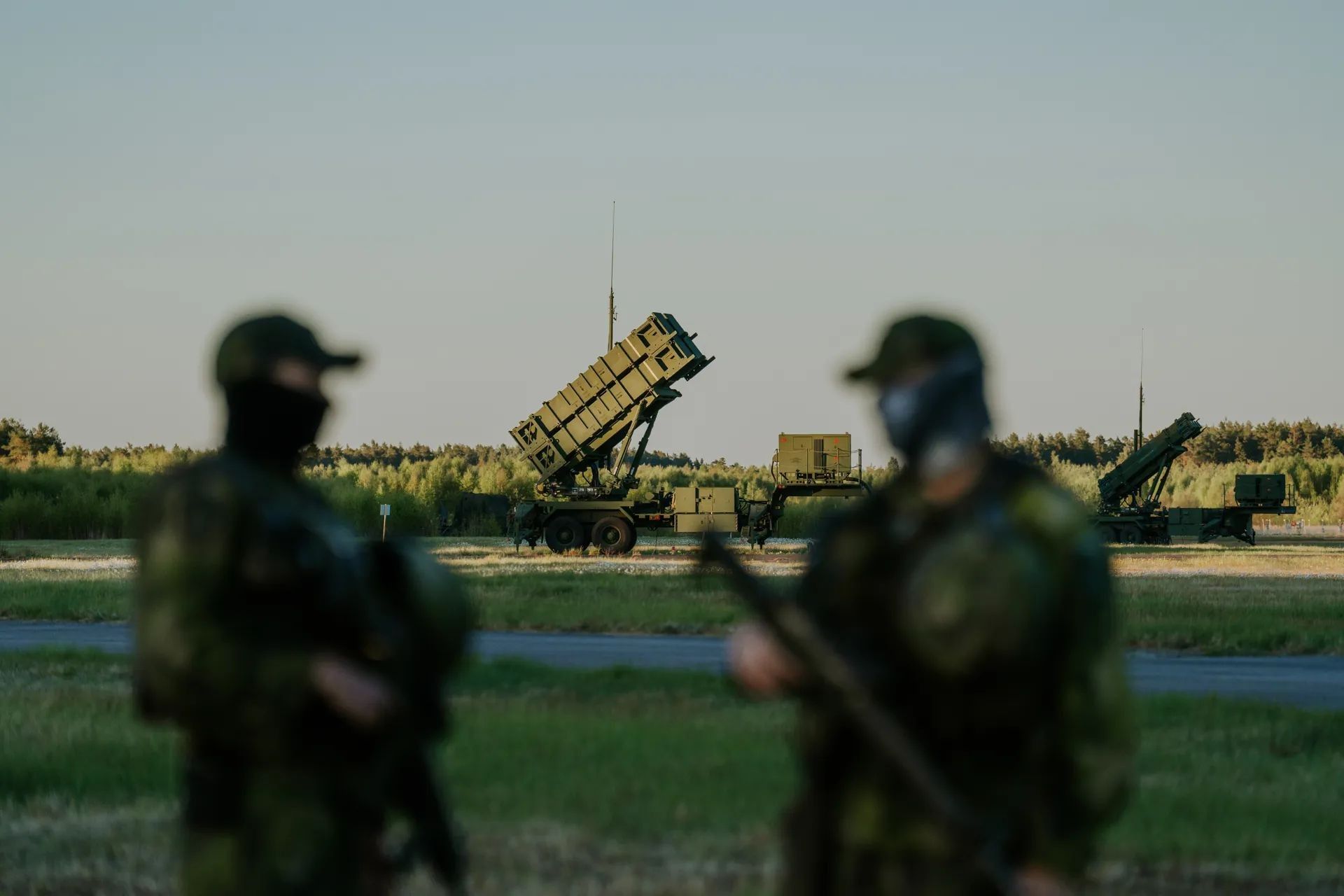
If we look at Europe’s eastern border, we see a substantial presence of forces from many countries, not necessarily from Eastern Europe. Portuguese F-16s are conducting the Baltic Air Policing mission. A few years ago, those same fighters were protecting airspace over the Arctic. Portuguese ground forces are stationed in Romania, and the Portuguese Navy recently had a presence in Lithuania. A few years ago, Portuguese frigates took part in NATO operations in the Baltic Sea. We also see Spanish forces there.
Among the governments, parliaments and citizens of Allied countries, there is a clear understanding that Europe’s security rests on the shared commitment of all parties. And if anyone had doubts about that, they certainly lost them when they felt the effects of the war in Ukraine: rising oil and grain prices, a higher cost of living, and the impact of the arrival of millions of refugees and migrants from Ukraine.
I would therefore say that governments often fear that others may not be sufficiently committed simply because they are a little further from the border. Yet all the indications I see, as well as opinion polls, show that these concerns are unfounded. There is a strong sense of responsibility for our shared security throughout Europe.

Photo. Iman Djelassi
The question is whether that sense of responsibility will endure. Parliamentary elections will soon take place in several countries, potentially bringing significant changes to perceptions of security and alliances…
As a result of social media manipulation, malign influence from our adversaries and the use of disinformation, we are seeing the rise of pro-Russian far-right parties across Europe. They can be found in many countries.
At today’s meeting of the Ukraine–NATO Interparliamentary Council within the NATO Parliamentary Assembly [19 October 2026 — ed.], reference was made to a statement and a resolution adopted in one of the German federal states where the AfD had won. They called for support for Ukraine to be halted. This is a direct consequence of the activities of far-right, pro-Russian groups gaining influence in some European countries.
I have not forgotten how, before 2022, Salvini’s parties in Italy, and Salvini himself, had close ties to Putin. Nor how close Le Pen’s party in France was to Moscow and Putin. They severed those ties — or at least pretend to have done so — because, after the full-scale invasion of Ukraine, Putin became so unpopular in Europe that maintaining open contact with him was extremely damaging to them.
That closeness is dangerous. It is the result of the hybrid activities Russia conducts in European countries. We should examine much more closely how to defend ourselves against them, because interference in our democratic processes is continuous.
In the United Kingdom, there is already open discussion of Russian influence on the referendum that led to the country’s departure from the European Union, weakening both the UK and the EU itself. Moldova’s government resisted Russia’s attempt to influence the 2025 election, although there, too, signs of Russian interference in the electoral process were apparent. Elections in Romania also fell victim to Russian pressure. In Hungary, meanwhile, the pro-Russian prime minister suffered a heavy defeat in the most recent election.
This kind of interference and influence can be seen throughout Europe. It has nothing to do with distance from the border. It is part of Russia’s strategy to weaken Western institutions and governments in pursuit of its own objectives: at present, to destroy and conquer Ukraine; in the longer term, to expand its sphere of influence and consolidate its position as a global power — a status that, fortunately for us, Russia lost many years ago.
Is this Russian influence on the infosphere also apparent in Portugal?
It is not quite so clear-cut. As far as interference in elections themselves is concerned, we are not seeing it. Our electoral process is built around traditional, paper-based methods, making it much harder to interfere with than more digitised systems.
I can say, however, that the far right here has very strong links with the far right in France and Italy — it is close to Le Pen and Salvini. On social media, it uses the same strategy as far-right groups with close ties to Russia. They do not hesitate to manipulate information, weaponise lies, produce fake news or fabricate facts.
I cannot state categorically that this is a direct result of Russian influence, but they use exactly the same methods — particularly on social media — as parties close to Russia.
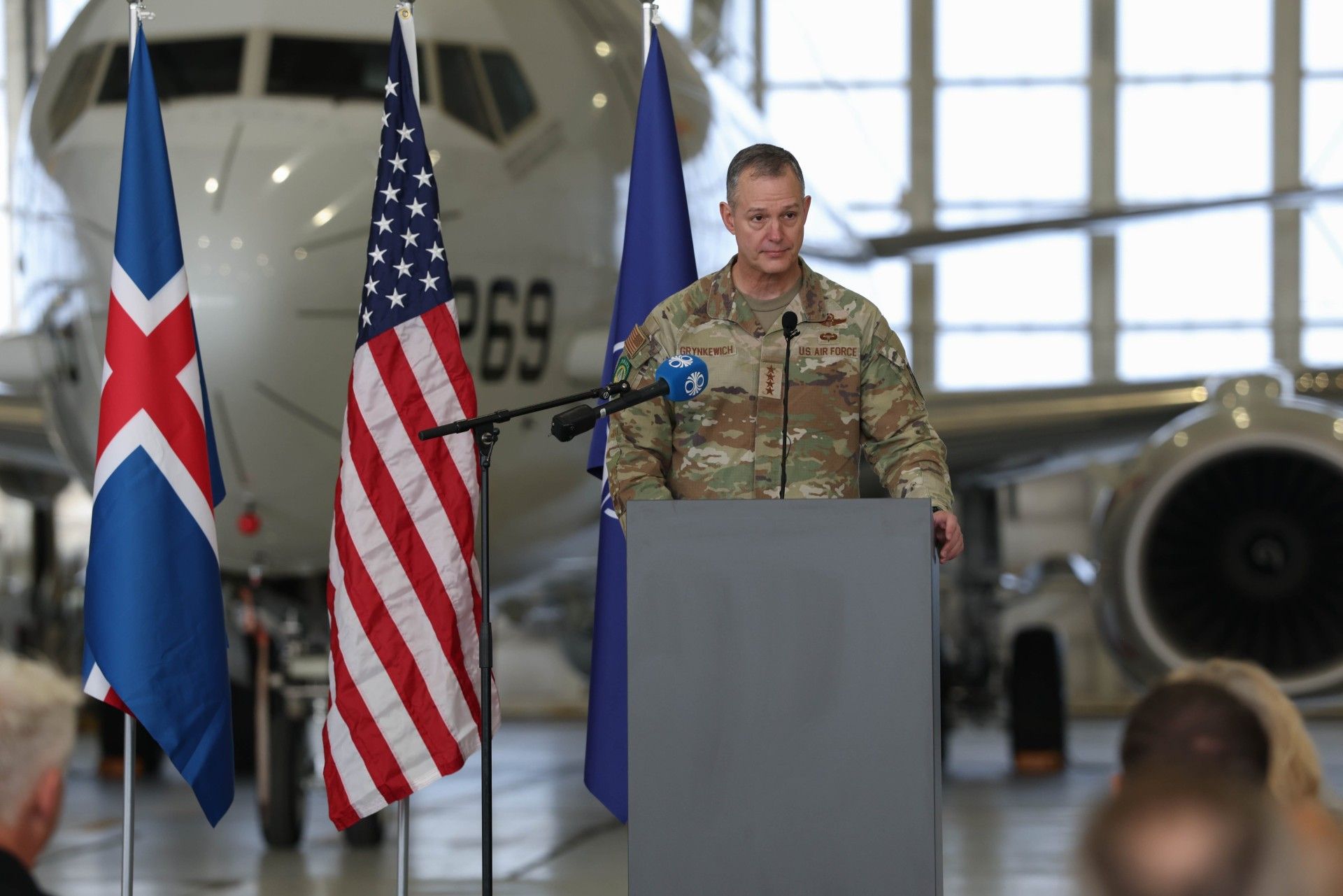
Finally, a question about General Grynkewich’s recent speech in Warsaw concerning NATO’s “theory of victory” over Russia. In your view, did it lack discussion of how to counter Russian hybrid activities?
I believe that, in his speech, the Supreme Allied Commander Europe, or SACEUR, primarily wanted to remind us that NATO is an effective defensive alliance which has been responsible for preserving its members’ peace, territorial integrity and sovereignty for almost 80 years.
General Grynkewich focused primarily on military operations. I had the opportunity to hear him at the Warsaw Security Forum, and my impression was that his main purpose was to provide reassurance. His intention was not so much to encourage complacency as to prevent excessive alarm and convey the message: “War is not that close, and it is not inevitable.”
But to achieve that, we must continually strengthen our ability to deter. And let there be no doubt: if deterrence fails, we will defend ourselves. That does, however, require us to build up our defence capabilities. There can be no effective deterrence or defence without adequate military capabilities and the industrial base that sustains them. I believe that was the central message of General Grynkewich’s speech. It was consistent with the agreements reached at the summit in The Hague, where we made commitments on defence spending, and in Ankara, where the commitment to translating declarations into actual capabilities was reaffirmed.
Let me repeat: war is not close, and it is not inevitable. But to prevent it, we must be able to deter effectively. Let there be no doubt — if necessary, we will defend ourselves and do whatever is required. This is where General Grynkewich used the vivid “three Bs” formulation: block, blunt the attack and break the enemy, if necessary.
Returning to your question, protection against hybrid threats was not the main focus of his speech. But that is true of everything, including our conversation — it is impossible to cover every subject at once. SACEUR was simply emphasising that, from a military perspective, we must be certain that we can preserve peace in Europe, which is NATO’s overriding objective.


