- WIADOMOŚCI
- KOMENTARZ
NATO's Theory of Victory. Gen. Grynkewich explains


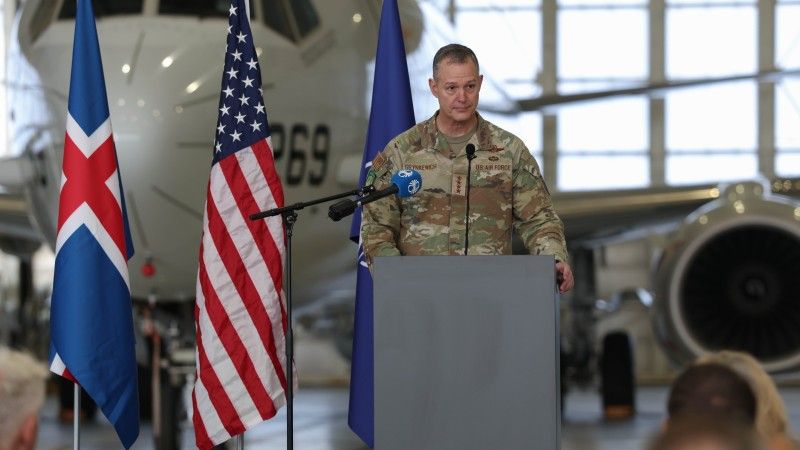
During the Warsaw Security Forum, the Supreme Allied Commander Europe, Gen Alexus Grynkewich, presented the Alliance’s ‘Theory of Victory’. What does the announced strategy entail?
The presented concept is based on three elements:
- Blunt the initial attack.
- Block the continuation of the attack.
- Degrade the enemy.
Blunting the initial attack will require NATO to reinforce its defences so that the enemy is unable to break through, surprise the Alliance, and achieve its operational goals before the member states are able to scramble their forces. According to Grynkewich, intelligence superiority will be particularly helpful in this regard. NATO is to be capable of detecting an impending attack and deploying its forces in a timely manner.
The second element involves preventing the continuation of the offensive. The air force and navy, in cooperation with space and cyber forces, will gain air and sea superiority. By using advanced sensors, autonomous systems, and multi-domain forces, the Alliance aims to prevent the permanent occupation of Allied territory.
Degrading the enemy means weakening its overall military potential. Strikes will be conducted not only against the attacking forces but also against everything that supports, supplies, and is responsible for command and control. In this way, the enemy will lose the ability to continue combat operations.
The burden of escalation will be placed on the aggressor
Grynkewich noted that the goal will not be to inflict a strategic defeat on the adversary, but merely to stop the attack. In this way, NATO will have no reason to escalate, and the burden of escalation will rest solely with the aggressor. The Alliance will react to the adversary’s subsequent moves and adapt its responses to those actions.
The adversary is to be placed in a situation where the only logical way out is de-escalation, while attempts to carry out further aggressive actions will lead to a deterioration of its own situation.
See also 

What about Ukraine?
Ukraine has received immense support from Alliance member states and will continue to receive it. The message is quite clear: Ukraine must survive this war, and NATO does not intend to withdraw its support for Kyiv. At the same time, the United States will remain key to the deterrence of Russia, at least militarily.
Importantly, in view of hybrid attacks, NATO’s new approach will not be pursued by seeking direct confrontation, but by maintaining military capabilities and presence, so that Moscow knows that further escalation will not yield its expected benefits.