












- WYWIADY
- WIADOMOŚCI
- WAŻNE
Russia is not done: Sweden’s Chief of Defence warns

Photo. David Hakeberg / Försvarsmakten
Despite heavy losses in Ukraine, Russia is adapting fast and preparing to challenge NATO in the Baltic Sea and beyond.
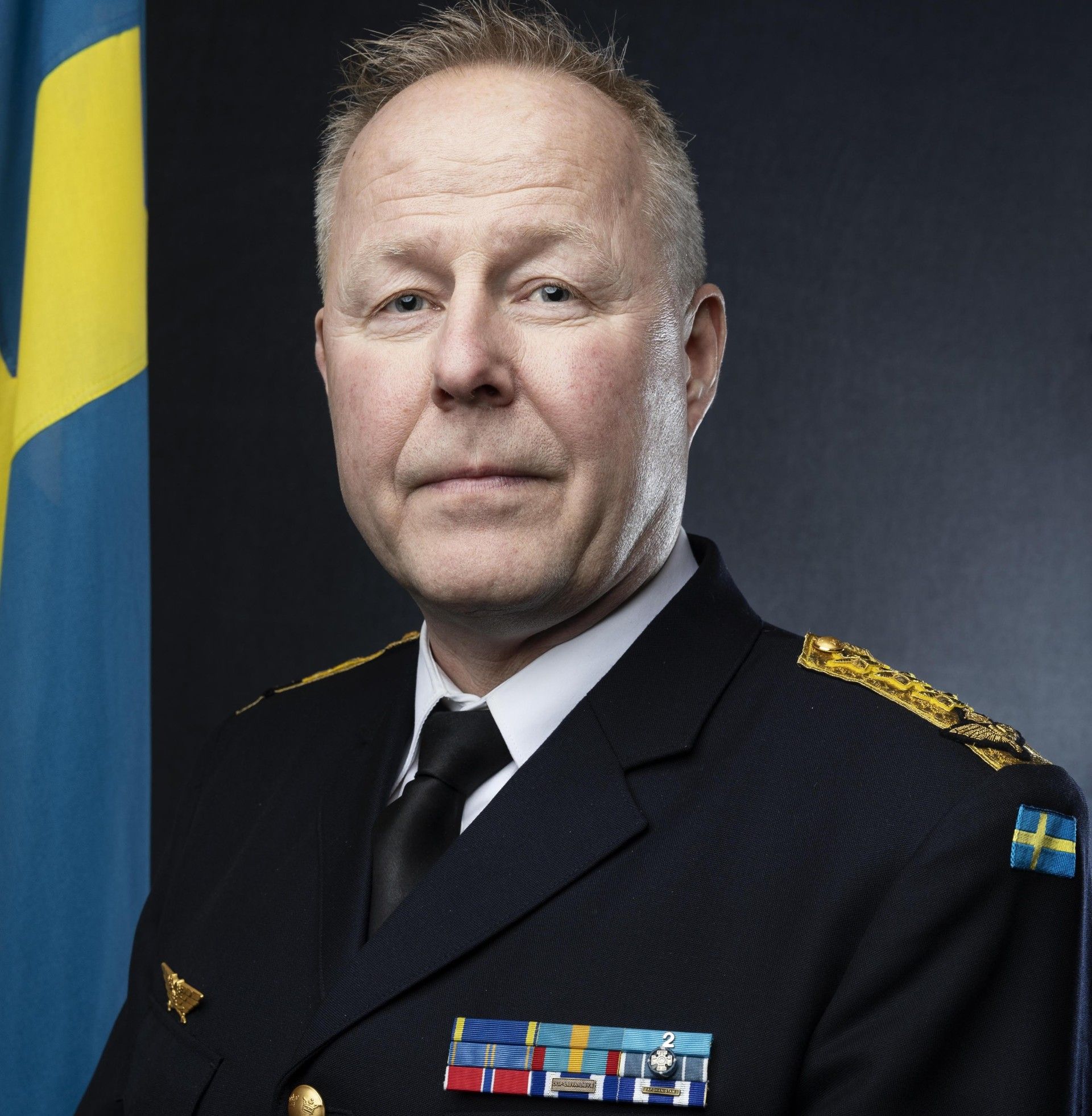
On Russia’s military adaptation, the growing linkage between the Baltic and the Arctic, cooperation on NATO’s northeastern flank, protection of undersea infrastructure and Sweden’s role in collective deterrence, Dr Aleksander Olech speaks with Sweden’s Chief of Defence Staff, Lieutenant General Carl-Johan Edström.
Dr Aleksander Olech: How does Sweden currently assess the scale and trajectory of the Russian threat in the Baltic region, especially considering Russia’s ongoing military adaptation, despite the war in Ukraine?
Sweden’s Chief of Defence Staff, Lieutenant General Carl-Johan Edström: Russia remains the most serious and immediate threat to security in the Baltic region. Despite heavy losses in Ukraine, Russia is adapting quickly, learning from the war, regenerating forces and investing in long range fires, air defence and naval capabilities. We assess that Russia will retain both intent and capability to challenge NATO interests in the Baltic Sea even while the war in Ukraine continues. This is a real, persistent and long-term threat.

Do you consider the Baltic Sea to be the primary theatre of strategic competition between NATO and Russia, or do you foresee this competition increasingly shifting toward the High North and the Arctic?
The Baltic Sea is and will remain a core arena of strategic competition. At the same time, this is not an either-or question. The Baltic region and the High North are increasingly connected. Russian military planning links the Kola Peninsula, the Arctic, the North Atlantic and the Baltic Sea into one strategic system. NATO must therefore think and act across regions, not in stovepipes.
Which areas of defence cooperation between Sweden and Poland do you regard as most critical for strengthening deterrence and collective defence along NATO’s northeastern flank?
Sweden and Poland are key partners on NATO’s northeastern flank. The most critical areas are operational planning, integrated air and missile defence, maritime domain awareness and control and host nation support. The concept with Forward Land Forces gives us opportunity to have presence near the border early, for high readiness to counter threats on the eastern flank, establishing collective air defence, vigilance activities and operations for defence and deterrence such as Eastern Sentry.
Close cooperation between our armed forces strengthens deterrence by making NATO more coherent and more credible in a crisis.
As Sweden integrates fully into NATO’s defence planning processes, which capabilities or operational contributions do you see as Sweden’s most important added value for the Alliance—particularly in the Baltic region?
The Baltic Sea region is our backyard. Sweden adds value through advanced air and naval capabilities, strong situational awareness across all domains by combine SIGINT from integrated platforms (air, sea and space) and the ability to operate seamlessly with allies. Our geography matters. Sweden is central to enabling NATO operations in the Baltic region. We contribute combat ready forces, high end capabilities and a mindset focused on fighting tonight while building for tomorrow.
Interoperability is key. We are taking, and we will continue to take, responsibility for a safe and secure Baltic Sea by regenerate our forces and to have high readiness in the air and sea space – all focused on collective deterrence, crisis management, and cooperative security.
In light of recent incidents involving undersea infrastructure in the Baltic Sea, how is Sweden enhancing its maritime surveillance and protection posture, and what forms of multinational cooperation are necessary to counter hybrid threats?
We are strengthening persistent maritime surveillance, undersea awareness and rapid response capabilities. Protection of critical infrastructure cannot be done by one nation alone, nor just a military concern. This is what we call Whole-of-Government approach that includes several authorities and Whole-of-Society (for instance infrastructure owners).
It requires shared intelligence, coordinated patrols and clear political mandate. Hybrid threats thrive in grey zones. We need to have strong resilience. Our response must remove those grey zones through cooperation and presence.
The core is that operations can be conducted. Control of the Baltic Sea is a fundamental condition for sealine operations.
Looking ahead to 2030 and beyond, what strategic capability developments should Sweden prioritise to maintain credible deterrence against Russia and effectively contribute to NATO operations?
NATO’s capability targets are the guiding stars, and our obligations as an Ally, for our long-term regenerate.
Sweden must prioritise air and missile defence, long range strike, maritime capabilities, resilience and logistics. We also need to invest in digitalisation, space and the ability to scale forces quickly. Deterrence is not only about platforms. It is about readiness, endurance and the ability to fight together with allies from day one.
That includes an increased ability to conduct ground combat operations in a transparent battlespace and Maritime capabilities such as amphibia forces operations.
With regards to Greenland, would Sweden help Denmark to defend Greenland?
The Arctic is a new area of operations for Sweden and the Nordic countries within NATO. This means that Greenland is covered by NATO’s defence plans and deterrence activities, and as an Ally Sweden contributes accordingly.
Thank you for this conversation


