












- ANALIZA
- WIADOMOŚCI
Terrorist threats to Poland, including after the war in Ukraine

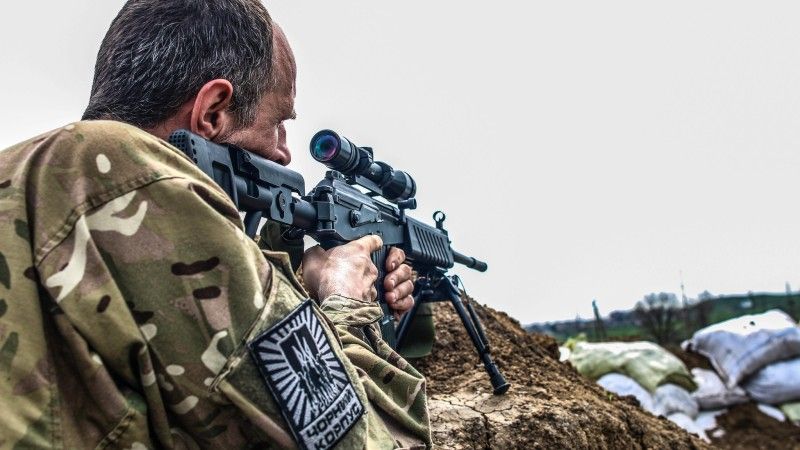
Photo. Ministry of Defense of Ukraine/flickr/Noah Brooks/CC BY-SA 2.0.
For years Poland seemed insulated from the waves of terrorism that struck Western Europe. That illusion is crumbling. Russia’s hybrid warfare, the destabilising effects of the war in Ukraine, radicalisation linked to migration, and the return of battle-hardened fighters are converging into a new spectrum of threats. Poland must now confront the possibility that the next major terrorist incident in Europe may occur far closer to home.
Diverging definitions of terrorism in Europe
Definitions of terrorism differ markedly between Poland and France (the European state most frequently targeted by terrorist attacks in the 21st century). A country’s history, its current geopolitical position, and its foreign policy all significantly shape the character and evolution of threats that may endanger state stability. Public perceptions of terrorism are linked to a nation’s history, domestic conditions and the media’s role in shaping images and events in other countries (for example, how terrorism is presented in French versus Polish media).
How the war in Ukraine reframed Poland's security environment
The outbreak of a full-scale war in Ukraine has further altered the character of threats to Poland. On the one hand, allied presence on the eastern flank has been strengthened; on the other, there has been a sharp increase in incidents of sabotage, diversionary propaganda and attempts to interfere in the everyday life of states in the region — Poland foremost among them. Rising tensions between Russia and the West (often described as hybrid warfare) mean that the actions of lone actors or Kremlin-directed cells can be exploited as instruments of terrorism, not merely as spontaneous acts of violence motivated by ideology, finance or emotion.
Contemporary terrorist threats to Poland cannot be ignored, but they differ from those found to the country’s west and east because of Poland’s particular legal-administrative, economic, political, ethnographic, demographic and socio-cultural conditions. It is therefore essential to take the nation’s history into account and to continuously analyze and assess changes in the global security environment in order to mount an appropriate response in the event of a terrorist attack.
According to Tomasz Aleksandrowicz, Poland is exposed to terrorist attacks, though on a significantly smaller scale than France. The dominant differences are the intensity of attacks, their recurrence and the scale of damage they can cause. The researcher identifies several factors that may influence the development of terrorism in Poland. First, a terrorist attack may be carried out on the territory of the Republic of Poland either against Poland itself or against third states.
See also 
Threat vectors identified by experts
Law-enforcement agencies should pay attention to fighters who, having taken part in combat in Ukraine or in the Chechen wars, might seek to provoke attacks. Persons returning from the Middle East to Western Europe via Polish territory may also pose a serious threat. Second, attacks and acts meeting the criteria of terrorism may be directed against Polish citizens or aimed at destroying property and assets belonging to the RP or flying its flag. This risk is largely due to the presence of Polish contingents on missions and in conflict zones. Terrorist attacks may be deliberate and targeted at Poland because of its membership in alliances and international organisations.
Kidnappings for ransom are also a significant concern given Polish personnel’s presence in high-tension regions, as are attacks in which Poles die incidentally — for example the killing of a Polish citizen in Strasbourg, where the attack targeted the French community. A third factor to consider is the recurrence of false bomb threats. Their frequency and the procedures they trigger send clear signals to terrorists about the responses that will follow in the event of a perceived threat. False alarms are a way to test reactions and counterterrorism procedures, allowing terrorists to prepare accordingly.
Attackers« objectives include learning procedures, tactics and the functioning of police and other deployed services, as well as spreading panic among a population that feels threatened. The greatest danger here is societal desensitisation to terrorist actions, which could lead to complacency during an evacuation even if a real attack occurs. Such passivity results from society’s dulled vigilance.
The fourth category of threat is cyberterrorism. Although it concerns all countries, its primary domain is the internet. Cyberattacks can significantly affect the functioning of the state and numerous institutions that rely on internet access, often destabilizing key state organs, including government websites. Growing exposure of sensitive data and thefts of funds from bank accounts are additional risks.
Information is a key commodity in the modern world, and its protection is vital to national security. Unlike ordinary cybercrime, cyberterrorism aims to provoke panic, discredit specific groups and individuals, and create as much chaos as possible in the targeted state. This relatively new field is a major contemporary challenge for governments and forces the creation of new institutions charged with cyber security and the development of the necessary computer technologies to protect state interests.
The final factor likely to influence the development of terrorism in Poland is mass migration — including the arrival of an increasing number of terrorists in Europe and their radicalization. This process has driven dynamic changes within European societies, notably their turn toward nationalism. Simultaneously, anti-immigrant and anti-Muslim activity has given rise to organizations or groups that will oppose migrants and followers of other religions and may undertake terrorist actions. Their political motives and intensified aggression could lead to retaliatory or pre-emptive attacks intended to neutralize perceived threats. Such movements could evolve into multinational clashes characterized by terrorist attacks aimed at reciprocal elimination. Europeans might adopt methods used by attackers from Africa and the Middle East against those same groups. Such actions could be a prelude to a European conflict between adherents of differing religions or ideologies.
It should be emphasized that migration processes, the war in Ukraine and the activity of extremist organizations do not operate in isolation. The overlap among nationalist, hooligan, quasi-political and religiously motivated milieus is a spark for many conflicts that under certain conditions will form recruitment pools for groups that become extremist and later terrorist. An additional challenge will be the return of some people who have been in conflict zones — on both the pro-Ukrainian side and among groups and formations supporting the Russian Federation — which may increase the risk of forming small, closed groups intent on continuing the fight.
International engagement, migration activities and extremist milieus
Poland is an active participant in international cooperation to combat terrorism in third countries. By sending Polish Armed Forces contingents on missions that, together with U.S. or other forces, form part of a fighting coalition, Poland automatically becomes an active party to the conflict.
In recent years the Polish military has taken part in missions including: Kosovo (KFOR — NATO), Afghanistan (Resolute Support — NATO), Bosnia and Herzegovina (EUFOR Althea — EU), Georgia (EUMM Georgia — EU), the Central African Republic (EUMAM RCA — EU), and in Kuwait, Iraq and Qatar (Inherent Resolve — coalition under a UN Security Council mandate). Considering the above circumstances, it is possible that Polish territory — including critical public utilities, military installations and industrial centres — could become a target for retaliatory action.
Although the 2005 assessments by Col. Roman Polko and Gen. Sławomir Petelicki predicting a high likelihood of terrorist attacks on Polish territory did not materialize, constant monitoring of threats remains prudent. In view of terrorist acts that have taken place in France, the United Kingdom and Spain, it is difficult not to conclude that each of those states paid a „price” for participation in military operations in the Middle East. The Spanish, repeatedly warned after the 2004 attacks, ultimately decided to withdraw their contingents.
This underlines the open question of Poland’s role in alliances with the United States and the consequences that may follow. The activity of the Islamic State in Europe or an independent attack by a supporter of an Al-Qaeda faction would not seem implausible, given the regularity of terrorist incidents in EU countries. It is therefore worth re-examining Poland’s situation in light of emerging threats. Within the country these threats are becoming increasingly real, and abroad they already have a direct character — as in the case of December 2018 killing of a Polish citizen in Strasbourg, and kidnapping and killing of a Polish citizen in Pakistan (February 2009).
Poland in the 21st century has not been exposed to terrorist attacks to the same extent as the French Republic, but it should take account of the activation of various extremist milieus. Potential threats to the RP are associated both with attacks by groups from the North Caucasus operating within the Russian Federation and with the use of Balkan routes to smuggle weapons, explosives and narcotics, as well as with an increase in supporters of leftist, anarchist and right-wing movements who may begin to engage in terrorist activities.
Undoubtedly the risk of terrorist acts grows with societal polarization and the development of extreme ideologies, manifested in the coercion of aggressive behavior as a way of solving social problems. This aggression may be directed at state authorities, political opposition, or groups who do not share particular views. The prospect of escalating terrorist threats is a basis for intensifying counterterrorism measures at all levels of cooperation, including international.
Attention should be paid to individuals who are marginalised in society and come from different cultural backgrounds, as they may be particularly susceptible to the populism of extremist organizations. Decades-long recurrence of terrorist acts on French territory means the level of threat has risen across Europe. It can be assumed that sooner or later heightened terrorist activity will also occur on Polish soil.
If actions by Russian separatists are considered terrorist in nature, it is important to understand the roots of Ukrainian terrorism. One source is political imbalance manifested in a crisis of state organs, a non-functioning institutional and legal apparatus, inequality among various groups (social, religious, national, oppositional), rising corruption, lack of investment in culture and unfairness in major state economic decisions. The permanent presence of Russian Federation forces on Ukrainian territory is also significant, heavily affecting state functioning and constituting a threat to national security.
Post-war dynamics and the risk of terrorism spillover
The more soldiers and terrorists travel to Ukraine, the greater the number of returns and the higher the risk of further attacks in their countries of residence in Europe. Many of the separatists involved in the Donbas conflict and their opponents — including pro-Ukrainian fighters from the Azov Regiment — originate from France, Norway and the Middle East. The return of fighters from Ukraine poses a threat to internal security that will become visible in several years. The outcome of the war in the East will be of limited consequence: combatants will engage in further conflicts to pursue their aims and demands. However, this time the activation of terrorist and nationalist milieus may occur on Polish territory.
As long as the situation in Ukraine remains tense and terrorists continue their activities, the conflict will constitute a serious threat to international security. Regardless of the result of this rivalry (between Russia and Ukraine and other states in the background), terrorists may reactivate after its end on other territories. Their actions may be motivated by their own views and demands, or they may be bribed to destabilize another actor. The Russo-Ukrainian conflict is certainly the longest international conflict of the 21st century; therefore terrorism in Ukraine represents a multifaceted and complex threat that requires a comprehensive response at regional, national and international levels.
Over the coming years one of the key challenges for European states will be the return of persons who have taken part in hostilities on Ukrainian territory on both Ukrainian and Russian sides. Not only does it concern volunteers or members of irregular formations, but also soldiers of national armies who, after hostilities, will seek to reintegrate into civilian life. The experience from other conflicts shows that the most problematic environments combine: combat experience, strong ideological conviction and a sense of grievance or lack of recognition by one’s own state.
This does not mean that returning veterans will automatically lead to an increase in terrorist attacks. Nevertheless, it is an area that requires deliberate state policy: programs to support soldiers and volunteers, systematic monitoring of high-risk groups and close cooperation among services at the European level. In the context of migration (from Africa and the Middle East) to the EU, many omissions have occurred. Neglect in these areas will result in growing frustration, the development of extremist milieus and even the transposition of front-line conflicts onto the domestic soil of EU states, including Poland. Early identification of problems — which we already know — should compel an appropriate response from state institutions. That is the only chance to limit the scale of threats before they take the form of terrorist attacks.


