












- WIADOMOŚCI
- KOMENTARZ
72 hours in the Gulf: Inside Chancellor Merz’s mission to wean Germany off US dependence

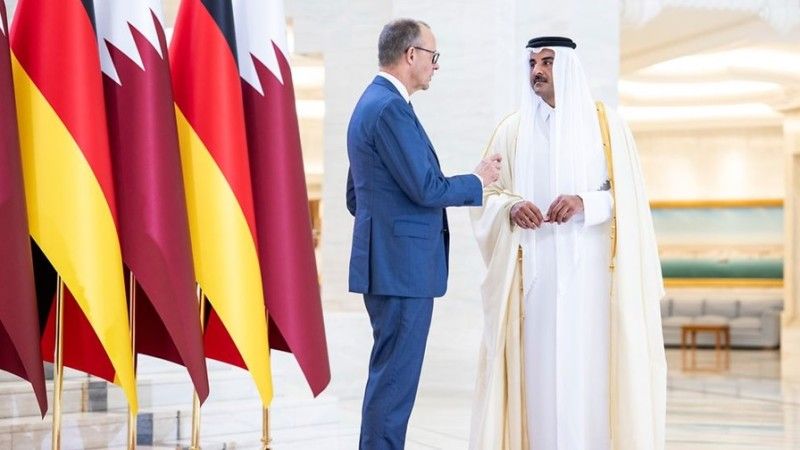
In an intense three-day diplomatic blitz across Riyadh, Doha, and Abu Dhabi from February 4 to 6, German Chancellor Friedrich Merz is pursuing energy supplies, Gulf investments, and defense agreements. His overarching aim: reducing Germany’s strategic reliance on the United States and China. Merz argues that as global politics becomes increasingly dominated by major powers, Berlin requires a wider network of partners to mitigate its vulnerabilities.
Energy is at the heart of the Chancellor’s Gulf push. After losing access to Russian pipeline gas, Germany quickly shifted to liquefied natural gas (LNG). In 2025 alone, the country imported 1,031 TWh of natural gas, about 10% of which arrived via LNG terminals, with a striking 96% of that LNG sourced from the United States. Berlin is now actively seeking to secure additional supplies from the Gulf region to balance its energy portfolio, while also investing in long-term strategic initiatives such as green hydrogen. Supporters argue this approach is essential for genuine diversification, but critics caution it may simply shift strategic leverage from Washington to another set of external suppliers.
Economy Minister Katherina Reiche prepared the ground in Saudi Arabia, arriving ahead of the Chancellor with a high-level business delegation to finalize agreements on energy projects, innovation, deep technology, and AI. Merz is also actively courting sovereign wealth funds to deepen economic ties. Qatar already holds major stakes in German champions such as Volkswagen and RWE, and Merz notes that German-Saudi bilateral trade, currently valued at around €11 billion, continues to grow steadily. Consequently, he is pushing for the restart of EU-Gulf free-trade negotiations.
The most delicate issue remains defense exports. Chancellor Merz has signaled a shift toward less restrictive and more predictable arms export policies. German media report Saudi Arabia’s growing interest in Airbus’s A400M transport aircraft, alongside renewed inquiries into the Eurofighter Typhoon. Yet relations with Riyadh have been strained since the 2018 murder of journalist Jamal Khashoggi, a stark reminder that diversification often carries its own political costs.
A parallel agenda focuses on Iran. Merz insists Tehran must end domestic violence, halt its military nuclear program, and cease destabilizing actions in the region. Speaking in Doha, he cited „great concern” regarding regional escalation and urged Iran to return to the negotiating table.


