












- WIADOMOŚCI
- KOMENTARZ
Andrew Michta: After Davos, it’s time for NATO to come together

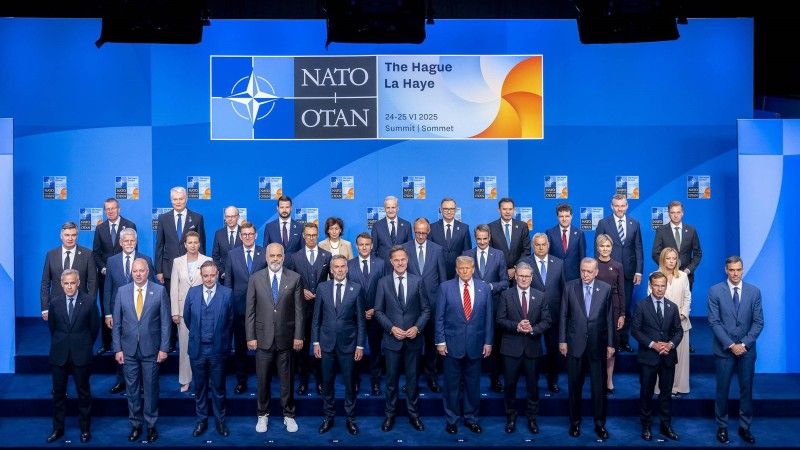
There are moments in history when calm and cool-headedness are likely to prevail because the geopolitical drivers and vital national interests will ultimately contain chaos. This is what just happened at Davos.
In the weeks leading up to the meeting, experts predicted imminent trouble in transatlantic relations, politicians panicked over the collapse of the rules-based order, and the media had a field day with stories about the United States preparing to invade Greenland. Then came President Trump’s Davos speech, which, in his distinctive style, mixed metaphors, wandered through numerous tangents, and made self-congratulatory remarks, but ultimately said what should have been clear from the beginning: The United States is not going to break NATO, its crucial alliance, over territorial claims to Greenland. Shortly after, a „framework” for the agreement regarding the U.S. presence on the island was announced. Although details are limited, it’s safe to assume the U.S. will boost its military presence in Greenland to deter Russian or Chinese actions and strengthen deterrence in the Arctic. Additionally, America will likely pursue commercial arrangements to explore the island’s mineral resources.
There was plenty of political theater at Davos. It was striking to see Canada’s Prime Minister, Mark Carney, take a firm stance, declaring that his country will, in effect, chart its own course, as if Canada weren’t geographically, economically, and geopolitically connected to the United States. Likewise, many European leaders spoke confidently as they delivered strong messages about the rule of law in international relations, but offered little concrete action to implement them. And though they were all understandably offended by Donald Trump’s strong-arm tactics and his excessively blunt language, Davos showed once again that – save for the quiet demeanor of NATO Secretary General Mark Rutte and the calm exhibited by Finland’s President Alexander Stubb and Polish President Karol Nawrocki – European elites found themselves unable to transcend the moment, adapt, and carry on.
The row over Greenland was a U.S. mistake that will carry with it a penalty as we move forward. That penalty will be a partial loss of trust – this most precious commodity in any close alliance. But it is also an opportunity for the allies to talk directly to each other, not in normative, but in geostrategic terms. Alliances are first and foremost about shared threats and shared national interests, with shared values serving as a functional reinforcer but not a defining one. If anything, this crisis should refocus both Washington and key European capitals on what really matters. It should begin the process of reforging the alliance not around the legacy assumptions inherited from the Cold War, but to counter real threats and shore up the points of contact with Russia. The United States« focus on hemispheric defense, articulated in its National Security Strategy, is not, as some European analysts have posited, synonymous with America’s withdrawal. On the contrary, it is only when the United States can ensure the security of its immediate neighborhood that it can then project power and fulfill its security commitments to its allies across the Atlantic and the Pacific.

For too long, the biggest European countries have enjoyed a „vacation from history.” The sudden shock from the row over Greenland should finally wake them up from their complacency and help them realize that their security is deeply connected to the United States. The way forward isn’t about debating the idea of a „European army” or „strategic autonomy,” but about fulfilling their responsibilities to rearm and form the core of NATO’s conventional deterrence and defense under the U.S. strategic nuclear umbrella. This should be Europe’s top priority when its leaders return home from Davos. They need to do their best to set aside their bruised egos, stop overreacting to Donald Trump’s often unpalatable tactics, and remember this: their countries don’t have a relationship with this or that U.S. president or political party. They have a crucial national security relationship with the United States of America. So, solve the problem and focus on resourcing your country’s defenses because our enemies are only getting stronger.
Andrew A. Michta is Professor of Strategic Studies at the Hamilton School at the University of Florida and a Nonresident Senior Fellow at the Atlantic Council in Washington, D.C.Views expressed here are his own.


