- KOMENTARZ
- WIADOMOŚCI
Does China pursue an aggressive policy?

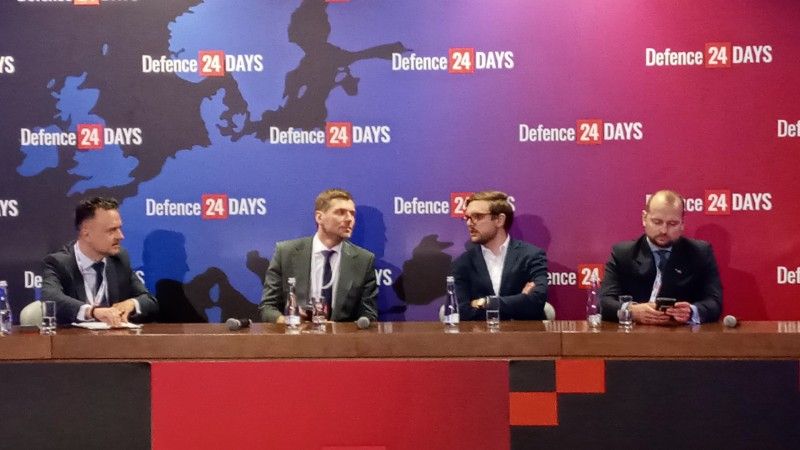
Defence24 Days 2026 is now behind us! One of the final panels focused on China’s policy and its impact on our security.
The panel, titled “Aggressive Chinese policy and its implications for our security” was moderated by Dr. Robert Czulda from Defence24.pl. The participants included:
- Jakub Jakóbowski, Deputy Director of the Center for Eastern Studies (OSW)
- Dr. habil. Jarosław Ćwiek-Karpowicz, Director of the Polish Institute of International Affairs (PISM)
- Dr. Jacek Raubo, Head of the Analysis Department at Defence24
All panelists noted that the title of the discussion, in their view, should have been phrased somewhat differently. Jakub Jakóbowski pointed out that any aggressive actions by China, when compared with the behavior of other actors, seem relatively mild. In his opinion, since its founding as the People’s Republic, China has perceived itself as being in a systemic conflict with the West, represented by the United States. Today, we are witnessing a shift in China’s posture from defensive to offensive. In the classical sense of armed aggression, China is not comparable, for example, to the United States. However, power and coercion are exercised elsewhere—through economic dependencies and within the information domain. The reluctance toward open military aggression is also linked to the country’s demographic crisis.
The Chinese understand that industrial dependencies have a major impact on the ability to wage war. The export of certain raw materials and components is restricted to maintain peace and limit warfare. They are attempting to create a situation in which any potential conflict—such as the defence of Taiwan—would be entirely unprofitable, and therefore unrealistic.
Dr. habil. Jarosław Ćwiek-Karpowicz from the Polish Institute of International Affairs proposed modifying the panel’s title. In his view, it should read: “Can China Be a Stabilising or Destabilising Actor in the International Order?” International conflicts, he argued, serve China’s economic interests. Most often, the country benefits from both sides of potential conflicts. Through its “aggressive” policy however, China in some ways isolates itself. For example, in the matter of vaccines, which are freely developed in the West, Asian countries have taken note of this difference.
According to Dr. Ćwiek-Karpowicz, China’s policy is reactive. As an example, he cited the complete replication of European climate policy. China trades emissions on a larger scale than Europe and is also developing renewable energy sources.

Dr. Jacek Raubo uses the term “stealth” in reference to China. Many processes occurring within the country went undetected by the international community. For some time now, this mode has either been deactivated, or other states have learned to detect these processes. The issue, he argued, is not one of aggressiveness but rather assertiveness. The expert noted that many Chinese technological solutions are scaled specifically for regional states—something the West does not offer. Consequently, the narrative about China in the West often differs from that prevailing in countries supported by China.