












- WIADOMOŚCI
What’s behind the newest EU and NATO initiatives to deepen industrial ties with Ukraine?

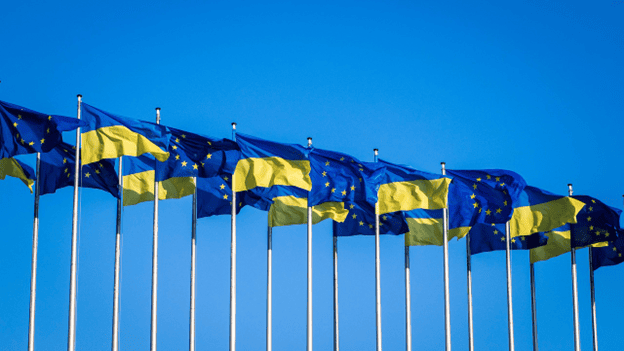
Being at the forefront of Russia’s full-scale invasion, Ukraine is gaining first-hand insight into emerging methods and technologies of warfare — knowledge the Euro-Atlantic community increasingly depends on. In this context, both the EU and NATO take steps to deepen the defence-industrial cooperation with Ukraine and facilitate knowledge transfer. The EU’s EDIP and UNITE Brave NATO are the most recent examples of this growing effort. Yet despite the rising recognition of Ukraine’s operational expertise and the growing ambition to anchor Ukraine more firmly within Euro-Atlantic structures, the long-term political will behind these initiatives remains uncertain.
EU’s EDIP and UNITE Brave NATO
Last Tuesday, the European Parliament voted 457-148, with 33 abstentions, to pass the €1.5-billion European Defence Industry Program (EDIP), covering 2025-2027. The program formally allocates €300 million to the dedicated Ukraine Support Instrument , which will help modernize Ukraine’s defence industry and integrate it with the EU’s industrial base. By granting Ukraine access to the EU’s Defence Investment Program , Europe can procure defence equipment in, with, and for Ukraine.
Andrius Kubilius — the EU Defence Commissioner — was one of the most forceful voices during the plenary debate. He noted that while Ukraine „needs us,” Europe needs Ukraine’s defence innovations even more. Kubilius also emphasized that for Ukraine it’s „not just a presence in our mechanisms, but real involvement in creating new joint productions and technologies that will form the foundation of Europe’s future security.”
Meanwhile on November 26th, NATO announced a new joint NATO-Ukraine initiative – UNITE Brave NATO — poised to accelerate defence innovation, scale prototypes, test innovative technologies, help enhance interoperability, and provide real-time lessons for the Alliance. The main areas of focus include counter-unmanned aerial systems (c-UAS), SIGINT systems, robust navigation in contested electromagnetic environments, and unmanned ground systems.
Ukraine as an equal partner?
The EDIP program signals the EU’s readiness to facilitate Ukraine’s gradual integration into the European defence structures, while the UNITE Brave initiative accelerates the innovation cycle between Ukraine and the broader Euro-Atlantic community. Together, these initiatives underscore the growing recognition of Ukraine’s operational know-how as a strategic asset for Euro-Atlantic defence industries.
Industrial integration, though promising, may ultimately be limited by deeper structural challenges within both the EU and NATO. Such institutional inertia exposes a central question: is it possible for Ukraine to be treated as an equal partner that co-shapes the future of regional security, or will it be seen primarily as a pragmatic source of battlefield-tested innovation, valued for its insights but excluded from actual security policy formulation?
Current disputes over the use of Russian frozen assets , diverging member-state positions on security guarantees , and domestic political shifts in some member states that increasingly oppose to strengthening the EU foreign policy and downplaying the Russian threat , illustrate only a portion of the frictions that could stall meaningful progress.
The answer is further complicated by the fact that the EU and NATO will not necessarily move at the same pace or in the same direction on the question of Ukraine’s industrial integration. Diverging institutional logics, mandates, and political incentives create space for uneven trajectories. Consequently, this EU–NATO misalignment could lead to a situation in which Ukraine is meaningfully integrated into one organization but sidelined in the other, reinforcing institutional incoherence, fragmenting procurement processes, and undermining coordinated planning cycles.
The influence of the United States adds another layer. Washington’s preferences, electoral cycles, and industrial interests will continue to shape both NATO’s posture and Europe’s own willingness to commit to Ukraine’s long-term integration, particularly if U.S. strategic attention shifts.
The costs of half-measures
Treating Ukraine as an equal actor depends on several conditions. First, the Euro-Atlantic community must articulate a clear theory of victory regarding Ukraine’s future. It must also move beyond symbolic funding to invest in sustained political commitment, coherent industrial planning, and a readiness to confront national-level and intra-alliance rifts. Both the EU and NATO should also focus on clear task delineation to avoid effort duplication and power vacuums. All these efforts must be anchored in long-term continuity to ensure that progress is not undone by shifting election cycles. As of now, none of these elements is guaranteed, even — and perhaps especially — after the war ends
The natural consequence of failing to deliver on these aspects is a fragmented Euro-Atlantic posture marked by misaligned defense planning, stalled industrial cooperation, and political asymmetry in which Ukraine may contribute to Europe’s security but remains without an equal seat in shaping the policies its contributions naturally underpin. Such negligence will create long-term structural vulnerabilities, leaving both Ukraine and the Euro-Atlantic community less resilient and less coordinated in the face of future threats.
Author: Karolina Kisiel


