












- WIADOMOŚCI
- ANALIZA
EU enlargement continues at a slow pace

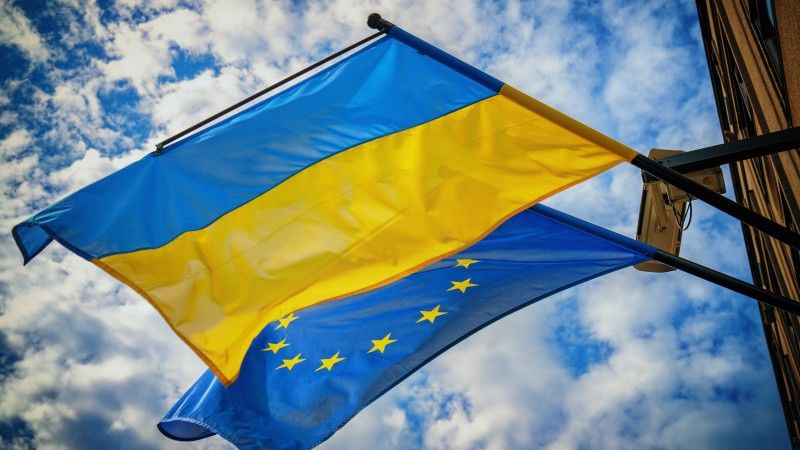
Shortly before the summer break, the European Union announced plans to open only two accession clusters for Ukraine and Moldova, instead of the remaining five. This decision arose amid resistance from Hungary and other member states.
As of now, Brussels’ aim is to unlock only Cluster 6, concerning external relations, and Cluster 2, dedicated to the internal market. It is important to note that since 2021, EU accession negotiations have been structured into 33 negotiating chapters grouped into six clusters: Fundamentals, Internal Market, Competitiveness and Inclusive Growth, Green Agenda and Sustainable Connectivity, Resources, Agriculture and Cohesion, External Relations.
It is worth noting that after a two-year pause related to Hungary’s veto, on June 15, Ukraine and Moldova initiated negotiations on the first cluster, known as the “Fundamentals”. This cluster covers the core values and principles on which the EU is built, including the rule of law, fundamental rights, the functioning of democratic institutions, public administration reform, and economic criteria.
The fate of the two countries’ accession is being treated collectively, even though Moldova has different domestic conditions. Moldova also has territorial issues related to Transnistria but is not engaged in a full-scale war like Ukraine. Currently, Chisinau has already been offered access to the Single Euro Payments Area, EU mobile roaming arrangements, and cultural support programmes.

The issue of Ukraine’s accession remains a controversial topic for European stakeholders
Nevertheless, even though the government in Budapest has changed, Hungarian decision-makers remain reluctant to speed up Ukraine’s membership process. For them, opening all clusters in the short term would mean that both countries might obtain accelerated accession.
During last week’s summit of the European Council, Péter Magyar said that he requested the deletion of a section in the joint conclusions that spoke about opening all remaining clusters with Ukraine “as soon as possible”. As conclusions are adopted by consensus, it was not feasible to include this in the official document.
Hungary’s current resistance is linked to the need for increased efforts by Kyiv to work on the written agreement regarding the rights of the Hungarian minority in Ukraine – a topic that regularly resurfaces in discussions.
What is more, not only during the last summit but also during other meetings, politicians often use the argument of Western Balkans candidates such as Montenegro, Albania, North Macedonia, and Serbia, which are following the old procedures of accession negotiations. These countries have been waiting in the queue for a longer time, and any fast-track options for Ukraine and Moldova can be perceived as unfair treatment.
For the majority of member states, accepting a faster accession process for Ukraine is not achievable, as they can use the long and comprehensive process to prolong and postpone the issue of enlargement, which is not an easy topic for politicians – especially during the election year.
It is important to highlight that even though various member states are openly expressing resistance to Ukraine’s membership, this attitude is not limited to Hungary. Nevertheless, while Viktor Orbán was in power, it was easy to place the responsibility on Budapest, as its voting behaviour was often framed as an obstacle to strengthening the European Union.

The European Commission has an alternative
At present, the strongest supporter is the European Commission (EC), which argues that Ukraine is technically ready to negotiate all six clusters. At the same time, it is aware of the current obstacles posed by member states. Therefore, the EC is looking for an alternative.
Currently, the European Commission is working on the concept of gradual integration, which means in practice giving economic benefits before countries join the bloc, on the condition of delivering concrete reforms. This approach should be perceived as a way to speed up enlargement without lowering the bar for entry, while providing candidates with incentives to remain interested in joining the EU.
Regarding economic benefits, it is possible to include access to EU funding programmes, preferential trade arrangements, and partial access to the single market before accession, with the package tailored to each candidate country’s progress. Without a doubt, this idea is a significant departure from the current system, under which most benefits are reserved for full members.
A key beneficiary of this programme might be Ukraine, as full accession will still take years and the level of support for this case within member states is still not very high.
Certainly, EU enlargement brings many challenges – one of them is the redirection of structural funds from current beneficiaries to new member states to decrease the development gaps between them. The second one is the Common Agricultural Policy – a topic especially sensitive for Poland. Without a doubt, the list of challenges could fill entire pages. As of now, Montenegro is widely seen as the frontrunner for membership. Ukraine and Moldova have opened accession talks for the first cluster – the remaining five clusters are on hold. Others, including Serbia, Turkey, and Georgia, have not seen substantial progress recently.


