- WIADOMOŚCI
- KOMENTARZ
Europe at the table: EU participation in the Abu Dhabi peace talks

On Monday, November 9, Ursula von der Leyen confirmed that EU representatives will be present in Abu Dhabi during the negotiations. However, they will not participate directly in the main talks between the parties.
As of now, the President of the European Commission has confirmed the presence of senior EU officials, led by Bjoern Seibert, von der Leyen’s Chief of Cabinet, and Anna-Maria Boura, chief foreign policy adviser to European Council President António Costa.
At the same time, European countries will also be represented in the E3 format, with delegations from France, Germany and the UK, as well as Italy. On Monday afternoon, NATO confirmed its presence through Chief of Staff Geoffrey Van Leeuwen. There is still no confirmation of a face-to-face meeting between the European and Russian delegations. However, both EU institutions have expressed their willingness to take part in a direct meeting with Kremlin representatives.
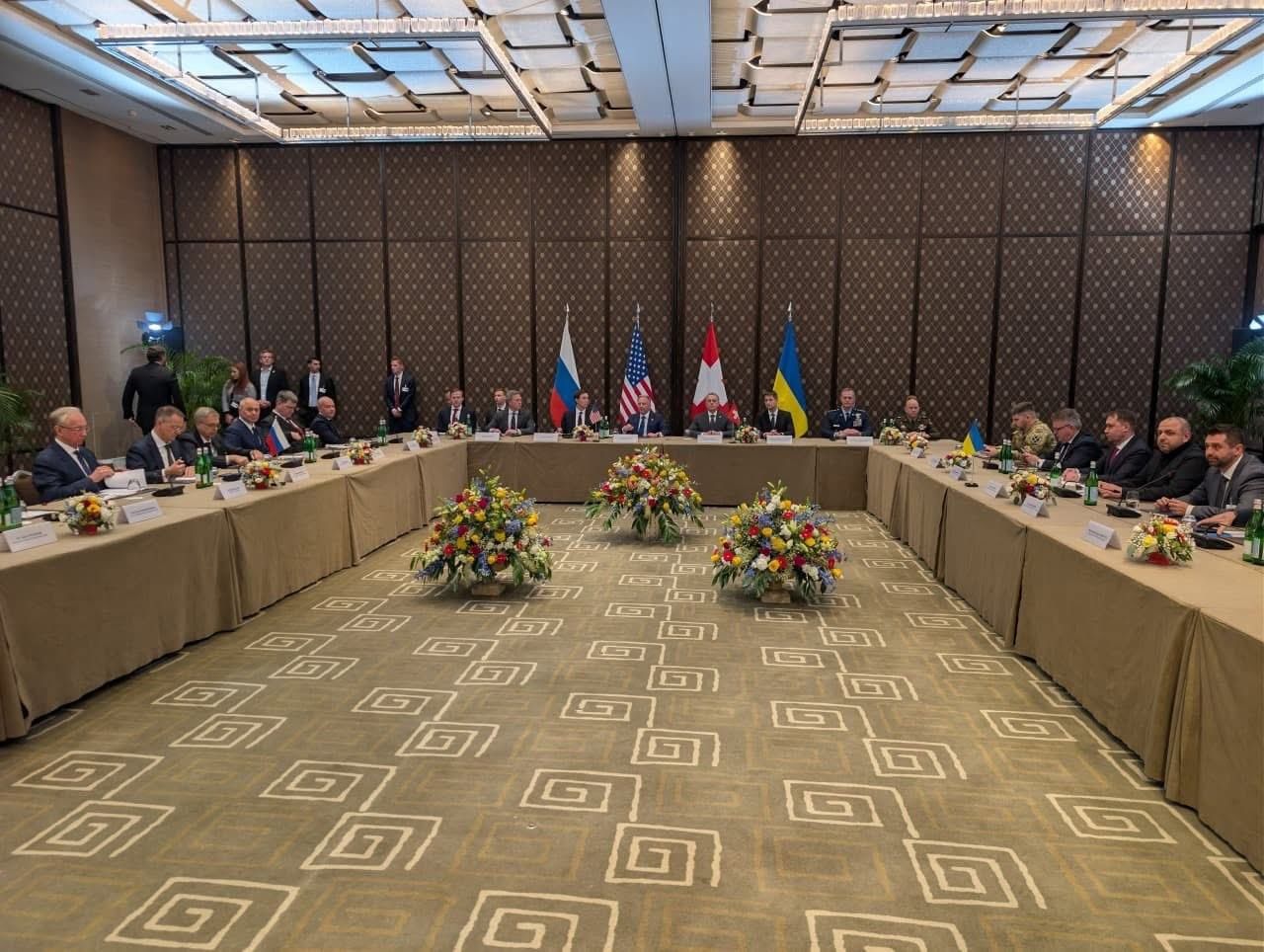
The talks scheduled for 10-11 November will bring together representatives from Russia, Ukraine and the United States, with the main objective of discussing a potential ceasefire and the security arrangements that could be implemented once the war is over. The meeting will be hosted by the United States, which will be represented by special envoys Steve Witkoff and Jared Kushner. The Ukrainian delegation will be led by Rustem Umerov, together with Kyrylo Budanov, Sergiy Kyslytsya and Davyd Arakhamia. The Russian delegation will be headed by Vladimir Medinsky, aide to President Vladimir Putin, and Deputy Foreign Ministers Sergei Ryabkov and Mikhail Galuzin.
It is worth mentioning that this meeting marks the return of peace negotiations, which have been suspended since February due to the White House’s focus on the war with Iran.
According to Jared Kushner, the talks will focus on a “new security architecture” that would create “the conditions for multilateral talks to begin in the near future”. At the same time, he emphasised that “achieving a comprehensive and lasting settlement will also require direct engagement between Russia and our European partners on the broader security arrangements that affect them.”

Even though the negotiations have not yet started, it will be difficult to achieve any consensus or agree on a common statement, as it is clear that the Russian Federation has not changed the conditions it presented before launching its full-scale aggression. Therefore, some EU leaders and officials perceive such initiatives as premature and unlikely to produce meaningful results.
Growing criticism of EU diplomacy
This announcement came shortly after Giorgia Meloni’s letter of complaint sent to António Costa, in which she called for a more coordinated EU response and demanded the appointment of a special European envoy. In his response, Costa agreed with Meloni and proposed discussing the issue during the informal summit in Dublin, which will take place after the Abu Dhabi meeting. Meloni’s statement was also supported by Polish Foreign Minister Radosław Sikorski, who warned that the interests of Eastern European countries should be taken into consideration.
Moreover, it is worth mentioning that recently, EU diplomacy has been criticised by Charles-Henri Gallois, adviser to National Rally President Jordan Bardella, who expressed a negative opinion about the role of Kaja Kallas and EU diplomacy. According to him, Kallas’s usefulness is very limited, and she merely duplicates the diplomacy of member states. “(…) No one recognises her legitimacy, particularly not the United States or China.” Similar criticism has also come from Marine Le Pen, the current front-runner in the French presidential election. Her National Rally party has also proposed reducing France’s contribution to the EU budget.
Therefore, to counter these voices of criticism, the EU needs to be visible and engage in all relevant formats where the European security architecture is being discussed. It is the EU’s responsibility to remain present, outline its position and voice its objections whenever the security of the continent is at stake. Consequently, the announced EU presence should be viewed as a positive step. However, the nature of the EU’s involvement remains limited and falls short of the role of an active, assertive and pragmatic decision-maker.