












- ANALIZA
- KOMENTARZ
- WIADOMOŚCI
Europe may be repeating its biggest mistake in space

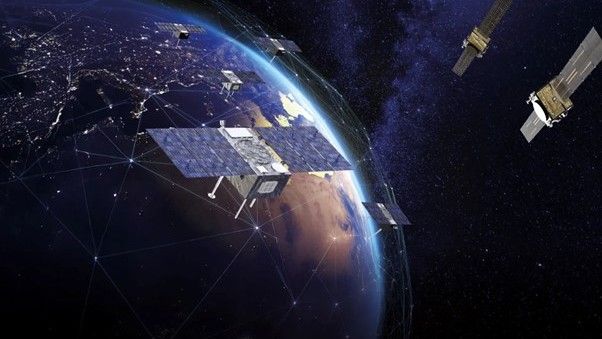
By pursuing separate large-scale investments in counterspace and Satcom, Europe’s major space powers risk steering the continent toward deeper fragmentation, inefficiency, and vulnerability in the space domain.
It has become a truism that Europe’s defence industry and military systems are excessively fragmented, and therefore often more costly and less efficient than they would be if pooled at the European, or at least regional, level. Yet despite repeated warnings and countless recommendations, the continent now appears set to repeat the same mistake in space security, leaving itself particularly exposed at precisely the moment when space is becoming more strategically important than ever.
European space capabilities are already deeply fragmented, especially in the defence sector. In contrast to continent-wide civilian programmes such as Galileo or Copernicus, military space assets remain scattered across the armed forces and governments of individual states. As a result, just four countries — France, Germany, Italy, and Spain — operate roughly 48 satellites spread across 13 ISR and 6 SATCOM constellations, averaging little more than two satellites per system.

Counterspace: a new dimension of fragmentation and vulnerability
Europe today urgently needs to bolster its space security, above all through counterspace capabilities able to deter and, if necessary, counter hostile actions by increasingly assertive space powers, particularly Russia and China. In the past year alone, Germany and France have committed €35 billion and over €4 billion respectively by 2030 to national space security ranging from patrol satellites and lasers to jammers and even spaceplanes, which are all necessary steps in themselves.
Yet a closer look at the structure of these counterspace investments and individual programmes shows that Europe is once again drifting toward fragmentation, duplication, and friction. France is pursuing its own patrol satellite programmes, YODA and TOUTATIS, with the first demonstrators expected to launch in 2027, while Germany is following a similar path, having issued a request for information for two distinct system types designed for rapid development. The same logic applies to space lasers, with Paris advancing FLAMHE and BLOOMLASE even as Berlin prepares its own programmes. Even spaceplanes — perhaps the most resource-intensive capability of all — are being developed along separate national paths, with Germany now reportedly seeking to test its prototype as early as next year.
These parallel but largely separate efforts stem from national security sensitivities and states« desire to retain autonomy over active defence capabilities, given their potential offensive applications. That makes them far harder to coordinate, pool, or jointly own than SSA, ISR, or Satcom assets, which are primarily passive and therefore far less escalatory.
The result is a growing mismatch between Europe’s expanding portfolio of large institutional and commercial constellations and its still fragmented, limited, and poorly coordinated counterspace capabilities. As mega-constellations expand, such assets may simply outgrow the ability of Europe’s current space security architecture to protect them effectively, turning one of the continent’s greatest strategic assets into one of its most exposed vulnerabilities.

A fragmenting secure communications landscape
What is even more troubling is that the problem extends far beyond counterspace capabilities to the very core of current EU cooperation on flagship space projects, above all IRIS², the Union’s much-vaunted €10 billion initiative to provide European states with secure satellite communications akin to Starlink. Yet the project has already been strained by a seemingly endless struggle over the multi-billion-euro contracts for its nearly 300 satellites — a contest driven largely by French, German, and Italian bidders that at times threatened to derail the programme. Germany then dealt it a further blow this March by announcing plans to build its own military communications constellation of more than 100 satellites, also worth around €10 billion.
Germany’s plans sparked consternation in Brussels. „If Germany now builds a purely national architecture that is not integrated into IRIS², there is a risk of weakening European structures,” warned Marie-Agnes Strack-Zimmermann, chair of the European Parliament’s Security and Defence Committee. In her view, such projects would create „duplicate structures, fragmented standards, and ultimately less strategic impact for more money.”
And Germany is not the only country pursuing this course. Italy, too, is developing its own comparable dual-use low-Earth-orbit secure communications constellation of more than 100 satellites, with discussions already underway with its domestic aerospace industry on launches from 2031 onward.
Between national sensitivities and vested industrial interests
Both Berlin and Rome appear to treat European security projects as secondary complements to their core national capabilities rather than as true collective alternatives. That view is reflected in the statement of a German spokesperson for IRIS², who argued that the programme „has the potential, where appropriate, to complement national initiatives in fulfilling sovereign tasks.”
Behind this reasoning lies a broader belief that only national systems can provide the degree of independence, tailored functionality, and operational discretion required for the most sensitive missions. National procurement is also perceived as faster than lengthy EU procedures. At the same time, fragmentation is often reframed as „diversification” of constellations, which is seen as providing redundancy and, with it, greater resilience for the continent as a whole.
What may matter even more for these capitals, yet is often underappreciated, is that national projects ensure that public funding flows far more directly into domestic industry, production capacity, and employment. In Germany, the likely beneficiaries are Rheinmetall and OHB, while in Italy the leading contender appears to be the state-controlled defence and aerospace group Leonardo.
Conversely, in joint European projects it is far more difficult to divide the financial and industrial pie in a way that leaves everyone satisfied and feeling treated fairly. When that political balancing act becomes a central priority, speed, cost, and efficiency often pay the price — something the IRIS² saga has shown repeatedly. Notably, France was the only country not to object to the proposed distribution of production within IRIS², which German officials argued would disproportionately favour French firms such as Thales and Eutelsat. These accusations were later countered as yet another example of German lobbying, illustrating the fierce competition surrounding major European tenders.

Managing fragmentation through integration
Speaking of solutions, of course, there is always an option of ad-hoc market-like integration of the systems when the countries would wake up to reality that they would make great use of their combined potential. This has already happened in space situational awareness, where national radars and telescopes were pooled in 2021 under EU SST to help protect European space assets.
The European Defence Agency’s SatCom Market follows a similar logic, offering a platform to exchange secure and reliable Satcom services across Europe. In theory, German and Italian military Satcoms could one day be plugged into such a broader architecture. In practice, however, it is hard to imagine Berlin, let alone Paris, showing the same willingness when it comes to military counterspace capabilities.
Europe thus has a choice between integrating its space systems up front or trying to connect them only after the fact. The second path is more expensive, slower, and inherently less efficient, because architectural incompatibilities embedded at the design stage often cannot be fully remedied later. Yet it remains politically attractive, since it best serves the short-term industrial, security, and political interests of individual states.
If Europe cannot stop the fragmentation of major counterspace and Satcom systems in the years ahead, it must at least guarantee their interoperability, especially from the design stage onward, when many irreversible technical divergences can still be avoided. Rome has already hinted at such a logic, noting that „the idea is for the constellation to work together with others, not necessarily on its own.” Interoperability, however, is not a cure-all. While it can significantly enhance the collective potential of national systems through their a posteriori aggregation, it cannot fully offset the costs of fragmentation.


