












- KOMENTARZ
- WAŻNE
- WIADOMOŚCI
France left to fund Rafale F5 alone after UAE withdrawal

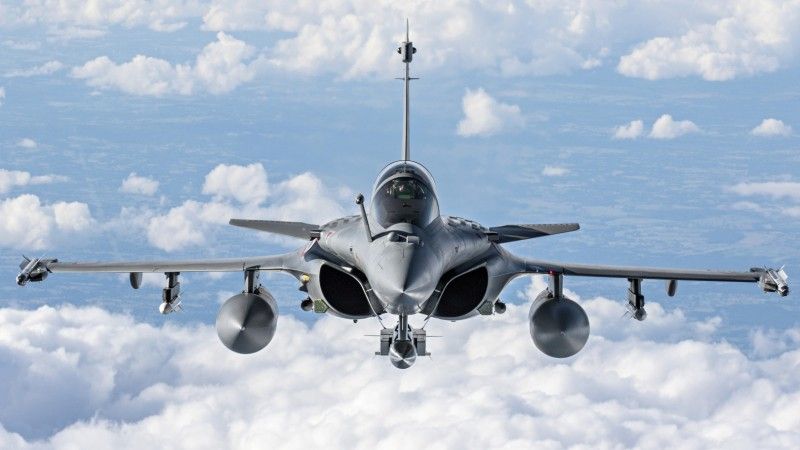
Photo. Ministerstwo obrony Francji
Paris faces a strategic and financial setback as the United Arab Emirates withdraws from the Rafale F5 programme, exposing tensions in a key defence partnership and raising broader questions about France’s position in the Gulf.
France will ultimately have to finance the Rafale F5 programme alone after the United Arab Emirates decided to withdraw from participation. The dispute centred on access to sensitive technologies, particularly in the field of optronics, which Paris refused to share. Initially, Abu Dhabi had been ready to contribute up to €3.5 billion to a programme estimated at around €5 billion. The collapse of negotiations now leaves France bearing the full cost, with expected delays in development and delivery.
From a broader strategic perspective, this decision carries significant implications. The 🇫🇷 French Republic maintains military bases in the 🇦🇪 United Arab Emirates and treats Abu Dhabi as its primary partner on the Arabian Peninsula. France is also one of the key arms suppliers to the UAE, having sold, among others, 80 Rafale fighter jets in a deal worth approximately €16 billion, as well as corvettes, missiles and advanced defence systems. This makes the relationship not only political, but deeply embedded in long-term military and industrial cooperation.
France has also demonstrated its commitment in practice. When Iran targeted the United Arab Emirates, Paris reacted decisively and played a key role in strengthening its protection. Against this backdrop, the Emirati decision to withdraw from the Rafale F5 programme constitutes a strategic setback for Paris and signals clear limits of the current partnership framework, particularly in the area of technology transfer and defence industrial cooperation.
The Rafale F5 itself represents a major technological shift rather than a simple upgrade. Planned to enter service around 2033, it will include next-generation sensors, enhanced electronic warfare systems and advanced connectivity, allowing it to operate as part of a broader „system of systems” alongside drones, satellites and other platforms. A central element will be the integration of combat drones acting as „loyal wingmen”, capable of reconnaissance, electronic warfare and strike missions. The aircraft is also expected to carry the future ASN4G hypersonic nuclear missile.
Financially, the consequences are significant. The development of the F5 standard alone is estimated at over €5 billion, while the broader Rafale programme reaches approximately €11.7 billion. Without Emirati funding, France will have to absorb the full burden, stretching its defence budget and potentially slowing down implementation.
This episode should be interpreted as a signal of growing limitations in France’s ability to translate defence partnerships into long-term strategic commitments. In the coming years, this may lead to greater caution in similar programmes and a stronger emphasis on technological sovereignty, both in France and among its partners.


