












- KOMENTARZ
- WIADOMOŚCI
France targets €100 billion for defence

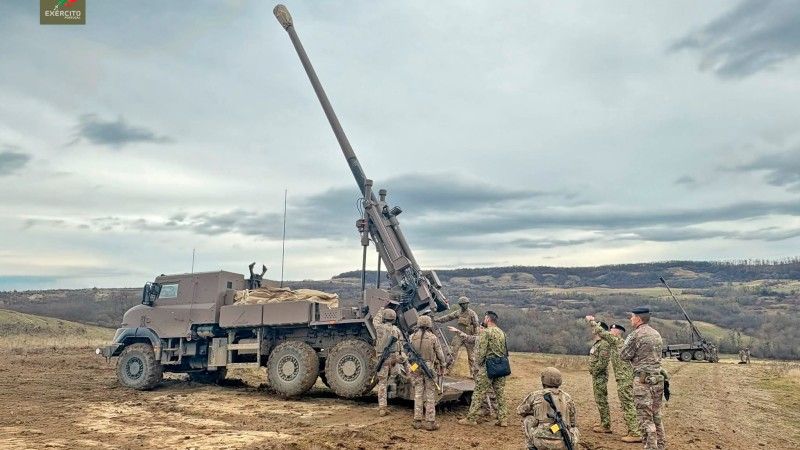
Photo. Exército Português / X
France intends to significantly increase military spending in the coming years. After adopting a defence budget for 2026 at the level of €57 billion, in Paris there is talk of the need to reach a ceiling of as much as €100 billion annually.
The French government assumes further, systematic increases in defence expenditure. As indicated by Prime Minister Sébastien Lecornu, the current level of funding will not be sufficient in the perspective of the coming years. Therefore, ultimately it may prove necessary to allocate as much as €100 billion per year to defence. What is important, this would mean almost a doubling of the current defence budget. The scale of the planned growth is particularly significant in the context of the difficult state of France’s public finances and the high budget deficit. Despite fiscal constraints, in Paris the conviction is growing that military spending is becoming a virtually fundamental category.
See also 

Energy stability and AI
One of the factors enabling France to think about such large expenditures is relative energy stability. The French energy mix relies in more than 70% on nuclear power, which makes the state far less dependent on imports of raw materials than many other European countries.
Additionally, France invests significant resources in the development of new technologies, including artificial intelligence and the space sector. Combined with a strong (largely autonomous) defence industry, this gives Paris the basis to maintain long-term growth in military spending.
Arms industry and weapons exports
The expansion of the defence budget is directly linked to the development of the domestic arms industry. France is among the largest exporters of armaments in the world, and interest in its equipment has been growing in recent years.
The most important recipients of French weapons include, among others, India and the United Arab Emirates. At the same time, Paris also maintains sales to Europe – an example is the export of Rafale fighter jets simultaneously to Croatia and Serbia. Further countries are considering the purchase of French equipment, and Ukraine has also signed a letter of intent for 100 Rafales.
Increasing production and exports partly allows compensation of the costs of rising defence expenditure and strengthens France’s position as one of the main pillars of the European arms industry. Hence – unsurprisingly – France has become the third recipient of loans from the EU SAFE programme.
Ambitions
The increase in defence spending also has a political dimension. France seeks to maintain the position of one of the leaders of the European Union and the principal leader of European autonomy, especially vis-à-vis the United States. The expansion of the armed forces and defence expenditure constitute a tool for strengthening Paris’s influence both in the EU and in NATO.
However, the greatest threat to the implementation of the ambitious plans remains the political situation within the country. In the recent period France has experienced several government collapses, and the budget was adopted only in the last week, as it had been hindered by a divided parliament.
The perspective of the presidential elections in April 2027 further increases uncertainty and concerns. A change of power – to the far right or the left – may mean a redefinition of defence financing plans or a change of priorities for military investment.
Grand finale
France is preparing for a significant increase in military spending in the coming years, which in the longer term is to reach the level of €100 billion annually. Such a decision results both from the deteriorating security situation in Europe and from the political ambitions of Paris; though for now from Macron’s circles.
The implementation of these plans will depend not only on economic capabilities, but above all on the political stability of the state in the coming years; which rather does not appear likely.


