












- ANALIZA
- WIADOMOŚCI
Franco-American relations in 2026

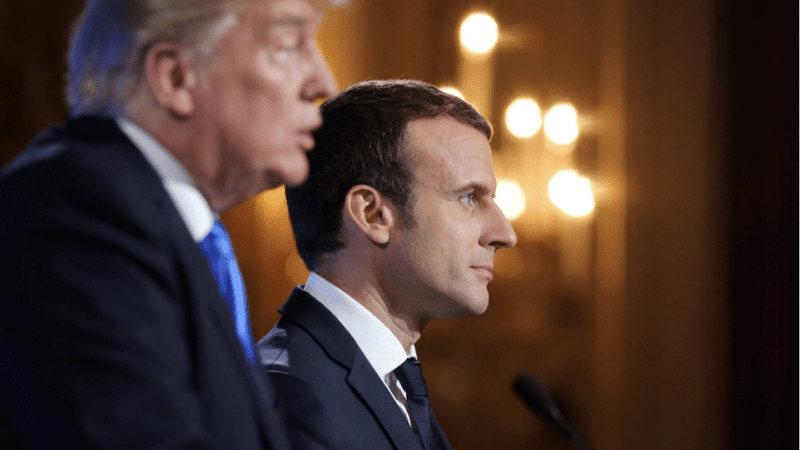
The increasingly aggressive and interventionist U.S. foreign policy is making everyone dizzy, with its claims over Greenland territory, arrest of Maduro and threats towards the Iranian regime. The accumulation of U.S. unilateral actions tackles the following questions: how should Europe and France react to a demonstration of power that circumvents international law and threatens European integrity, and what are the substantial means to limit Trump’s appetite?
French public opinion is split over the U.S. capture of Maduro. Far-left leader Jean-Luc Mélenchon has condemned what he describes „a new world order built by force,” calling for armed resistance and public demonstrations against what he labels an American „invasion,” while stopping short of denouncing the nature of the Venezuelan regime itself. After criticizing President Macron’s stance, accused of „endorsing Trump’s strategy,” Communist lawmakers have called on the Prime Minister to organize a parliamentary debate and vote to clarify France’s official position.
France’s official stance has been more pragmatic within the framework of international and bilateral relations. President Emmanuel Macron could not risk straining relations with the U.S., as France is Washington’s third-largest trading partner in Europe and the two countries maintain a strong bilateral economic relationship. In the days following Maduro’s capture, Macron faced criticism for not condemning the methods employed by the United States. This backlash helps explain why Macron revised his position. During the Council of Ministers on January 5th, Emmanuel Macron welcomed the end of Maduro’s dictatorship and the liberation of Venezuelan people, while simultaneously stressing that the method used to overthrow the regime was „neither approved nor supported” by France.
While French authorities have not officially articulated a position on potential future U.S. actions in Venezuela or elsewhere in South America, the issue has been widely discussed by French analysts and journalists. Many argue that Donald Trump’s regional strategy will not stop at Venezuela. The recent intervention follows a long history of U.S. military involvement in South America during the second half of the twentieth century. Trump himself has framed his action as the „Donroe Doctrine,” a reinterpreted version of the Monroe Doctrine aimed at asserting American dominance across the Western Hemisphere.
The U.S. administration had increased pressure on Cuba, urging the country to reach an agreement with Washington before the interruption of oil supplies and money previously provided by Venezuela. A threat to which Cuban President responded by asserting Cuba would not be told what to do. French geopolitical analyst Frédéric Encel has warned that the list of countries targeted by U.S. pressure could expand and mentioned Colombia’s socialist-oriented leadership. However, he also emphasized the singularity of the Venezuelan case, pointing to a combination of factors: a regime aligned with Iran, close ties to China, and leadership accused of supporting drug trafficking while presiding over the country’s economic collapse. In that sense, control over Venezuela is more about securing American interests and an illustration of its national security strategy than freeing the Venezuelan people:
The 2025 NSS constitutes a fundamental break with the consistent assessment of previous US administrations during the post-1945 period that permanent US global dominance is in the best US national interest. Instead, the 2025 NSS seeks to align the perceived past US overreach to a narrower definition of US national interest, and to eliminate »global burdens« that it claims have no connection to the US national interest and have been a drain on US resources. However, the strategic refocus does not appear to be tantamount to isolationism but rather is set to allow the US to maintain its preeminent economic and military role in the world, and to proceed to unilateral economic or military action to pursue its national interest.
With Trump willing to further its ambitions into European soil, Emmanuel Macron has adopted a firmer stance on Greenland than he did on Venezuela, denouncing what he described as „new colonialism and new imperialism” and rejecting any form of „vassalisation or defeatism.” In an interview with the French daily newspaperOuest-France, France’s Minister for Europe and Foreign Affairs, Jean-Noël Barrot, reaffirmed France’s support for Greenland’s independence and called for an end to what he described as American „blackmail.” He dismissed the likelihood of a U.S. military takeover of Greenland, arguing that such a scenario would be unjustified and implausible given Greenland’s protection under NATO. He also emphasized Europe’s substantial capacity to defend its own strategic interests. Besides, military intervention in Greenland would have great economic consequences for the U.S., because NATO partners might refrain to buy U.S. military materials such as the F-35.
However, Europe’s ability to exert meaningful leverage over the U.S. remains doubtful, and it would likely be unable to prevent the annexation of Greenland, as Europe continues to rely heavily on the U.S. for its own security. Frédéric Encel argues that Europe has not taken action to defend Greenland because it lacks a shared sense of collective identity and a unified geopolitical voice. Alongside the Russian threat, growing distrust toward the United States helps explain the desire of some European countries to strengthen cooperation, as illustrated by the nuclear partnership between London and Paris.
After having discussed with the Danish Prime Minister regarding the situation and having consulted with the United Kingdom and Germany on the „various options” under consideration, France has decided to participate to a joint military exercise around Greenland, along with Danish, Swedish, Norwegian and German troops.
Consequently, relations between Paris and Washington have become strained. According toLa Dépêche, they are now almost non-existent and largely utilitarian in nature. Europe—and France in particular—should therefore be concerned about Donald Trump’s national security strategy, which appears aimed at exerting control not only over South America but also over Europe, notably through Greenland.
It is time for Europe to move from a reactive posture (Ukraine, Venezuela, Greenland) to a more proactive role in international affairs. While Russia, the U.S., China actively project power beyond their own borders and rely on strong strategic doctrines, EU foreign policy remains hampered by internal divisions and the need for consensus. Europe still relies on NATO, which limits its strategic autonomy. The issue remains that Europe is not a single political entity, which restricts its ability to act as a unified geopolitical actor. As a result, only a EU few countries are willing to participate to the military protection of Greenland, and France is one of them. A defense council meeting was convened urgently on January 15th by the French President facing the American threats and the Iranian repression.
Europe appears as a spectator rather than an actor on the international stage, advocating for the principles of international law while lacking the means to effectively constrain powerful states that disregard it. U.S. threats to intervene in Iran have attracted relatively limited political attention, despite being arguably comparable to interference in domestic affairs. While a direct military intervention in Iran seems unlikely due to the risk of major escalation, international legal mechanisms could be mobilized in response to repression and killings. Similarly to the European Union, the United Nations remains constrained by internal divisions, which limit its capacity for decisive action. And the U.S. have understood that.
Author: Emma Dupuy


