












- ANALIZA
- WIADOMOŚCI
- WAŻNE
Growing tensions between the US and Venezuela

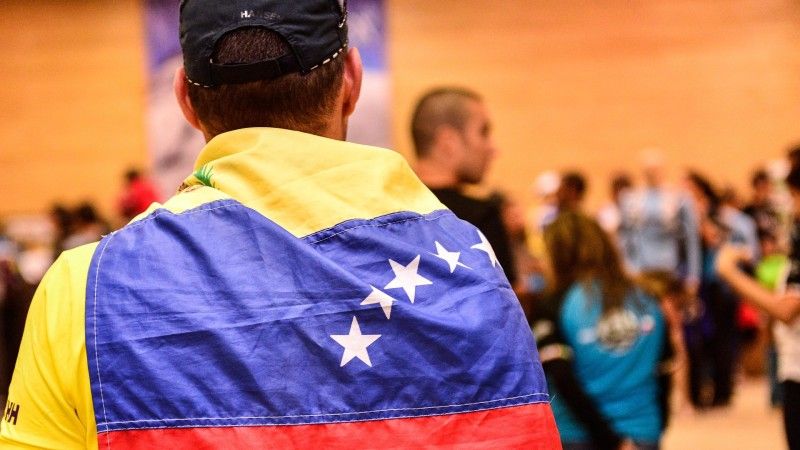
The crisis in US-Venezuelan relations has reached a level that significantly increases the risk of unintended military escalation. The intensification of US military operations in the Caribbean, restrictive measures against the government of Nicolás Maduro, and the dynamic shrinking of Caracas’s international base, including the significant withdrawal of Russia and China, are creating a situation with strategic consequences for the security of the Western Hemisphere.
The decisive impetus for the current phase of the crisis was the public demand that Nicolás Maduro leave the country within a specified period, as well as Donald Trump’s declaration that the airspace over and around Venezuela should be treated as a closed area. This formulation leaves a broad scope for operational interpretation and effectively represents a promise of air operations if Washington deems them necessary. Simultaneously, the United States has significantly increased its military presence in the Caribbean Sea. Numerous US Navy strike units have been deployed to the region, supported by intensive patrol and reconnaissance aircraft operations. The scale of US naval and air presence in the Caribbean has not been so extensive since the 1980s. These actions signal both the Maduro regime and Latin American countries that Washington is considering using military pressure as a tool to influence a change of government in Venezuela.
The Caracas government’s response
The Venezuelan regime responded with the mobilization of elite military units, intensified propaganda, and actions targeted at foreign citizens. The authorities are advancing a narrative of rearming the so-called national stronghold, which is threatened by external aggression. Parliament suspended its work, citing „the need to analyze US actions” as the reason. On the one hand, the message being used aims to consolidate the regime’s political base, and on the other, to justify the security apparatus’s actions, which are based on extraordinary powers. In this context, the detention of US citizens a few days ago is particularly significant. Although Caracas presents such actions as measures to maintain internal security, this does not change the fact that their nature clearly fits the practice of using foreigners as an instrument of political pressure. The detentions deepen tensions with Washington and, in practice, constitute an obstacle to any crisis diplomacy.
Russian and Chinese strategic disengagement and signals of distance from Maduro
One of the most telling elements of the current situation is the progressive reduction of Russia’s involvement. For years, Moscow has been a key political and military partner for Caracas. Still, the geopolitical situation and its own strategic burdens, including the ongoing war in Ukraine, are forcing it to reconsider its priorities. According to reports, the Russian Federation has begun evacuating its citizens from Venezuela. The Russian Association of Tour Operators (ATORUS) has confirmed the organization of special repatriation flights and the redirection of tourist traffic to other countries in the region, including Cuba. A growing number of Russian private entities are suspending operations in Venezuela, citing concerns about the security of Venezuelan airspace and the unpredictable political situation. Russia has not demonstrated any readiness to actively defend the Maduro regime in the face of increasing US pressure. The Kremlin is primarily limiting itself to rhetorical statements, avoiding actions that could be interpreted as a direct challenge to the United States in an area traditionally considered within Washington’s strategic interests.
A similar process is being observed in the actions of the People’s Republic of China. Although Beijing has significant financial exposure in Venezuela, it is treating the crisis as a calculated risk rather than a ground for confrontation with the United States. The Chinese authorities are limiting themselves to cautious statements and showing no willingness to take political or military actions that could be interpreted as support for Caracas amid increasing American pressure. From a strategic perspective, this means that both Russia and China are distancing themselves from Maduro’s confrontational policies, focusing on their own global calculations and avoiding the opening of a new front of tensions with the United States. For Caracas, this is a clear signal that its current pillars of support are beginning to lose stability.
Shrinking airspace, communication restrictions with international warnings
Venezuela’s isolation has been further exacerbated by numerous airlines suspending flights to Caracas following warnings from aviation safety authorities. The US Federal Aviation Administration (FAA) and European institutions point to a growing threat to civil air traffic safety in the military zone. In response, the Venezuelan Civil Aviation Authority (INAC) revoked the operating permits of numerous carriers, accusing them of engaging in acts aimed at Venezuelan sovereignty. The suspension of operations by Air Europa and Ultra, as well as restrictions imposed on Iberia, TAP, Avianca, Turkish Airlines, and other carriers, effectively cut the country off from international aviation infrastructure. This operating environment hinders the evacuation of foreign nationals, the mobility of diplomatic personnel, and the maintenance of standard economic relations.
Growing operational uncertainty has prompted some countries to issue travel recommendations to Venezuela. The United States, Canada, Australia, Norway, and Sweden, among others, have issued advisories advising their citizens not to travel there. The Polish Ministry of Foreign Affairs has also issued an official statement, citing growing security risks, airspace destabilization, and possible disruptions to air traffic. Other countries are advising against all but essential travel. At the same time, some foreign diplomatic personnel are limiting their activities or leaving Caracas, citing operational difficulties and the unpredictability of the situation. Such moves further confirm that Venezuela is entering a phase of international isolation, which could deepen further if military pressure mounts.
Strategic consequences and risk of escalation
The ongoing crisis minimizes the space for negotiations. The United States is increasing military activity and political pressure, while Caracas is responding with mobilization and rhetoric of an external threat. The simultaneous withdrawal of Russia and China, along with growing diplomatic isolation, is causing the Maduro regime to balance between maintaining a veneer of stability and losing real agency. In such conditions, the risk of an unintended military incident is exceptionally high. Operational tensions at sea and in the air, the lack of transparency in security agencies, and limited diplomatic communication create an environment in which misinterpretation of the opponent’s intentions could lead to violent escalation. The coming weeks will determine whether the situation remains within the framework of political and military pressure or escalates into an open conflict. The dynamics of Washington and Caracas, as well as the ultimate stance of Russia and China, will be crucial in determining whether Venezuela becomes the scene of one of the most serious security crises in the Western Hemisphere in the 21st century.


