












- WIADOMOŚCI
- KOMENTARZ
New Berlin-Tokyo axis? Germany pushes deeper defence pact

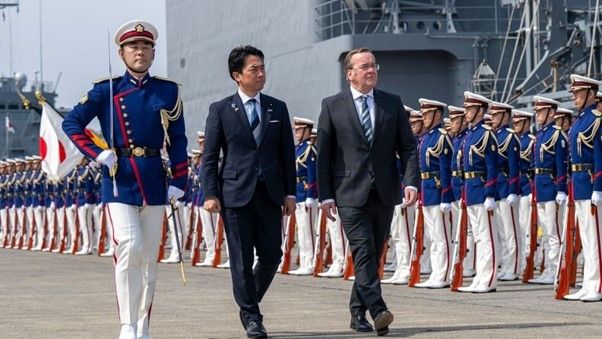
Photo. deutschland.de
Berlin and Tokyo are building a more operational security partnership, moving from symbolic visits to regular military consultations and a proposed reciprocal access deal.
Germany is moving to turn its Indo-Pacific rhetoric into military reality. On March 22 in Yokosuka, German Defense Minister Boris Pistorius and his Japanese counterpart Shinjiro Koizumi agreed to establish regular security consultations designed to span from peacetime planning through active crisis management. To further this integration, Pistorius proposed a Reciprocal Access Agreement (RAA) aimed at streamlining visits, joint exercises, and deployments between the Bundeswehr and Japan’s Self-Defense Forces.

While the RAA remains a proposal (and was notably absent from Tokyo’s official readout), this development represents a major strategic upgrade. It provides both nations with a permanent mechanism to coordinate whenever regional stability or their own security is threatened. By explicitly framing Euro-Atlantic and Indo-Pacific security as fundamentally inseparable, both ministers underscored a profound shift: Berlin has abandoned the notion of Asia as a distant theater, just as Tokyo is systematically weaving European partners into its regional deterrence network.
This latest proposal rests on an expanding legal foundation. Bilateral defense ties accelerated in 2021 with an information-security agreement and the inaugural “2+2” dialogue, followed by the activation of a crucial logistics pact (the so-called “ACSA”) in July 2024. While the ACSA already facilitates the reciprocal exchange of supplies and services, an RAA would dramatically lower logistical barriers by clarifying the legal status and movement of visiting forces.

Recent deployments prove this partnership has already moved well beyond symbolism. German naval vessels visited Japan in 2024, Japanese F-15s executed an unprecedented deployment to Germany in 2025, and Pistorius arrived this week flanked by defense industry representatives. Berlin is looking past routine port calls, focusing instead on a practical mix of strategic consultation, military interoperability, and industrial cooperation. Although the access deal remains in the proposal stage, the broader trend is clear: Berlin and Tokyo are building a security partnership that is steadily becoming more operational.


